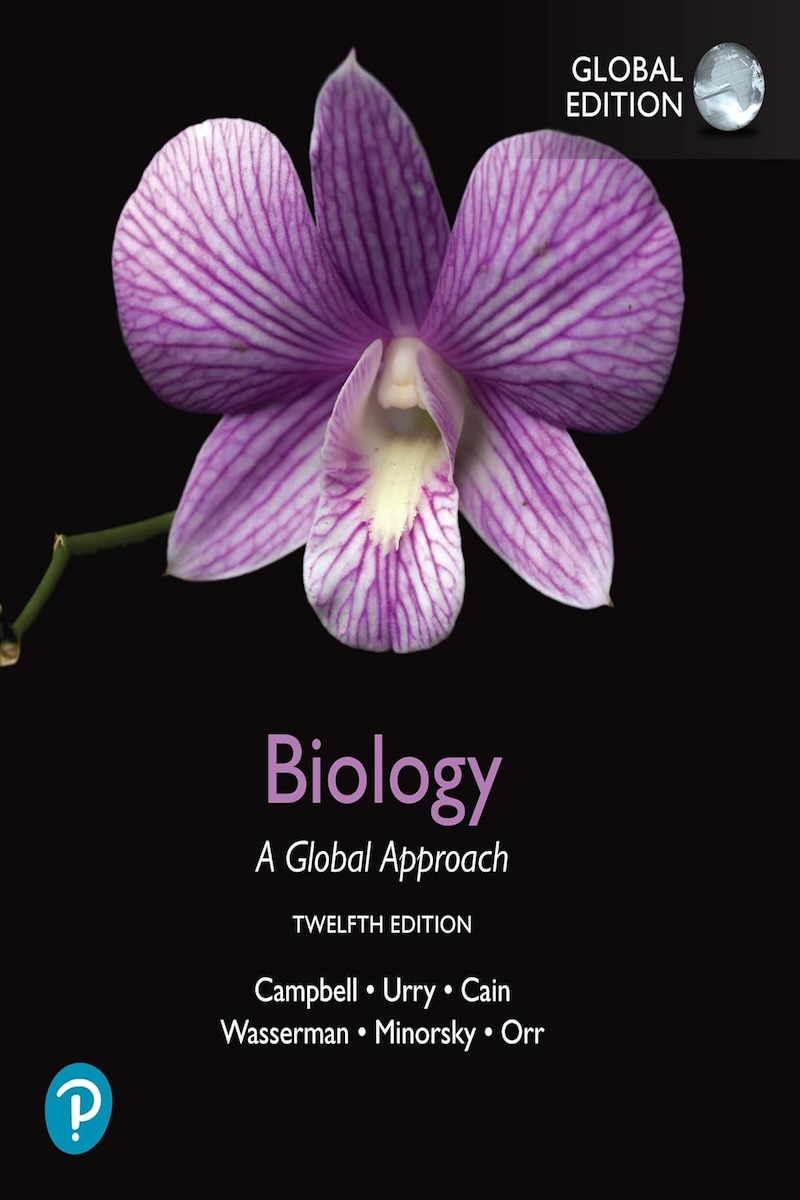
Campbell Biology
Author: Lisa Urry et al.
The gold standard introductory biology textbook used by millions of students worldwide, providing comprehensive coverage of molecular biology, genetics, evolution, ecology, and all major areas of biology with clear explanations and cutting-edge content.
By purchasing through this link, we may receive a small commission at no extra cost to you. Thank you for your support!
Citation
Urry, L. A., Cain, M. L., Wasserman, S. A., Minorsky, P. V., & Reece, J. B. (2020). Campbell Biology (12th ed.). Pearson.
Intellectual & Historical Context
Campbell Biology represents the evolution of Neil Campbell's vision for creating an introductory biology textbook that would make the subject accessible to students while maintaining scientific rigor. First published in 1987, the textbook has been continuously updated to reflect advances in biological understanding, particularly in molecular biology, genetics, and evolution.
Now in its 12th edition, Campbell Biology has become the most widely used introductory biology textbook globally, adopted by 90% of AP Biology classes and 60% of introductory college biology courses. The book has been translated into over 20 languages and used by more than 14 million students worldwide.
Pedagogical Approach
Campbell Biology employs a conceptual framework that emphasizes the unity and diversity of life through evolution. The textbook integrates molecular and cellular biology with organismal and ecological perspectives, helping students understand how biological processes operate across different levels of organization.
Key Themes
Unity and Diversity of Life
The textbook demonstrates how all living organisms share fundamental characteristics while exhibiting remarkable diversity through evolutionary processes.
Evolution as the Central Theme
Evolution serves as the unifying principle that explains both the unity and diversity of life, connecting all biological concepts from molecular to ecosystem levels.
Structure and Function Relationships
Throughout all levels of biological organization, the structure of biological entities determines their function and vice versa.
Information Flow and Regulation
Living systems require constant information flow and regulatory mechanisms to maintain organization and respond to environmental changes.
Energy Transformations
All biological processes require energy, and understanding energy flow is crucial to understanding life processes.
Interactions and Systems
Biological systems are interconnected networks where components interact at multiple levels, from molecular to global scales.
Content Organization
Unit 1: The Chemistry of Life
Foundation concepts in chemistry, water properties, carbon-based molecules, and macromolecules essential for life.
Unit 2: The Cell
Cell structure, membranes, metabolism, cellular respiration, photosynthesis, and cell communication and reproduction.
Unit 3: Genetics
Mendelian genetics, chromosomal basis of inheritance, molecular biology of genes, gene regulation, and biotechnology.
Unit 4: Mechanisms of Evolution
Natural selection, evolution evidence, phylogeny, and the history of life on Earth.
Unit 5: The Evolutionary History of Biological Diversity
Survey of major groups of organisms from viruses and prokaryotes to fungi, plants, and animals.
Unit 6: Plant Form and Function
Plant structure, resource acquisition, transport, reproduction, and responses to environment.
Unit 7: Animal Form and Function
Animal body systems including nervous, endocrine, circulatory, respiratory, digestive, excretory, and reproductive systems.
Unit 8: Ecology
Population ecology, community ecology, ecosystems, and conservation biology.
Pedagogical Features
Scientific Skills Exercises
Activities that build quantitative skills and scientific reasoning abilities essential for biology.
Problem-Solving Exercises
Real-world applications that develop critical thinking and analytical skills.
Visual Learning Tools
Comprehensive figures, animations, and interactive media that enhance understanding of complex processes.
Assessment Integration
Practice tests, review questions, and digital resources that support student learning and instructor teaching.
Current Edition Updates
Molecular Biology Advances
Integration of CRISPR-Cas9 gene editing, next-generation sequencing technologies, and advances in genomics.
Climate Change Integration
Updated coverage of climate change impacts on biological systems and conservation strategies.
Diversity and Inclusion
Enhanced representation of diverse scientists and research from global perspectives.
Digital Learning Resources
Comprehensive online resources including adaptive learning tools and virtual laboratory experiences.
Significance & Impact
Campbell Biology has fundamentally shaped introductory biology education by establishing standards for:
- Conceptual integration across biological disciplines
- Visual communication of complex biological processes
- Scientific skill development in undergraduate education
- Global accessibility of biological knowledge
The textbook's influence extends beyond the classroom, serving as a reference for educators, researchers, and science communicators worldwide. Its emphasis on evolution as a unifying principle has helped establish this concept as central to biological education.
Real-World Applications
Pre-Medical Education
Serves as foundational preparation for medical, dental, veterinary, and other health professional programs.
Research Preparation
Provides essential background for students entering biological research fields.
Environmental Awareness
Develops understanding of ecological principles crucial for addressing environmental challenges.
Biotechnology Understanding
Introduces concepts essential for careers in biotechnology and pharmaceutical industries.
Critical Analysis
Strengths
Campbell Biology excels in integrating complex biological concepts into a coherent framework that emphasizes evolutionary relationships. The textbook's visual design and pedagogical features effectively support student learning across diverse educational contexts.
Comprehensive Coverage
The textbook successfully balances breadth and depth, covering all major areas of biology while maintaining accessibility for introductory students.
Scientific Currency
Regular updates ensure that content reflects current scientific understanding and technological advances.
Global Impact
The textbook's widespread adoption has created a common foundation for biological education worldwide.
Conclusion
Campbell Biology remains the definitive introductory biology textbook, successfully combining comprehensive coverage with pedagogical innovation. Its impact on biological education is unparalleled, having shaped the understanding of millions of students and established standards for science textbook development.
The textbook's success lies in its ability to make complex biological concepts accessible while maintaining scientific rigor, its integration of cutting-edge research with fundamental principles, and its recognition that understanding biology is essential for informed citizenship in an increasingly complex world.
Through its continued evolution and adaptation to new scientific discoveries and educational needs, Campbell Biology continues to serve as the foundation for biological literacy and scientific understanding for students around the globe.
Book Information
- Subject Category
- Biology
- Academic Level
- Undergraduate
- Publisher
- Pearson
- Publication Year
- 2020
- ISBN
- 978-0-13-544711-3
Support This Project
Help us maintain and expand this global academic resource platform.
Buy Me a Coffee