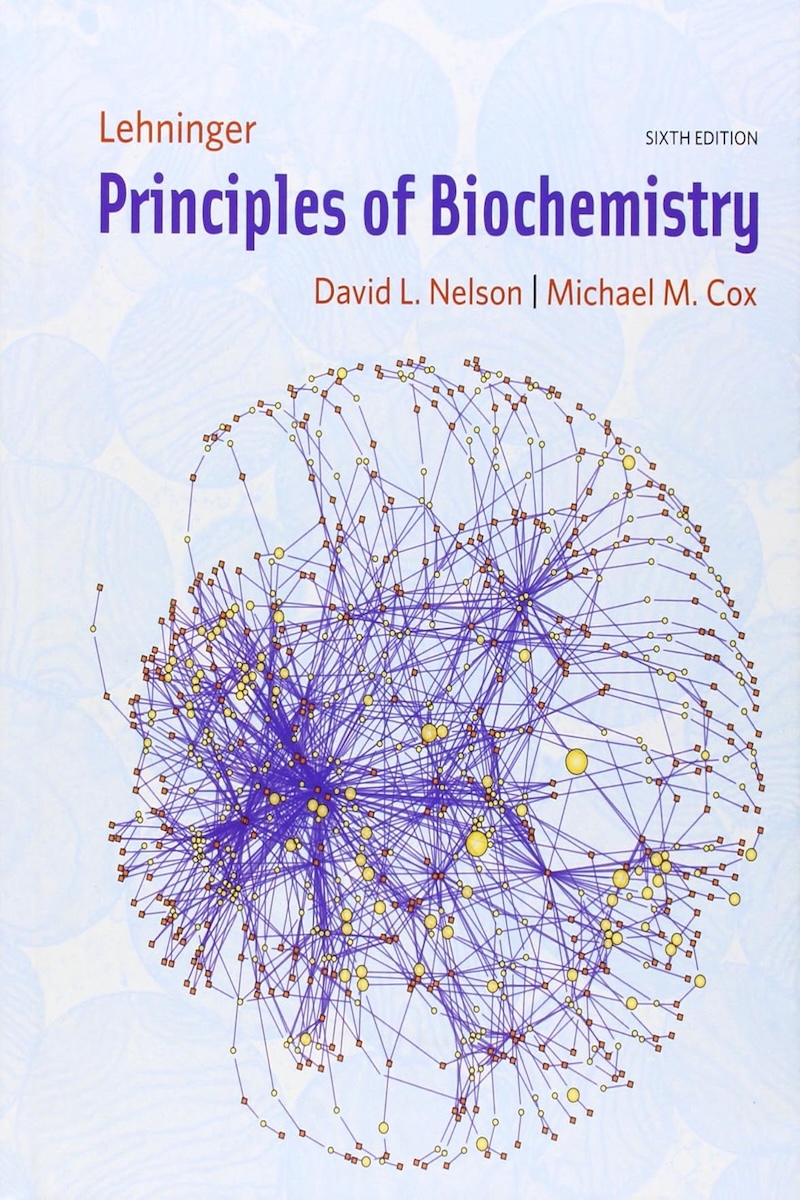
Lehninger Principles of Biochemistry
Author: David Nelson et al.
The definitive textbook on biochemistry that provides comprehensive coverage of biological molecules, metabolic pathways, and cellular processes, helping students understand the molecular basis of life through clear explanations and problem-solving support.
Buy this book on Amazon
Lehninger Principles of Biochemistry - David Nelson et al.
ISBN: 978-1-319-22847-5
By purchasing through this link, we may receive a small commission at no extra cost to you. Thank you for your support!
Citation
Nelson, D. L., & Cox, M. M. (2021). Lehninger Principles of Biochemistry (8th ed.). W. H. Freeman and Company.
Intellectual & Historical Context
Lehninger Principles of Biochemistry has its origins in Albert Lehninger's pioneering work in biochemistry, particularly his research on mitochondria and bioenergetics. First published in 1982, the textbook emerged during a period of rapid advancement in molecular biology and protein chemistry.
The book has evolved through eight editions to incorporate revolutionary advances in genomics, proteomics, structural biology, and systems biology. Each edition has maintained Lehninger's vision of presenting biochemistry as a coherent, logical science while adapting to new discoveries and pedagogical approaches.
Pedagogical Philosophy
The textbook is built on the principle that biochemistry is best understood through the integration of structure and function. It emphasizes that biological molecules and processes have evolved to solve specific problems, making biochemistry a rational and comprehensible science.
Fundamental Principles
Unity of Biochemistry
All living organisms share fundamental biochemical processes, reflecting their common evolutionary origin and the universal requirements of life.
Structure-Function Relationships
The three-dimensional structure of biological molecules determines their function, from proteins and nucleic acids to complex metabolic pathways.
Information and Energy
Life requires both information (stored in DNA and RNA) and energy (captured and utilized through metabolism) to maintain organization and function.
Regulation and Control
Sophisticated regulatory mechanisms control biochemical processes at multiple levels, ensuring appropriate responses to changing conditions.
Evolution and Adaptation
Biochemical systems have evolved to optimize efficiency while maintaining flexibility for adaptation to different environments.
Content Organization
Part I: Structure and Catalysis
Foundation concepts including water, amino acids, proteins, enzyme structure and function, and regulatory strategies.
Part II: Bioenergetics and Metabolism
Energy principles, glycolysis, citric acid cycle, fatty acid oxidation, amino acid oxidation, and photosynthesis.
Part III: Information Pathways
DNA metabolism, RNA metabolism, protein metabolism, and regulation of gene expression.
Part IV: Advanced Topics
Membrane transport, hormone signaling, integration of metabolism, and specialized topics in contemporary biochemistry.
Key Biochemical Concepts
Thermodynamics and Bioenergetics
Understanding how cells capture, store, and utilize energy through chemical reactions and electron transport.
Enzyme Catalysis
Mechanisms by which enzymes accelerate chemical reactions and the factors that regulate their activity.
Metabolic Integration
How different metabolic pathways are coordinated to meet cellular energy and biosynthetic needs.
Molecular Recognition
Principles governing how biological molecules specifically recognize and interact with each other.
Allosteric Regulation
Mechanisms by which regulatory molecules control protein function through conformational changes.
Protein Structure and Function
Primary Structure
Amino acid sequences and their role in determining protein properties and evolution.
Secondary Structure
Alpha helices, beta sheets, and other regular structural motifs in proteins.
Tertiary Structure
Three-dimensional folding patterns and the forces that stabilize protein structures.
Quaternary Structure
Assembly of multiple protein subunits and the functional advantages of protein complexes.
Enzyme Mechanisms
Detailed analysis of how enzymes achieve catalytic efficiency and specificity.
Metabolic Pathways
Carbohydrate Metabolism
Glycolysis, gluconeogenesis, glycogen metabolism, and the pentose phosphate pathway.
Lipid Metabolism
Fatty acid synthesis and oxidation, cholesterol metabolism, and membrane lipid biosynthesis.
Amino Acid Metabolism
Nitrogen fixation, amino acid biosynthesis and degradation, and the urea cycle.
Nucleotide Metabolism
Purine and pyrimidine synthesis, salvage pathways, and regulation of nucleotide pools.
Integration of Metabolism
How metabolic pathways are coordinated and regulated in response to physiological demands.
Information Processing
DNA Structure and Replication
Molecular basis of heredity and mechanisms ensuring accurate DNA replication.
RNA Processing and Function
Transcription, RNA modification, and the diverse functions of different RNA types.
Protein Synthesis
Translation mechanisms and the genetic code, including post-translational modifications.
Gene Regulation
Mechanisms controlling gene expression at transcriptional and post-transcriptional levels.
Membrane Biology
Membrane Structure
Lipid bilayers, membrane proteins, and the dynamic nature of biological membranes.
Transport Processes
Passive and active transport mechanisms for moving molecules across membranes.
Signal Transduction
How cells detect, process, and respond to external signals through membrane receptors.
Membrane Bioenergetics
Role of membranes in energy conversion and ATP synthesis.
Advanced Topics
Structural Biology
Modern techniques for determining protein structures and their functional implications.
Systems Biology
Network approaches to understanding complex biological systems and emergent properties.
Biotechnology Applications
How biochemical principles are applied in medicine, agriculture, and industry.
Evolutionary Biochemistry
How biochemical systems have evolved and continue to evolve.
Problem-Solving Approach
Quantitative Analysis
Mathematical treatment of biochemical processes, including enzyme kinetics and thermodynamics.
Experimental Design
How biochemical experiments are designed and interpreted to test hypotheses.
Data Analysis
Statistical methods and computational tools used in biochemical research.
Critical Thinking
Developing skills to evaluate scientific literature and design experiments.
Clinical Relevance
Disease Mechanisms
Molecular basis of genetic diseases, cancer, and metabolic disorders.
Drug Development
How understanding biochemical mechanisms leads to therapeutic interventions.
Diagnostic Applications
Biochemical markers and assays used in medical diagnosis.
Personalized Medicine
How individual biochemical differences affect drug responses and treatment strategies.
Research Integration
Current Techniques
Modern experimental methods including mass spectrometry, NMR, and cryo-electron microscopy.
Computational Methods
Bioinformatics tools for analyzing sequences, structures, and networks.
Omics Approaches
Genomics, proteomics, metabolomics, and other system-wide analytical methods.
Emerging Technologies
CRISPR gene editing, synthetic biology, and other cutting-edge developments.
Educational Features
Visual Learning
Comprehensive illustrations, animations, and molecular models that clarify complex processes.
Problem Sets
Quantitative problems that develop analytical skills and deepen understanding.
Case Studies
Real-world applications that demonstrate the relevance of biochemical principles.
Online Resources
Digital tools and databases that support learning and research.
Significance & Impact
Lehninger Principles of Biochemistry is widely regarded as the premier textbook in biochemistry, used in undergraduate and graduate programs worldwide. It has set the standard for how biochemistry is taught and understood, influencing multiple generations of scientists, physicians, and researchers.
The textbook's impact extends beyond education to research and practice, serving as a comprehensive reference for professionals in biochemistry, molecular biology, medicine, and biotechnology.
Contemporary Applications
Biotechnology
Fundamental principles guide the development of new biotechnological applications and products.
Medicine
Understanding biochemical mechanisms is essential for modern medical practice and drug development.
Environmental Science
Biochemical knowledge informs approaches to environmental remediation and sustainability.
Agricultural Science
Metabolic engineering and crop improvement rely on deep biochemical understanding.
Critical Analysis
Comprehensive Coverage
The textbook successfully integrates vast amounts of biochemical knowledge into a coherent framework that emphasizes fundamental principles.
Pedagogical Excellence
Clear writing, outstanding illustrations, and logical organization make complex topics accessible to students.
Scientific Currency
Regular updates ensure that content reflects current understanding and emerging technologies.
Global Impact
International adoption has created a common foundation for biochemical education worldwide.
Future Directions
Systems Integration
Increasing emphasis on understanding biochemistry at the systems level rather than isolated pathways.
Computational Biology
Growing integration of computational methods and modeling in biochemical analysis.
Precision Medicine
Application of biochemical knowledge to develop personalized therapeutic approaches.
Sustainability
Using biochemical principles to address environmental challenges and develop sustainable technologies.
Conclusion
Lehninger Principles of Biochemistry remains the definitive textbook for understanding the molecular basis of life. Its success lies in presenting biochemistry as a logical, integrated science that explains how biological molecules and processes enable life.
The textbook continues to evolve with advances in science and technology while maintaining its core strength: making complex biochemical concepts accessible through clear explanations, outstanding visuals, and emphasis on fundamental principles. It serves as both an educational resource and a comprehensive reference for anyone seeking to understand how life works at the molecular level.
Through its combination of scientific rigor, pedagogical innovation, and practical relevance, Lehninger Principles of Biochemistry has shaped biochemical education and research for decades and will continue to guide our understanding of the fascinating molecular world that underlies all life processes.
Book Information
- Subject Category
- Biology
- Academic Level
- Undergraduate
- Publisher
- W. H. Freeman and Company
- Publication Year
- 2021
- ISBN
- 978-1-319-22847-5
Support This Project
Help us maintain and expand this global academic resource platform.
Buy Me a Coffee