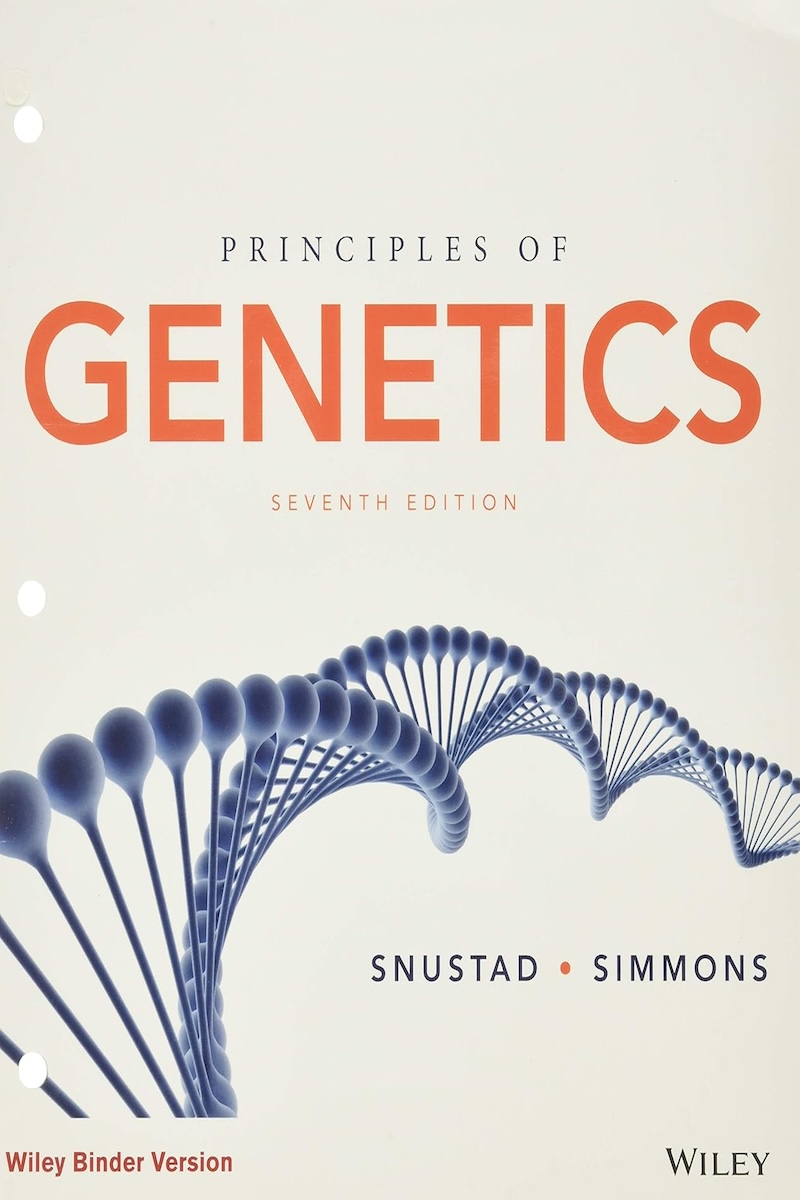
Principles of Genetics
Author: Michael Simmons et al.
A comprehensive introduction to genetics that covers classical and molecular genetics, genomics, and biotechnology, providing students with a solid foundation in genetic principles and their applications in medicine, agriculture, and research.
Buy this book on Amazon
Principles of Genetics - Michael Simmons et al.
ISBN: 978-1-119-49239-7
By purchasing through this link, we may receive a small commission at no extra cost to you. Thank you for your support!
Citation
Snustad, D. P., & Simmons, M. J. (2019). Principles of Genetics (7th ed.). John Wiley & Sons.
Intellectual & Historical Context
Principles of Genetics builds upon the foundational work of Gregor Mendel while incorporating over a century of genetic discoveries. The textbook traces the evolution of genetics from Mendel's pea plant experiments through the molecular revolution to modern genomics and genetic engineering.
The field of genetics has undergone rapid transformation, from classical breeding studies to DNA sequencing, from simple inheritance patterns to complex genomic interactions. This textbook captures this progression while maintaining focus on fundamental principles that unite all genetic phenomena.
Pedagogical Approach
The textbook employs a logical progression from basic concepts to advanced applications, integrating classical genetics with molecular mechanisms. It emphasizes problem-solving skills and quantitative analysis while maintaining accessibility for undergraduate students.
Fundamental Principles
Heredity and Variation
The transmission of traits from parents to offspring and the sources of variation that make each individual unique.
Gene Expression
How genetic information is converted into observable characteristics through transcription and translation.
Genetic Recombination
Mechanisms that generate new combinations of alleles through sexual reproduction and crossing over.
Mutation and Evolution
Sources of genetic change and their role in evolution and genetic disease.
Gene Regulation
Control mechanisms that determine when, where, and how much gene products are made.
Classical Genetics
Mendel's Laws
Fundamental principles of inheritance including segregation and independent assortment.
Extensions to Mendelian Genetics
Multiple alleles, incomplete dominance, codominance, and epistasis.
Sex-Linked Inheritance
Inheritance patterns for genes located on sex chromosomes and their implications.
Linkage and Mapping
Physical association of genes on chromosomes and methods for determining gene order and distance.
Quantitative Genetics
Inheritance of complex traits controlled by multiple genes and environmental factors.
Molecular Genetics
DNA Structure and Replication
Molecular basis of heredity and mechanisms ensuring accurate transmission of genetic information.
Gene Expression Mechanisms
Detailed analysis of transcription and translation processes in prokaryotes and eukaryotes.
Gene Regulation
Transcriptional and post-transcriptional control of gene expression in different organisms.
Mutation and DNA Repair
Types of mutations, their causes, and cellular mechanisms for maintaining genetic integrity.
Recombinant DNA Technology
Techniques for manipulating DNA including cloning, PCR, and DNA sequencing.
Genomics and Modern Genetics
Genome Organization
Structure and organization of genomes in different organisms from viruses to humans.
Genomic Analysis
High-throughput sequencing, comparative genomics, and functional genomics approaches.
Epigenetics
Heritable changes in gene expression that don't involve DNA sequence alterations.
Systems Genetics
Network approaches to understanding complex genetic interactions and phenotypes.
Personalized Genomics
Individual genetic variation and its implications for medicine and human traits.
Human Genetics
Human Genetic Diseases
Molecular basis of genetic disorders including single-gene and chromosomal abnormalities.
Cancer Genetics
Genetic basis of cancer including oncogenes, tumor suppressors, and DNA repair defects.
Pharmacogenetics
How genetic variation affects drug metabolism and therapeutic responses.
Genetic Counseling
Principles and practice of providing genetic information to individuals and families.
Ethical Considerations
Ethical issues surrounding genetic testing, gene therapy, and genetic engineering.
Population Genetics
Hardy-Weinberg Equilibrium
Mathematical framework for understanding allele frequencies in populations.
Forces of Evolution
Selection, mutation, migration, and genetic drift as factors changing allele frequencies.
Quantitative Trait Evolution
Genetic basis of complex trait evolution in natural populations.
Conservation Genetics
Genetic factors affecting endangered species and conservation strategies.
Human Population Genetics
Genetic diversity, population structure, and evolution in human populations.
Genetic Engineering and Biotechnology
Recombinant DNA Methods
Detailed coverage of cloning vectors, restriction enzymes, and DNA manipulation techniques.
Gene Cloning Strategies
Different approaches for isolating and characterizing specific genes.
Transgenic Organisms
Methods for creating genetically modified organisms and their applications.
Gene Therapy
Approaches for treating genetic diseases through gene transfer and editing.
CRISPR Technology
Modern gene editing techniques and their revolutionary applications.
Model Organisms
Prokaryotic Systems
Bacterial genetics including E. coli as a model for understanding basic genetic processes.
Yeast Genetics
S. cerevisiae as a model for eukaryotic cell biology and genetics.
Plant Genetics
Arabidopsis and crop plants as models for plant biology and agricultural applications.
Animal Models
Drosophila, C. elegans, zebrafish, and mouse as models for animal development and disease.
Human Genetics Studies
Family studies, population studies, and genome-wide association studies.
Experimental Methods
Classical Genetic Analysis
Complementation tests, epistasis analysis, and genetic mapping techniques.
Molecular Techniques
DNA sequencing, PCR, gel electrophoresis, and hybridization methods.
Genomic Methods
RNA-seq, ChIP-seq, GWAS, and other high-throughput approaches.
Bioinformatics Tools
Computational methods for analyzing genetic and genomic data.
Functional Analysis
Methods for determining gene function including knockouts and transgenic approaches.
Problem-Solving Skills
Genetic Crosses
Analysis of inheritance patterns through systematic crosses and pedigree analysis.
Mapping Techniques
Determining gene order and distances using recombination and complementation data.
Molecular Analysis
Interpreting results from molecular genetic experiments and genomic studies.
Statistical Methods
Quantitative analysis of genetic data including chi-square tests and regression analysis.
Experimental Design
Planning genetic experiments to test specific hypotheses and control for variables.
Clinical Applications
Genetic Testing
Methods for detecting genetic variations and their clinical interpretation.
Prenatal Diagnosis
Genetic screening during pregnancy and reproductive decision-making.
Cancer Genetics
Genetic factors in cancer susceptibility, diagnosis, and treatment.
Precision Medicine
Using genetic information to guide therapeutic decisions.
Gene Therapy Developments
Current approaches and future prospects for treating genetic diseases.
Agricultural Applications
Crop Improvement
Traditional breeding and modern genetic approaches for enhancing crop traits.
Resistance Breeding
Developing crops resistant to pests, diseases, and environmental stresses.
Biotechnology Applications
Genetically modified crops and their benefits and controversies.
Molecular Markers
DNA-based markers for accelerating breeding programs.
Genomic Selection
Using genome-wide information to predict breeding values.
Significance & Impact
Principles of Genetics has been a leading textbook in genetics education for decades, helping to train countless students who have become researchers, physicians, genetic counselors, and biotechnology professionals. The book has evolved with the field while maintaining its reputation for clarity and comprehensiveness.
The textbook's balanced approach to classical and molecular genetics has influenced how genetics is taught worldwide, ensuring that students understand both historical foundations and modern applications.
Educational Features
Progressive Organization
Logical sequence from basic principles to advanced applications facilitates learning.
Problem-Based Learning
Extensive problem sets develop analytical and quantitative skills essential for genetics.
Visual Learning
Clear diagrams, photographs, and animations illustrate complex genetic processes.
Case Studies
Real-world examples demonstrate the relevance and application of genetic principles.
Online Resources
Digital tools and databases support both learning and research activities.
Contemporary Relevance
Precision Medicine
Genetic knowledge is increasingly important for personalized healthcare approaches.
Biotechnology Industry
Understanding genetics is essential for careers in biotechnology and pharmaceutical development.
Agricultural Innovation
Genetic principles guide modern approaches to crop improvement and food security.
Conservation Biology
Genetic knowledge is crucial for preserving biodiversity and managing endangered species.
Critical Analysis
Comprehensive Coverage
Successfully integrates diverse areas of genetics into a coherent educational framework.
Balance of Topics
Appropriate emphasis on both fundamental principles and practical applications.
Scientific Currency
Regular updates ensure content reflects current understanding and emerging technologies.
Pedagogical Effectiveness
Clear writing and logical organization make complex genetic concepts accessible to students.
Future Directions
Systems Genetics
Increasing emphasis on understanding genetic networks and complex trait architectures.
Synthetic Biology
Engineering biological systems using genetic principles and tools.
Epigenomics
Growing understanding of epigenetic mechanisms and their inheritance.
Population Genomics
Large-scale studies of genetic variation and evolution in natural populations.
Conclusion
Principles of Genetics continues to serve as the definitive textbook for understanding inheritance, variation, and the molecular basis of life. Its success lies in combining rigorous scientific content with clear pedagogy, making genetics accessible to students while preparing them for advanced study and professional careers.
The textbook's evolution parallels the remarkable advances in genetics over the past century, from Mendel's laws to CRISPR gene editing. By maintaining focus on fundamental principles while incorporating new discoveries, it provides students with both historical perspective and cutting-edge knowledge.
As genetics becomes increasingly central to medicine, agriculture, biotechnology, and our understanding of life itself, Principles of Genetics remains an essential resource for anyone seeking to understand this dynamic and rapidly advancing field. The book continues to inspire new generations of geneticists who will shape the future of biological science and its applications to human welfare.
Book Information
- Subject Category
- Biology
- Academic Level
- Undergraduate
- Publisher
- John Wiley & Sons
- Publication Year
- 2019
- ISBN
- 978-1-119-49239-7
Support This Project
Help us maintain and expand this global academic resource platform.
Buy Me a Coffee