01 / Classic Textbook Recommendation
Classic Textbook Recommendation
Citation
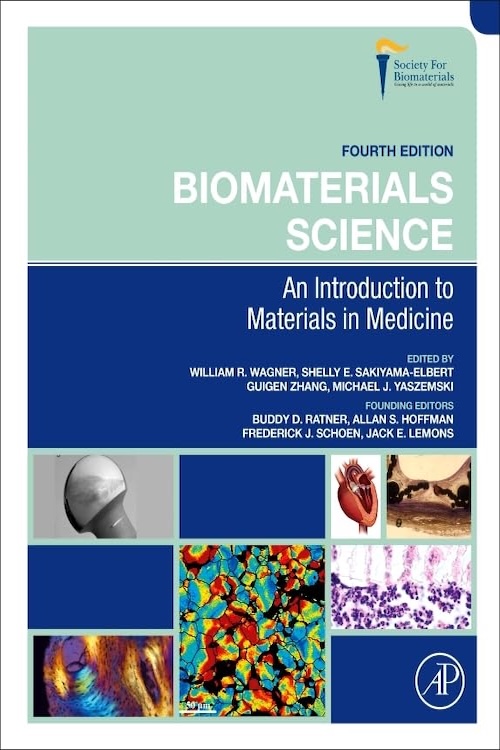
Ratner, B. D., Hoffman, A. S., Schoen, F. J., & Lemons, J. E. (Eds.). (2020). Biomaterials Science: An Introduction to Materials in Medicine (4th ed.). Elsevier.
Knowledge and Historical Background
Biomaterials Science: An Introduction to Materials in Medicine has been the definitive textbook for biomaterials education, providing comprehensive coverage of materials science principles applied to biological and medical applications. Written by leading biomaterials researchers, the book reflects decades of advancement in understanding material-biological interactions.
The textbook emerged from the recognition that biomaterials require unique considerations beyond traditional materials science, including biocompatibility, biodegradation, and complex interactions with living systems. It represents the evolution of biomaterials from simple replacement materials to sophisticated biological interfaces.
Teaching Philosophy
The textbook emphasizes that biomaterials science requires integration of materials science, biology, and engineering to develop materials that can function safely and effectively in biological environments. It teaches students to consider both material properties and biological responses in biomaterial design.
Core Concepts
Materials Fundamentals
Basic materials science principles including atomic structure, bonding, crystallography, and microstructure as they apply to biomaterials applications.
Mechanical Properties
Mechanical behavior of biomaterials including elastic properties, strength, fatigue, and fracture mechanics relevant to medical device applications.
Surface Properties
Surface science of biomaterials including surface energy, wettability, surface modification, and protein adsorption at material interfaces.
Biocompatibility
Understanding of biological responses to materials including inflammation, immune responses, toxicity, and long-term biocompatibility assessment.
Polymeric Biomaterials
Properties and applications of synthetic and natural polymers in medical applications, including degradable polymers and hydrogels.
Metallic Biomaterials
Metallic materials for medical applications including stainless steel, titanium alloys, and shape memory alloys for implants and devices.
Ceramic and Composite Biomaterials
Ceramic materials and composites for biomedical applications including bioactive ceramics, bone substitutes, and reinforced composites.
Tissue Engineering Materials
Materials design for tissue engineering applications including scaffolds, growth factor delivery, and cell-material interactions.
Medical Device Applications
Application of biomaterials in specific medical devices including cardiovascular devices, orthopedic implants, and drug delivery systems.
Testing and Characterization
Methods for testing and characterizing biomaterials including mechanical testing, surface analysis, and biological evaluation protocols.
Significance and Impact
Biomaterials Science: An Introduction to Materials in Medicine has shaped biomaterials education by providing systematic framework for understanding material-biological interactions. Its comprehensive approach has influenced biomaterials research and development worldwide.
The textbook's integration of materials science with biological considerations has helped establish biomaterials as a distinct field while preparing students for careers in medical device development and tissue engineering.
Conclusion
Biomaterials Science: An Introduction to Materials in Medicine provides essential foundation for understanding how materials can be designed and optimized for biological applications. Its comprehensive coverage prepares students for advanced study while developing the interdisciplinary knowledge required for biomaterials innovation.
The textbook's demonstration that materials science can be effectively applied to biological problems makes it invaluable for students pursuing biomaterials careers, showing how systematic understanding of material-biological interactions leads to safer and more effective medical devices and therapeutic approaches.