01 / Classic Textbook Recommendation
Classic Textbook Recommendation
Citation
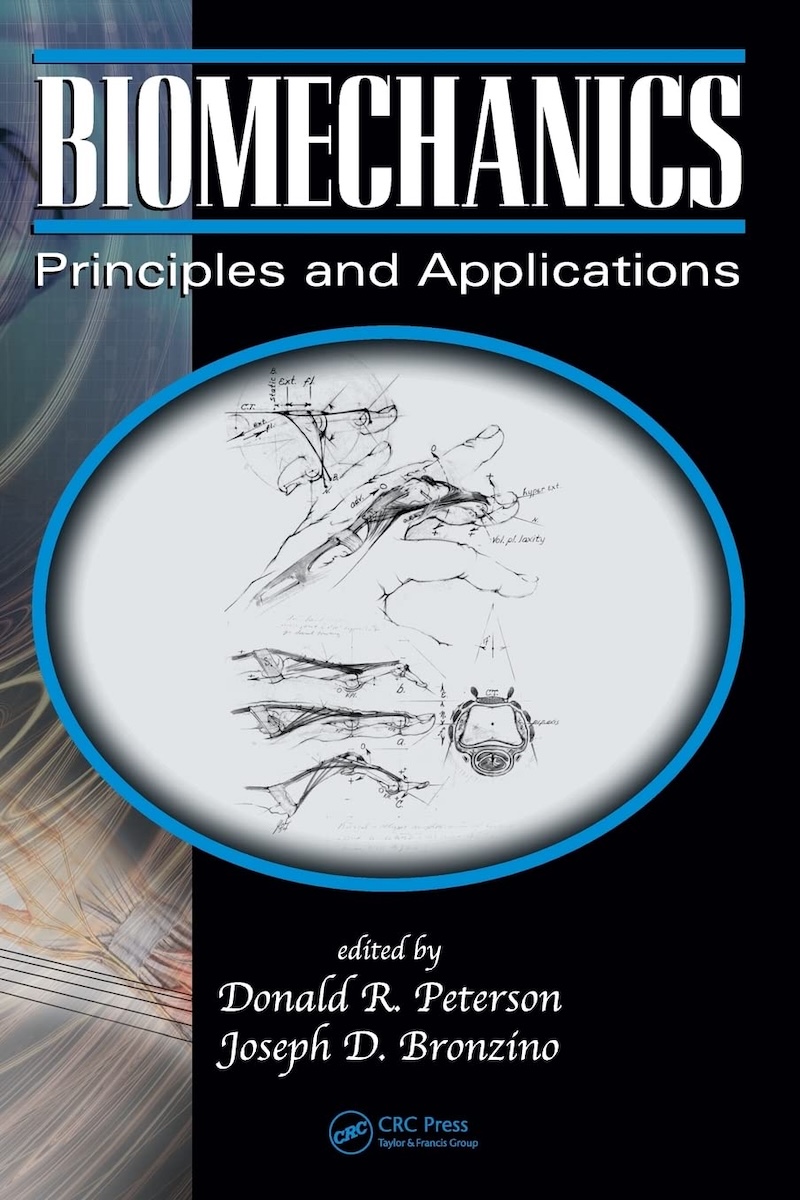
Peterson, D. R., Bronzino, J. D., & Balachandran, B. (2024). Biomechanics: Principles and Applications (3rd ed.). CRC Press.
Knowledge and Historical Background
Biomechanics: Principles and Applications provides comprehensive coverage of biomechanics as a fundamental discipline within biomedical engineering. Developed by leading biomechanics researchers and educators, the textbook reflects the evolution of biomechanics from basic mechanical analysis to sophisticated understanding of biological motion and tissue behavior.
The textbook emerged from recognition that understanding mechanical principles in biological systems is essential for developing medical devices, analyzing human performance, and treating musculoskeletal disorders. It represents the integration of classical mechanics with biological complexity.
Teaching Philosophy
The textbook emphasizes that biomechanics applies fundamental mechanical principles to understand and solve problems related to living systems. It teaches students to analyze biological structures and movements using engineering approaches while appreciating the unique characteristics of living tissues.
Core Concepts
Fundamentals of Mechanics
Classical mechanics principles including statics, dynamics, and mechanics of materials applied to biological systems and living tissues.
Tissue Mechanics
Mechanical properties of biological tissues including bone, cartilage, ligaments, tendons, and soft tissues under various loading conditions.
Musculoskeletal System
Analysis of the human musculoskeletal system including joint mechanics, muscle function, and movement coordination.
Cardiovascular Biomechanics
Mechanical analysis of the cardiovascular system including blood flow dynamics, vessel mechanics, and cardiac function.
Human Movement Analysis
Kinematic and kinetic analysis of human movement including gait analysis, sports biomechanics, and motor control.
Orthopedic Biomechanics
Application of biomechanics to orthopedic problems including joint replacement, fracture fixation, and bone remodeling.
Rehabilitation Engineering
Biomechanical principles applied to rehabilitation including assistive devices, prosthetics, and therapeutic interventions.
Injury Mechanics
Analysis of injury mechanisms including trauma biomechanics, safety engineering, and injury prevention strategies.
Computational Biomechanics
Numerical methods for biomechanical analysis including finite element modeling, multibody dynamics, and simulation techniques.
Experimental Methods
Biomechanical testing methods including force measurement, motion capture, and mechanical testing of biological materials.
Significance and Impact
Biomechanics: Principles and Applications has influenced biomechanics education by providing systematic approach to understanding mechanical principles in biological systems. Its comprehensive coverage has shaped curriculum development in biomedical engineering programs.
The textbook's integration of theoretical principles with practical applications has prepared students for careers in medical device development, sports medicine, and rehabilitation engineering.
Conclusion
Biomechanics: Principles and Applications provides essential foundation for understanding mechanical aspects of biological systems. Its systematic approach prepares students for advanced study while developing analytical skills required for biomechanics research and application.
The textbook's demonstration that mechanical engineering principles can provide valuable insights into biological function makes it invaluable for students pursuing biomechanics careers, showing how engineering analysis contributes to understanding human movement, designing medical devices, and improving healthcare outcomes.