01 / Classic Textbook Recommendation
Classic Textbook Recommendation
Citation
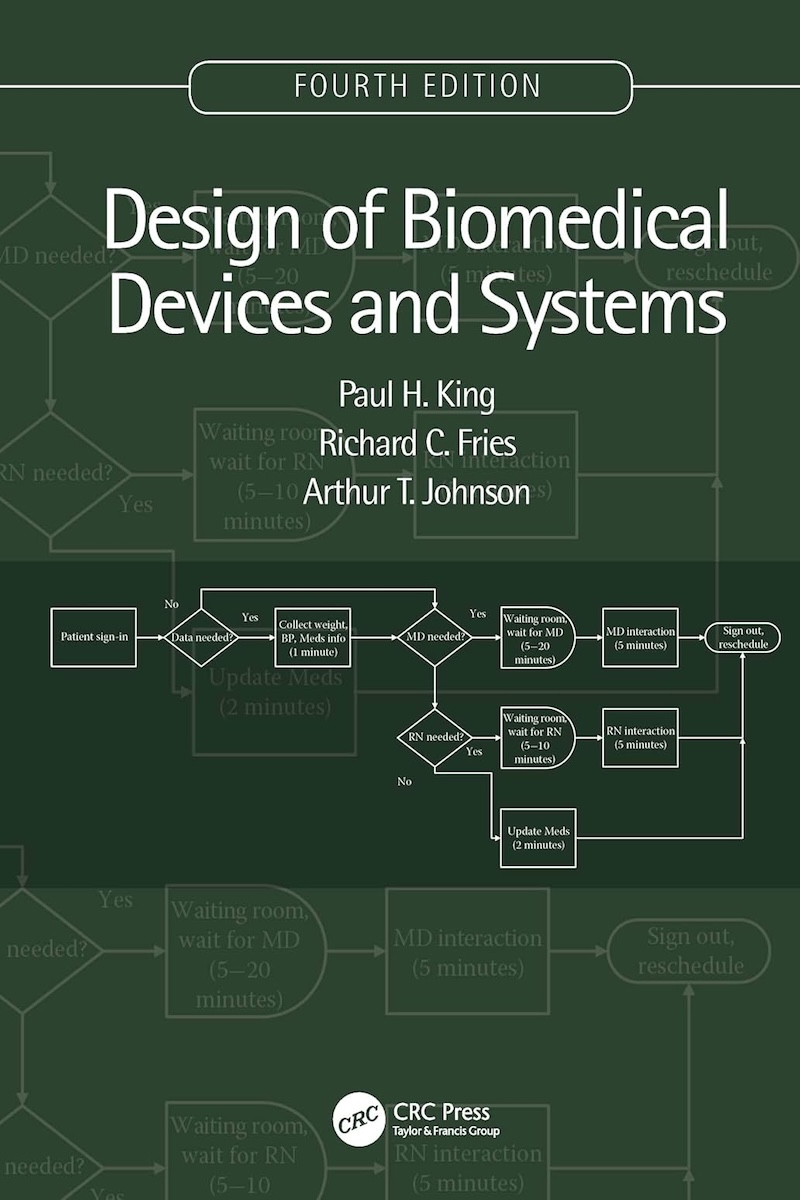
King, P. H., Fries, R. C., & Johnson, A. T. (2018). Design of Biomedical Devices and Systems (4th ed.). CRC Press.
Knowledge and Historical Background
Design of Biomedical Devices and Systems provides comprehensive coverage of the medical device development process from concept to market. Written by an experienced medical device engineer and regulatory expert, the textbook reflects decades of evolution in medical device development practices and regulatory requirements.
The textbook emerged from recognition that successful medical device development requires integration of engineering design principles with regulatory science, business considerations, and clinical needs. It represents the synthesis of technical excellence with practical implementation strategies.
Teaching Philosophy
The textbook emphasizes that medical device development is a systematic engineering process that must balance technical innovation with regulatory compliance, patient safety, and commercial viability. It teaches students to approach device development with comprehensive understanding of all stakeholder requirements.
Core Concepts
Design Process
Systematic approach to medical device design including needs assessment, concept development, detailed design, testing, and validation.
Regulatory Framework
Understanding of FDA regulations, international standards, and regulatory pathways for medical device approval and marketing.
Design Controls
Implementation of design controls as required by FDA Quality System Regulation including design planning, inputs, outputs, reviews, and verification.
Risk Management
Application of risk management principles to medical device development including hazard analysis, risk assessment, and risk mitigation strategies.
User-Centered Design
Human factors engineering approaches to medical device design ensuring usability, safety, and effectiveness in clinical environments.
Materials and Manufacturing
Selection of materials and manufacturing processes for medical devices considering biocompatibility, sterilization, and quality requirements.
Testing and Validation
Comprehensive testing strategies including bench testing, animal studies, and clinical trials to demonstrate device safety and effectiveness.
Quality Systems
Implementation of quality management systems for medical device development and manufacturing including ISO 13485 requirements.
Intellectual Property
Protection of medical device innovations through patents, trade secrets, and other intellectual property strategies.
Commercialization
Business aspects of medical device development including market analysis, reimbursement considerations, and launch strategies.
Significance and Impact
Design of Biomedical Devices and Systems has influenced medical device education by providing practical framework for understanding the complex process of bringing medical devices to market. Its comprehensive approach has shaped biomedical engineering curriculum development.
The textbook's integration of technical and regulatory considerations has prepared students for careers in medical device industry while promoting innovation within regulatory constraints.
Conclusion
Design of Biomedical Devices and Systems provides essential knowledge for successful medical device development. Its comprehensive coverage prepares students for advanced study while developing practical skills required for medical device engineering careers.
The textbook's demonstration that successful innovation requires understanding of both technical and regulatory aspects makes it invaluable for students pursuing medical device careers, showing how systematic design processes lead to safe, effective, and commercially successful medical technologies.