01 / Classic Textbook Recommendation
Classic Textbook Recommendation
Citation
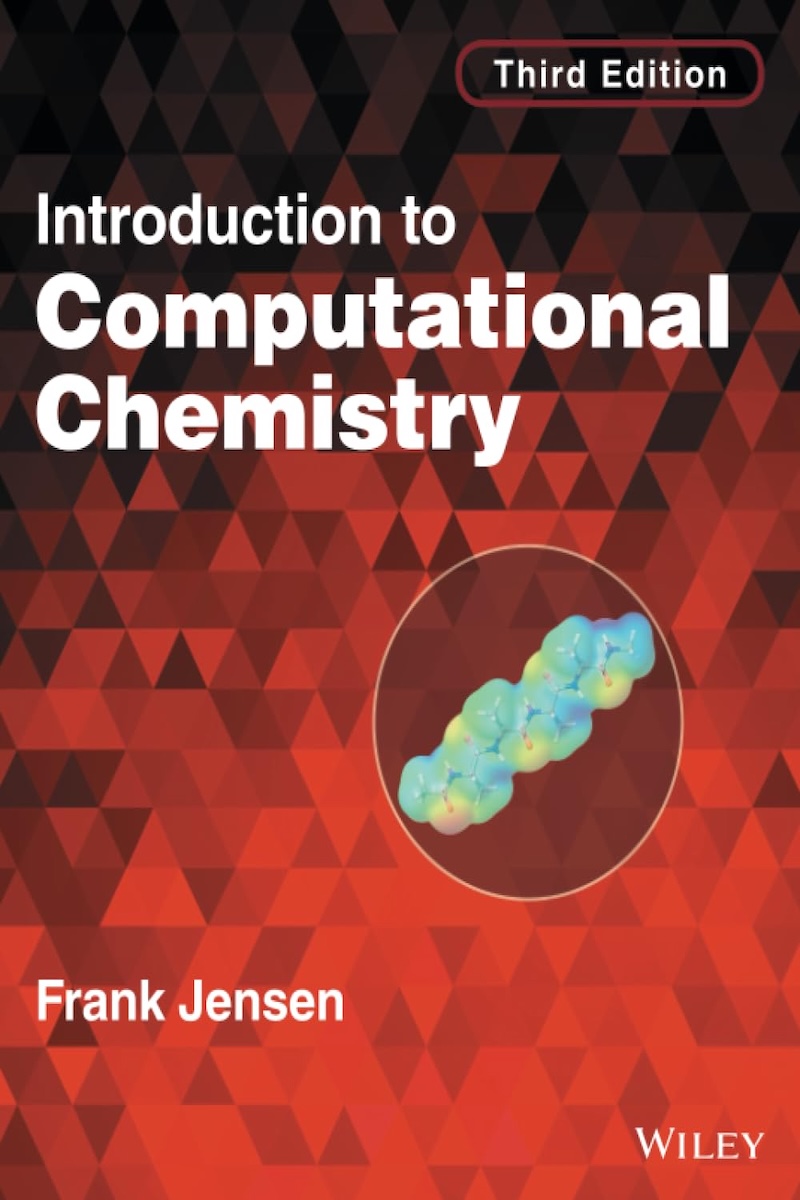
Jensen, F. (2017). Introduction to Computational Chemistry (3rd ed.). John Wiley & Sons.
Knowledge and Historical Background
"Introduction to Computational Chemistry" by Frank Jensen has been a leading textbook in the field since its first publication in the 1990s. Jensen, a professor at Aarhus University, developed this text to provide chemists with a practical introduction to computational methods that were becoming increasingly important in chemical research.
The book emerged during the computational revolution in chemistry, when advances in computer technology and quantum mechanical methods made computational chemistry accessible to experimental chemists. Each edition has incorporated new developments in algorithms, software, and computational methodologies.
Teaching Philosophy
The textbook emphasizes practical understanding of computational methods rather than mathematical derivations. It focuses on helping chemists understand what computational methods can and cannot do, how to choose appropriate methods for specific problems, and how to interpret computational results critically.
Core Concepts
Quantum Mechanical Methods
Introduction to ab initio methods, density functional theory (DFT), and semi-empirical methods for calculating molecular properties and reaction energetics.
Basis Sets and Computational Accuracy
Understanding basis set limitations, convergence criteria, and factors affecting the accuracy of quantum chemical calculations.
Molecular Mechanics
Force field methods for modeling large molecules and biological systems, including parametrization and validation of force fields.
Molecular Dynamics Simulations
Principles of molecular dynamics, integration algorithms, and applications to studying molecular motion and thermodynamic properties.
Monte Carlo Methods
Statistical sampling techniques for exploring configurational space and calculating thermodynamic properties of chemical systems.
Geometry Optimization
Methods for finding equilibrium structures, transition states, and reaction pathways on potential energy surfaces.
Property Calculations
Computing spectroscopic properties, thermodynamic quantities, and kinetic parameters from first principles.
Software and Practical Applications
Overview of computational chemistry software packages and practical considerations for running calculations efficiently.
Significance and Impact
"Introduction to Computational Chemistry" has played a crucial role in making computational methods accessible to experimental chemists. The book's practical approach has helped bridge the gap between theoretical computational chemistry and its application to real chemical problems.
Jensen's emphasis on understanding the limitations and appropriate applications of different methods has influenced how computational chemistry is taught and practiced. The textbook has contributed to the widespread adoption of computational methods in chemical research and education.
Conclusion
This textbook remains an essential resource for chemists seeking to incorporate computational methods into their research. Its practical approach and comprehensive coverage make it valuable for both beginners and experienced practitioners in computational chemistry.
The book's focus on understanding rather than deriving computational methods makes complex topics accessible while maintaining the rigor necessary for effective application. For chemists working at the interface of theory and experiment, this text provides the knowledge and critical thinking skills necessary for successful computational research.