01 / Classic Textbook Recommendation
Classic Textbook Recommendation
Citation
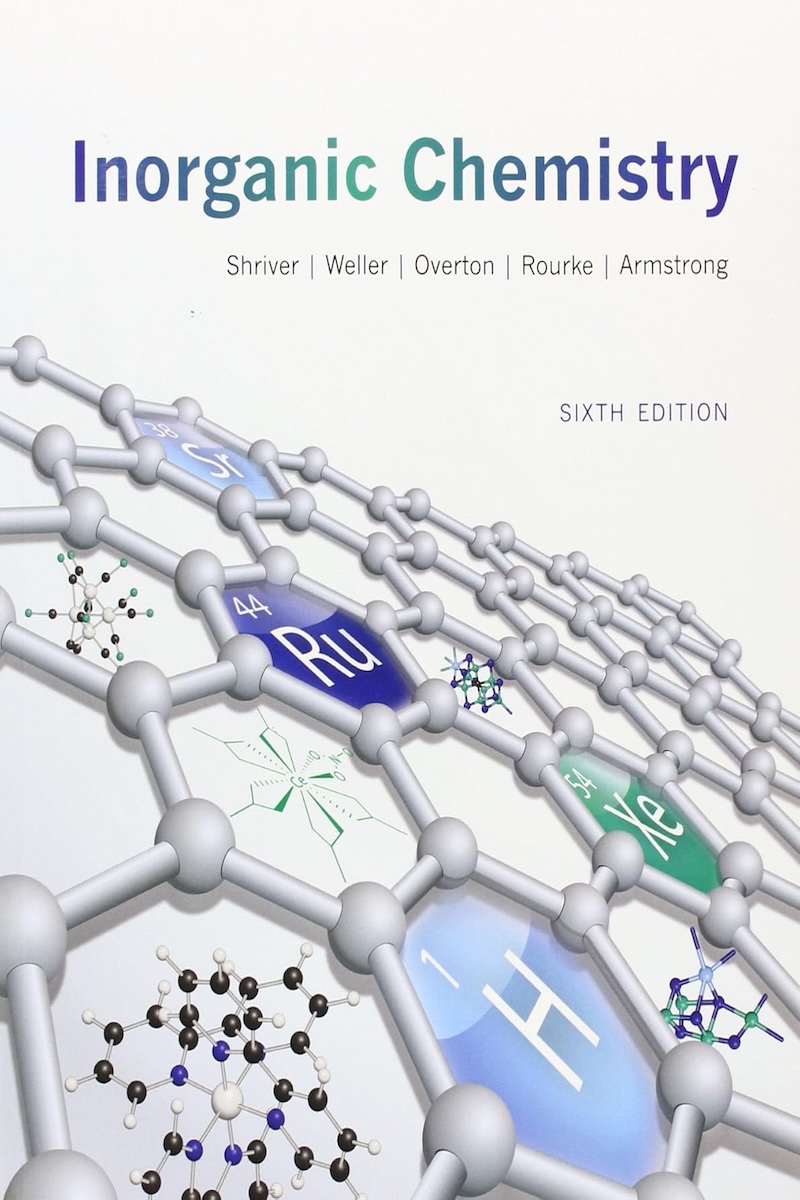
Shriver, D., Weller, M., Overton, T., Rourke, J., & Armstrong, F. (2014). Inorganic Chemistry (6th ed.). W. H. Freeman and Company.
Knowledge and Historical Background
"Inorganic Chemistry" by Shriver, Weller, Overton, Rourke, and Armstrong has been a leading textbook in the field, representing the collaborative effort of distinguished inorganic chemists from leading universities. The text was developed to provide comprehensive coverage of inorganic chemistry principles while incorporating modern developments in materials science, catalysis, and bioinorganic chemistry.
The book reflects the transformation of inorganic chemistry from a descriptive science to a theoretical and mechanistic discipline. Each edition has incorporated advances in characterization techniques, computational chemistry, and applications in technology and medicine.
Teaching Philosophy
The textbook emphasizes the connection between fundamental principles and practical applications, showing how inorganic chemistry underlies many technological advances. It combines descriptive chemistry with theoretical understanding, helping students appreciate both the diversity and unity of inorganic compounds.
Core Concepts
Atomic Structure and Periodicity
Electronic structure of atoms and ions, periodic trends, and their relationship to chemical properties and bonding patterns.
Molecular Structure and Bonding
Valence bond theory, molecular orbital theory, and their applications to understanding bonding in main group and transition metal compounds.
Coordination Chemistry
Structure, bonding, and properties of coordination compounds, including crystal field theory and ligand field theory.
Main Group Chemistry
Systematic study of the elements and their compounds, organized by periodic groups and emphasizing trends and anomalies.
Transition Metal Chemistry
Electronic structure, spectroscopic properties, and reactivity patterns of transition metal complexes and their applications.
Organometallic Chemistry
Metal-carbon bonding, catalytic cycles, and applications in organic synthesis and industrial processes.
Solid State Chemistry
Crystal structures, defects, electronic properties, and applications of inorganic solids in technology.
Bioinorganic Chemistry
Role of metals in biological systems, including metalloproteins, enzyme catalysis, and medicinal applications.
Significance and Impact
"Inorganic Chemistry" has influenced how the subject is taught by demonstrating the connections between fundamental principles and modern applications. The textbook's comprehensive approach has made it valuable for students pursuing careers in chemistry, materials science, and related fields.
The book's integration of descriptive chemistry with theoretical principles has helped establish standards for inorganic chemistry education. Its emphasis on applications in catalysis, materials, and biology reflects the increasing importance of inorganic chemistry in addressing technological and societal challenges.
Conclusion
This textbook continues to serve as a cornerstone of inorganic chemistry education, providing students with both the conceptual framework and practical knowledge necessary for advanced study and research. Its comprehensive coverage and clear organization make it valuable for understanding the vast diversity of inorganic compounds and their applications.
The collaborative expertise of its authors ensures that multiple perspectives and current research directions are represented, making the text relevant for contemporary inorganic chemistry. For students seeking to master this central area of chemistry, this book provides the foundation necessary for success in research, industry, and academia.