01 / Classic Textbook Recommendation
Classic Textbook Recommendation
Citation
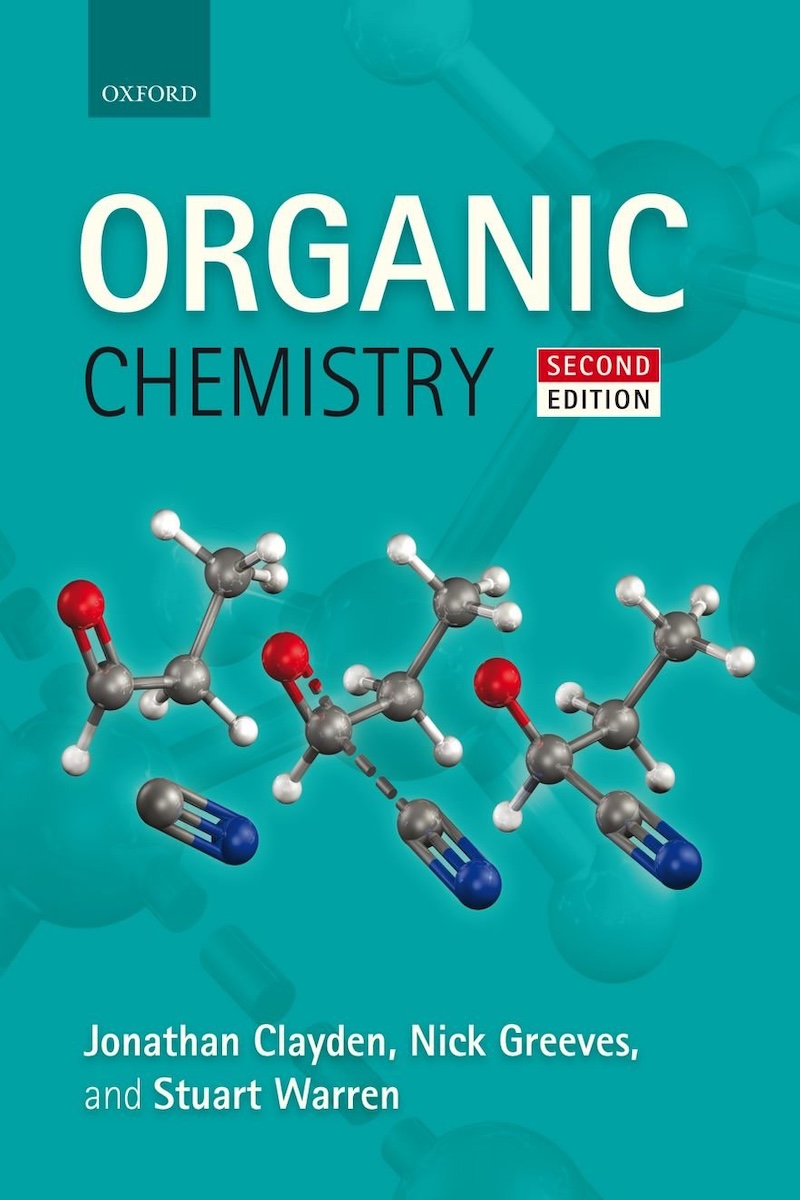
Clayden, J., Greeves, N., Warren, S., & Wothers, P. (2012). Organic Chemistry (2nd ed.). Oxford University Press.
Knowledge and Historical Background
"Organic Chemistry" by Clayden, Greeves, Warren, and Wothers represents a modern approach to teaching organic chemistry that emerged in the early 2000s. The authors, all experienced educators from Cambridge and Oxford universities, sought to create a textbook that emphasized understanding mechanisms and principles rather than rote memorization of reactions.
The book was developed in response to the need for a comprehensive yet accessible organic chemistry text that could serve both undergraduate and graduate students. It has become widely adopted in universities worldwide for its innovative pedagogical approach and comprehensive coverage of contemporary organic chemistry.
Teaching Philosophy
The textbook is built on the principle that organic chemistry is best understood through mechanisms and logical reasoning. It emphasizes the "why" behind reactions rather than just the "what," encouraging students to develop problem-solving skills and chemical intuition that will serve them throughout their careers.
Core Concepts
Structure and Bonding
Fundamental principles of molecular structure, including hybridization, resonance, and the relationship between structure and reactivity.
Stereochemistry
Three-dimensional aspects of molecular structure, including chirality, conformational analysis, and stereochemical outcomes of reactions.
Reaction Mechanisms
Systematic study of how organic reactions occur, including nucleophilic substitution, elimination reactions, and addition reactions.
Functional Group Chemistry
Comprehensive coverage of major functional groups, their properties, and characteristic reactions, organized by mechanistic similarity.
Aromatic Chemistry
Electrophilic aromatic substitution, nucleophilic aromatic substitution, and the unique properties of aromatic systems.
Carbonyl Chemistry
Aldehydes, ketones, carboxylic acids, and derivatives, including enolate chemistry and condensation reactions.
Synthesis and Retrosynthesis
Strategic approaches to organic synthesis, including retrosynthetic analysis and the planning of multi-step synthetic routes.
Spectroscopic Methods
NMR, IR, and mass spectrometry as tools for structure determination and reaction monitoring.
Significance and Impact
"Organic Chemistry" by Clayden has revolutionized organic chemistry education through its emphasis on mechanistic understanding and logical problem-solving. The book's approach has influenced how organic chemistry is taught globally, moving away from memorization toward conceptual understanding.
The textbook's clear explanations and innovative organization have made complex topics accessible to students while maintaining the rigor necessary for advanced study. Its influence extends beyond undergraduate education, serving as a valuable reference for graduate students and practicing chemists.
Conclusion
This textbook stands as a modern classic in organic chemistry education, successfully balancing comprehensive coverage with pedagogical innovation. Its emphasis on understanding principles and mechanisms has helped countless students develop the skills necessary for success in organic chemistry and related fields.
The collaborative expertise of its authors ensures that multiple perspectives and teaching approaches are represented, making the text valuable for diverse learning styles and educational contexts. For students seeking to master organic chemistry, this book provides both the theoretical foundation and practical problem-solving skills essential for advanced study and research in chemistry and related disciplines.