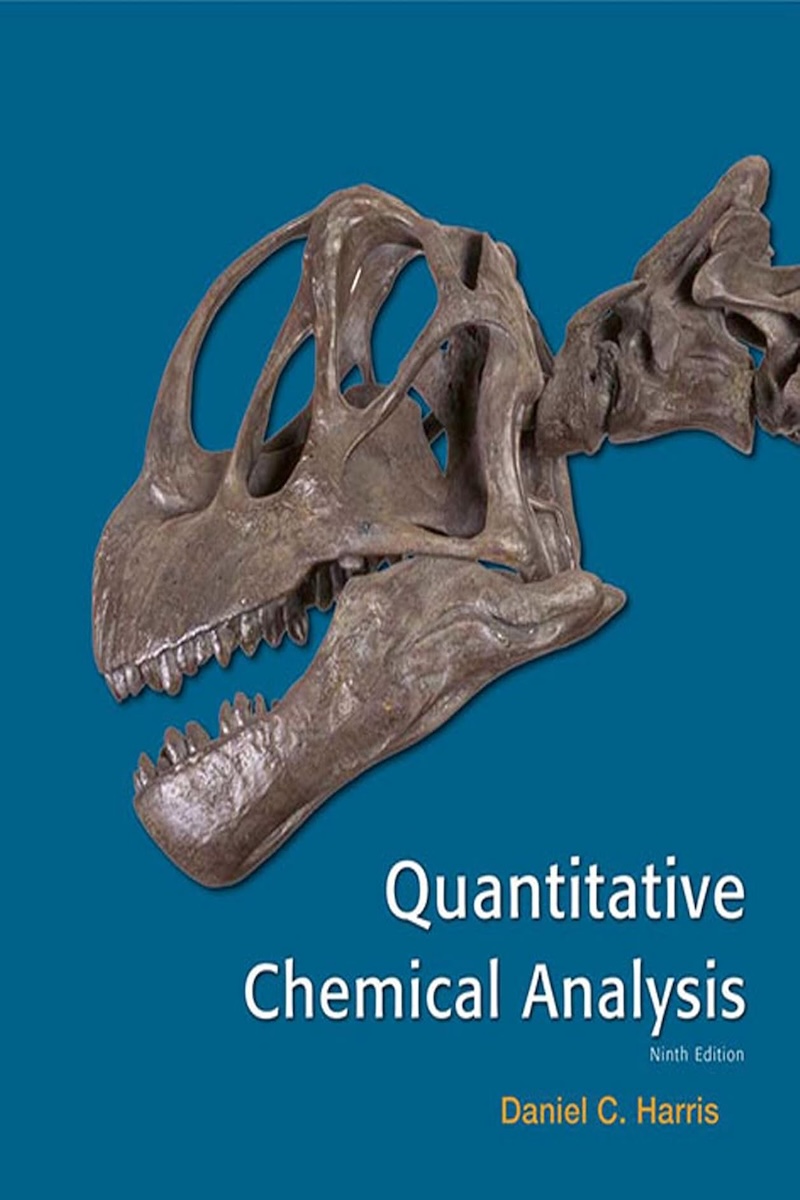
01 / Classic Textbook Recommendation
Classic Textbook Recommendation
Citation
Harris, D. C. (2019). Quantitative Chemical Analysis (10th ed.). W. H. Freeman and Company.
Knowledge and Historical Background
"Quantitative Chemical Analysis" by Daniel Harris has been the leading analytical chemistry textbook since its first publication in the 1980s. Harris, a professor at the University of California, Davis, developed this text to address the need for a comprehensive resource that combines theoretical principles with practical laboratory techniques.
The book emerged during a period when analytical chemistry was transitioning from classical wet chemistry methods to modern instrumental techniques. Each edition has incorporated advances in instrumentation, computational methods, and quality assurance protocols that reflect the evolving landscape of analytical chemistry.
Teaching Philosophy
The textbook emphasizes that analytical chemistry is both an art and a science, requiring not only technical knowledge but also critical thinking about data quality, method validation, and the meaning of analytical results. It stresses the importance of understanding uncertainty and statistical analysis in making reliable measurements.
Core Concepts
Statistics and Data Analysis
Comprehensive treatment of statistical methods for analytical chemistry, including error analysis, confidence intervals, hypothesis testing, and method comparison.
Chemical Equilibrium
Acid-base, complexation, precipitation, and redox equilibria as the foundation for understanding analytical separations and determinations.
Gravimetric and Volumetric Analysis
Classical analytical methods including precipitation gravimetry, acid-base titrations, complexometric titrations, and redox titrations.
Spectroscopic Methods
UV-visible, atomic absorption, atomic emission, and molecular fluorescence spectroscopy for qualitative and quantitative analysis.
Chromatographic Separations
Gas chromatography, liquid chromatography, and electrophoresis as powerful separation and analysis techniques.
Electroanalytical Chemistry
Potentiometry, voltammetry, and coulometry for the determination of analyte concentrations and properties.
Mass Spectrometry
Principles and applications of mass spectrometry for molecular identification and quantification.
Quality Assurance
Method validation, quality control, and good laboratory practices essential for reliable analytical results.
Significance and Impact
"Quantitative Chemical Analysis" has shaped analytical chemistry education worldwide by emphasizing both theoretical understanding and practical skills. The textbook's integration of statistical methods with analytical techniques has influenced how uncertainty and data quality are taught in chemistry programs.
Harris's approach to connecting fundamental principles with real-world applications has made analytical chemistry more accessible to students while maintaining the rigor necessary for professional practice. The book serves as both a learning tool and a professional reference for practicing analytical chemists.
Conclusion
This textbook remains the definitive resource for analytical chemistry education, successfully combining theoretical depth with practical relevance. Its comprehensive coverage of both classical and modern analytical methods makes it invaluable for students and professionals in chemistry, environmental science, and related fields.
The book's emphasis on statistical analysis and quality assurance reflects the critical importance of these concepts in modern analytical practice. For students seeking to master quantitative analysis, this text provides the knowledge and skills necessary for success in research, industry, and regulatory environments where accurate and precise chemical measurements are essential.