01 / Classic Textbook Recommendation
Classic Textbook Recommendation
Citation
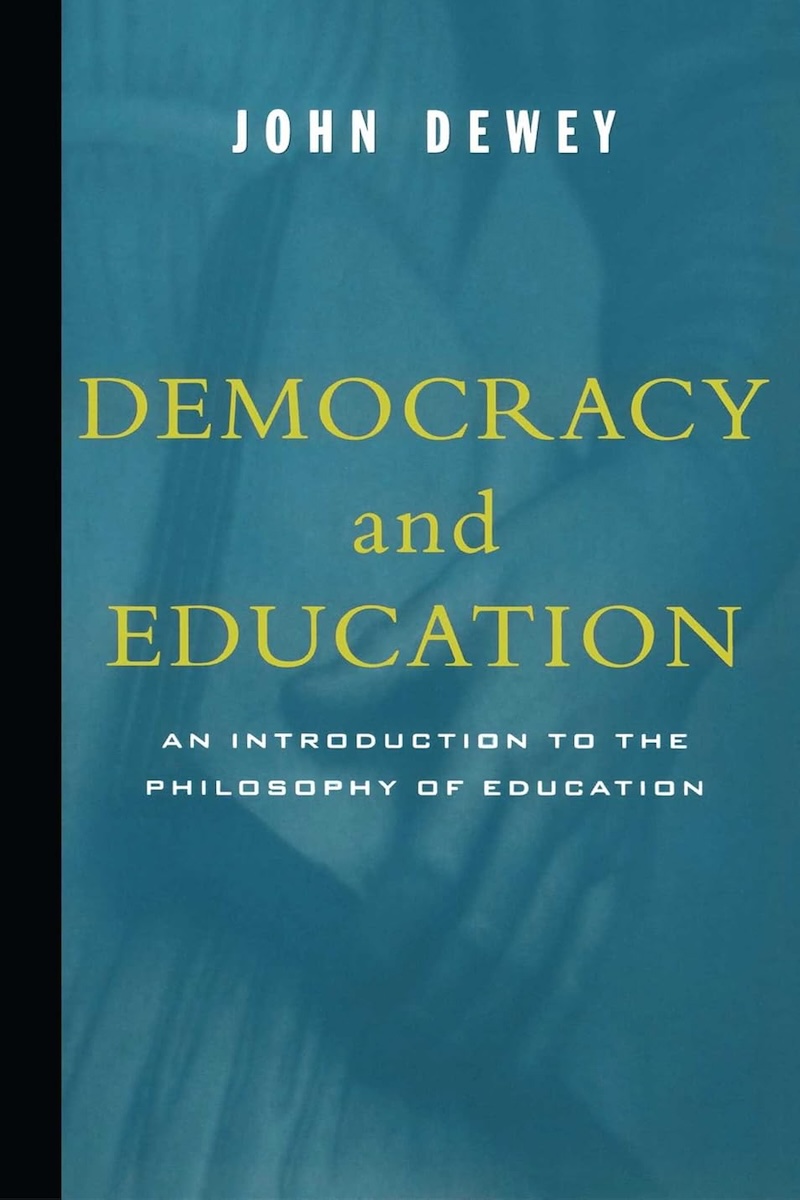
Dewey, J. (2025). Democracy and Education: An Introduction to the Philosophy of Education (New ed.). Columbia University Press.
Intellectual & Historical Context
Published originally in 1916, Democracy and Education emerged during a period of significant social transformation in America. The Progressive Era brought rapid industrialization, urbanization, and immigration, challenging traditional educational models. Dewey wrote this work during his tenure at Teachers College, Columbia University, where he was developing his educational philosophy and observing innovative teaching practices.
The book represents a synthesis of Dewey's pragmatist philosophy and his democratic ideals, responding to both the authoritarianism of traditional education and the individualism that failed to address social needs. Written during World War I, it reflects concerns about preparing citizens for democratic participation while maintaining individual freedom and growth.
Dewey's work builds upon earlier educational reformers like Johann Pestalozzi and Friedrich Froebel while anticipating modern educational theories about experiential learning, student-centered pedagogy, and the social purposes of education.
Thesis Statement
Dewey argues that education and democracy are fundamentally interconnected: democratic society requires educated citizens capable of intelligent action, while genuine education can only flourish in a democratic environment that respects individual growth and social cooperation. Education should be understood as "growth" rather than preparation for a fixed future, emphasizing experience, inquiry, and active participation.
Key Concepts
Education as Growth
Dewey rejects the notion that education is preparation for adult life, arguing instead that education is life itself. Growth is the fundamental characteristic of life, and education should foster continued capacity for growth rather than imposing predetermined ends.
Experience and Experiential Learning
Learning occurs through interaction with the environment. Meaningful education must engage students' experiences, allowing them to test ideas through action and reflection. Abstract knowledge divorced from experience lacks educational value.
Democracy as a Way of Life
Democracy is not merely a political system but a way of associated living characterized by shared interests, free communication, and mutual respect. Democratic education fosters these qualities in students.
Inquiry and Scientific Method
Education should teach students to think scientifically—to observe, hypothesize, test, and revise their understanding. This method applies not only to natural sciences but to all areas of human experience.
Social Function of Education
Education serves social purposes by transmitting culture while also promoting social progress through critical thinking and innovation. Schools should reflect democratic principles while preparing students to improve society.
Individual and Social Balance
Education must balance individual development with social responsibility. True individualism emerges through social cooperation, while healthy society depends on the unique contributions of developed individuals.
Occupational Education
Dewey advocates for education that connects learning to meaningful work, not as narrow vocational training but as understanding the social significance and intellectual content of occupations.
Chapter Summaries
Chapter 1: Education as a Necessity of Life
Dewey establishes education as essential for human survival and development. Unlike other animals, humans must transmit their accumulated knowledge and culture to each generation. Education serves the biological function of renewal and growth.
Chapter 2: Education as a Social Function
Education is fundamentally social, occurring through communication and shared experience. The social environment shapes individual development, making the quality of that environment crucial for educational outcomes.
Chapter 3: Education as Direction
Education involves guiding growth rather than imposing external control. Direction comes from understanding natural tendencies and providing appropriate conditions for development rather than coercion.
Chapter 4: Education as Growth
Growth is the fundamental characteristic of life and the proper aim of education. Growth has no fixed end point but involves continued capacity for development and adaptation to new situations.
Chapter 5: Preparation, Unfolding, and Formal Discipline
Dewey critiques three traditional theories of education: preparation for adult life, natural unfolding of innate capacities, and formal discipline through mental training. He argues for education focused on present experience and growth.
Chapter 6: Conservative and Progressive Education
Education necessarily involves both conservation of valuable traditions and progress through critical reconstruction. The challenge is balancing these functions appropriately.
Chapter 7: The Democratic Conception in Education
Democratic education is characterized by numerous and varied shared interests, free interaction between social groups, and regard for mutual interests as factors in social control.
Chapter 8: Aims in Education
Educational aims should emerge from actual conditions and guide present activity rather than impose external goals. Aims should be flexible, suggest methods, and be based on understanding of students and society.
Chapter 9: Natural Development and Social Efficiency as Aims
Dewey examines and critiques two popular educational aims: natural development (which ignores social context) and social efficiency (which subordinates individual growth to social utility).
Chapter 10: Interest and Discipline
Interest and discipline are not opposing forces but complementary aspects of engaged learning. True discipline emerges from pursuing genuine interests through sustained effort.
Chapter 11: Experience and Thinking
Thinking arises from problematic situations requiring inquiry. Education should engage students in genuine problems that require reflection and investigation rather than mere memorization.
Chapter 12: Thinking in Education
The development of reflective thinking is central to education. This involves learning to define problems, generate hypotheses, test ideas through observation and experimentation, and draw warranted conclusions.
Chapter 13: Method of Nature and Method of Education
Educational method should be based on understanding how learning naturally occurs rather than imposing artificial procedures. The scientific method provides a model for educational practice.
Chapter 14: The Nature of Subject Matter
Subject matter should be understood as the content of experience rather than fixed bodies of information. Knowledge is the outcome of inquiry, not its starting point.
Chapter 15: Play and Work in the Curriculum
Play and work are valuable educational activities when they engage students' interests and contribute to growth. Both should be meaningful and connected to larger educational purposes.
Chapter 16: The Significance of Geography and History
Geography and history help students understand their physical and social environment. These subjects should illuminate present experience rather than require memorization of isolated facts.
Chapter 17: Science in the Course of Study
Science education should emphasize scientific method and thinking rather than accumulation of scientific facts. Students should learn to observe, hypothesize, and test ideas.
Chapter 18: Educational Values
Educational values emerge from the consequences of educational activities for student growth and social progress. Values cannot be imposed externally but must be discovered through experience.
Chapter 19: Labor and Leisure
Dewey challenges the traditional division between liberal and vocational education, arguing that all valuable education should connect intellectual development with practical activity.
Chapter 20: Intellectual and Practical Studies
The opposition between intellectual and practical studies is false. Genuine intellectual activity involves practical engagement, while meaningful practical work requires intelligent reflection.
Chapter 21: Physical and Social Studies
The natural and social sciences should be taught in relation to each other and to students' experience. Both help students understand and participate effectively in their environment.
Chapter 22: The Individual and the World
Education should help students understand their relationship to the broader world while developing their unique capacities. Individual development and social participation are mutually supportive.
Chapter 23: Vocational Aspects of Education
Vocational education should reveal the social connections and intellectual content of occupations rather than provide narrow job training. All education should be vocational in connecting learning to meaningful activity.
Chapter 24: Philosophy of Education
Educational philosophy involves examining and coordinating educational practices with broader understanding of human nature and social purposes. It should guide educational practice while remaining open to revision.
Chapter 25: Theories of Knowledge and Morals
Dewey critiques dualistic philosophies that separate knowledge from action, individual from society, and thought from emotion. Educational practice should be based on more integrated understanding of human experience.
Chapter 26: Theories of Morals
Moral education occurs through participation in social activities that require consideration of others' interests and cooperation toward shared goals. Character develops through practice rather than instruction about moral rules.
Critical Analysis
Philosophical Contributions
Dewey's work represents a revolutionary synthesis of pragmatist philosophy and democratic theory applied to education. His rejection of traditional dualisms (mind/body, individual/society, theory/practice) provides a more integrated understanding of learning and development.
Educational Innovation
The book laid theoretical groundwork for progressive education movement, influencing practices such as project-based learning, collaborative education, and student-centered pedagogy. Its emphasis on experience and inquiry anticipated modern constructivist learning theories.
Democratic Theory
Dewey's conception of democracy as a way of life rather than merely a political system has influenced democratic theory and practice. His insights about the relationship between education and democratic citizenship remain highly relevant.
Contemporary Relevance
In an era of educational standardization and testing, Dewey's emphasis on growth, experience, and democratic participation offers alternative vision for educational reform. His ideas about connecting learning to meaningful activity speak to current concerns about student engagement.
Limitations and Criticisms
Critics argue that Dewey's optimism about human nature and social progress may be naive. Some question whether his methods can be effectively implemented in diverse social contexts or whether they adequately address issues of educational equity and cultural difference.
Real-World Applications
Progressive Schools
Many progressive schools implement Dewey's principles through project-based learning, democratic governance, and integration of academic and practical activities. Examples include laboratory schools, democratic schools, and experiential education programs.
Teacher Education
Teacher preparation programs incorporate Dewey's ideas about reflective practice, experiential learning, and the social purposes of education. His influence appears in emphasis on classroom inquiry and action research.
Educational Policy
Dewey's ideas influence educational policies promoting student engagement, authentic assessment, and school-community connections. His work supports arguments for more holistic approaches to educational accountability.
Democratic Education Movements
Contemporary movements for participatory democracy in education draw upon Dewey's insights about the relationship between educational practice and democratic citizenship.
Significance & Impact
Democracy and Education is considered one of the most influential educational texts of the 20th century. It provided theoretical foundation for progressive education movement and continues to influence educational theory and practice worldwide.
The book's impact extends beyond education to political theory, psychology, and social philosophy. Dewey's integrated approach to individual development and social responsibility has influenced diverse fields from organizational management to community development.
Modern educational movements emphasizing critical thinking, experiential learning, and democratic participation trace their theoretical roots to Dewey's work. His insights about the relationship between education and democracy remain central to debates about educational purpose and practice.
Key Quotes
Education is not preparation for life; education is life itself.
This quote encapsulates Dewey's rejection of education as mere preparation for future adult roles, emphasizing instead the immediate value and meaning of educational experience.
The school must represent present life—life as real and vital to the child as that which he carries on in the home, in the neighborhood, or on the playground.
Here Dewey argues for connecting formal education to students' lived experience rather than treating school as separate from "real" life.
A democracy is more than a form of government; it is primarily a mode of associated living, of conjoint communicated experience.
This passage reveals Dewey's understanding of democracy as a comprehensive way of life that should permeate all social institutions, including schools.
Conclusion
Democracy and Education remains a foundational text for understanding the relationship between educational practice and democratic society. Dewey's vision of education as growth through experience continues to offer compelling alternative to mechanistic approaches that reduce learning to information transmission and testing.
The book's enduring relevance lies in its integration of individual development and social responsibility, its emphasis on learning through inquiry and action, and its understanding of education as essential to democratic life. As educational systems worldwide grapple with questions of purpose, method, and social responsibility, Dewey's insights provide both theoretical framework and practical guidance.
Through its comprehensive examination of educational philosophy and practice, Democracy and Education demonstrates that effective education must be grounded in understanding of human growth, social cooperation, and democratic values. This approach to education as both personal development and civic preparation offers a vision of schooling that serves both individual fulfillment and social progress.