01 / Classic Textbook Recommendation
Classic Textbook Recommendation
Citation
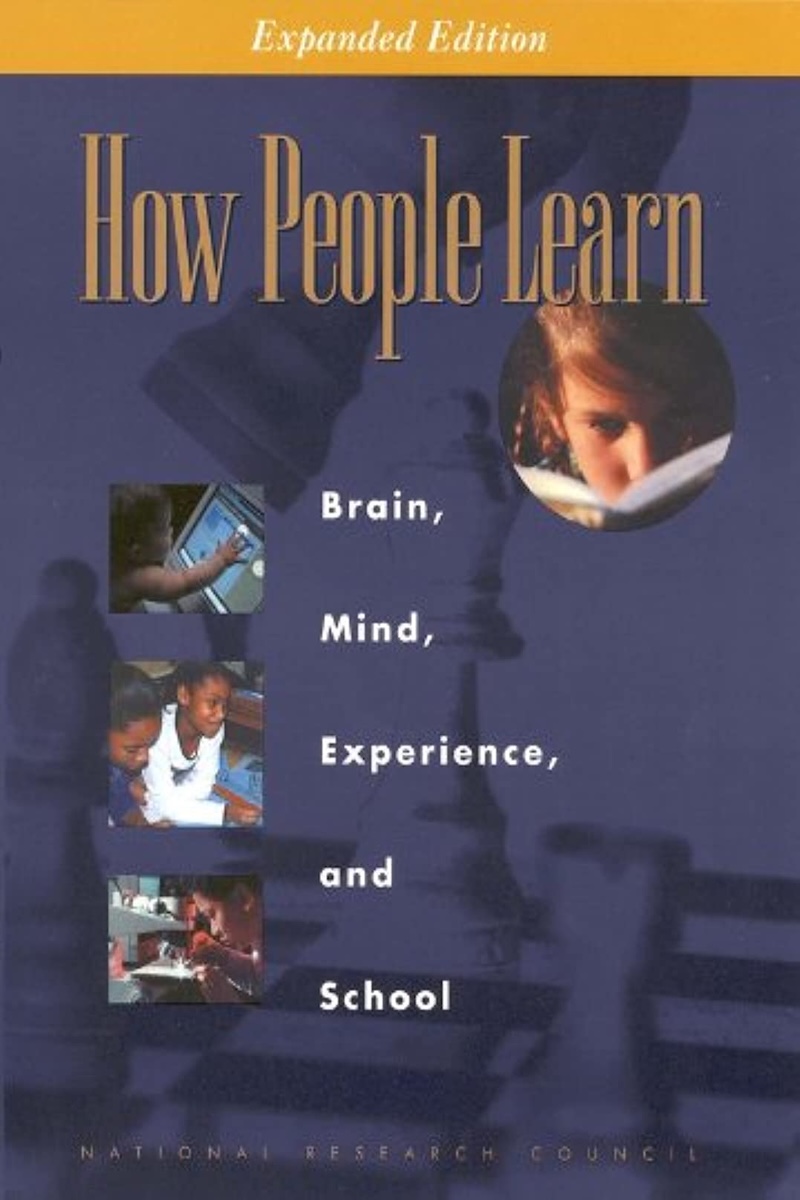
National Research Council. (2000). How People Learn: Brain, Mind, Experience, and School: Expanded Edition. The National Academies Press.
Intellectual & Historical Context
How People Learn represents a landmark synthesis of research from multiple disciplines, commissioned by the National Research Council to bridge the gap between scientific understanding of learning and educational practice. Published at the turn of the 21st century, the book emerged during a period of significant advances in cognitive science, neuroscience, and educational research.
The work was developed by a committee of leading researchers from psychology, neuroscience, education, and related fields who sought to translate scientific findings into practical recommendations for educators and policymakers. It represents a collaborative effort to create evidence-based approaches to education reform.
Thesis Statement
The National Research Council argues that advances in the sciences of learning provide unprecedented insights into how people learn and remember, and that these findings have profound implications for educational practice. Effective learning environments should be learner-centered, knowledge-centered, assessment-centered, and community-centered.
Key Concepts
Learner-Centered Environments
Educational settings that pay careful attention to the knowledge, skills, attitudes, and beliefs that learners bring to the educational setting, building on students' strengths while addressing their needs.
Knowledge-Centered Environments
Learning environments that focus on what is taught (information, subject matter), why it is taught (understanding), and what competence or mastery looks like, emphasizing deep understanding rather than superficial coverage.
Assessment-Centered Environments
Settings that provide opportunities for feedback and revision, helping students understand how they are doing relative to learning goals and what they need to do to improve.
Community-Centered Environments
Learning environments that promote a culture of learning in which students feel safe to share their thoughts, admit confusion, and learn from mistakes while connecting classroom learning to broader communities.
Expert vs. Novice Knowledge
Experts organize knowledge around core concepts and principles, have fluent retrieval of relevant knowledge, and can transfer learning to new situations, while novices lack these sophisticated knowledge structures.
Transfer of Learning
The ability to apply knowledge and skills learned in one context to new and different situations, which requires deep understanding of underlying principles rather than rote memorization.
Metacognition
Knowledge about one's own thinking processes and the ability to monitor and regulate one's learning, which is essential for effective learning and transfer.
Chapter Summaries
Chapter 1: Learning: From Speculation to Science
This chapter reviews the evolution of learning theory from philosophical speculation to empirical science, highlighting key discoveries from cognitive psychology and neuroscience that inform our understanding of how people learn.
Chapter 2: How Experts Differ from Novices
The chapter examines research on expertise, analyzing how experts organize knowledge differently from novices and what this means for instruction and curriculum design.
Chapter 3: Learning and Transfer
This chapter explores the challenge of transfer—helping students apply what they learn to new situations—and identifies conditions that promote successful transfer of learning.
Chapter 4: How Children Learn
The chapter reviews research on child development and learning, examining how children's thinking develops and what this means for educational practice at different developmental stages.
Chapter 5: Mind and Brain
This chapter synthesizes findings from neuroscience research, exploring how the brain learns and what brain research can and cannot tell us about education.
Chapter 6: The Design of Learning Environments
The chapter presents the framework of learner-centered, knowledge-centered, assessment-centered, and community-centered environments, showing how these elements work together to support effective learning.
Chapter 7: Effective Teaching: Examples in History, Mathematics, and Science
This chapter provides detailed examples of how the principles of learning can be applied in specific subject areas, illustrating effective teaching practices grounded in learning research.
Chapter 8: Teacher Learning
The chapter examines how teachers learn and develop expertise, discussing implications for teacher preparation and professional development.
Chapter 9: Technology to Support Learning
This chapter explores how technology can enhance learning when used appropriately, while cautioning against technological solutions that ignore principles of effective learning.
Chapter 10: Conclusions
The final chapter summarizes key findings and discusses implications for educational practice, policy, and future research.
Critical Analysis
Interdisciplinary Synthesis
The book successfully integrates findings from multiple disciplines, providing a comprehensive view of learning that incorporates insights from cognitive psychology, neuroscience, developmental psychology, and educational research.
Evidence-Based Approach
The work emphasizes the importance of empirical evidence in educational decision-making, challenging practices that lack scientific support while promoting approaches grounded in research.
Practical Applications
Despite its scientific foundation, the book provides concrete examples and recommendations that educators can implement, bridging the gap between research and practice.
Limitations
Some critics note that the research base was primarily Western and that the book could have addressed more fully issues of cultural diversity, equity, and social context in learning.
Real-World Applications
Curriculum Design
Educational organizations have used the book's principles to redesign curricula that emphasize deep understanding, transfer, and metacognitive development rather than superficial coverage of content.
Teacher Education
Teacher preparation programs have incorporated the book's findings into their curricula, helping future teachers understand how students learn and how to design effective instruction.
Educational Policy
Policymakers have drawn upon the book's recommendations to support evidence-based educational reforms and investments in educational research and development.
Assessment Reform
The emphasis on assessment-centered environments has influenced the development of formative assessment practices and performance-based assessments that support learning.
Significance & Impact
How People Learn has become one of the most influential educational research publications of the modern era, shaping educational policy and practice worldwide. It established learning science as a field and demonstrated the value of interdisciplinary research in education.
The book's framework of learner-centered, knowledge-centered, assessment-centered, and community-centered environments has been widely adopted in educational reform efforts. Its emphasis on evidence-based practice has strengthened the connection between educational research and classroom practice.
Key Quotes
Learning is not just a cognitive activity but involves the emotional, social, and physical aspects of human development.
This quote emphasizes the holistic nature of learning that extends beyond purely cognitive processes.
Expert knowledge includes content knowledge, but also an understanding of why, when, and how to use this knowledge.
Here, the authors highlight the sophisticated nature of expert knowledge that goes beyond mere factual information.
Assessment must be aligned with learning goals and provide information about student progress toward those goals.
This statement emphasizes the critical role of assessment in supporting rather than merely measuring learning.
Conclusion
How People Learn represents a watershed moment in educational research, providing a scientific foundation for understanding how learning occurs and how educational environments can be designed to support effective learning. Its interdisciplinary approach and emphasis on evidence-based practice have fundamentally changed how educators think about teaching and learning.
The book's enduring impact lies in its demonstration that learning science can inform educational practice in meaningful ways. As educational systems worldwide seek to improve student outcomes, the principles and findings presented in How People Learn continue to provide valuable guidance for creating more effective learning environments.
Through its comprehensive synthesis of research and practical recommendations, the book demonstrates that effective education must be grounded in understanding of how people actually learn, rather than assumptions about how learning should occur.