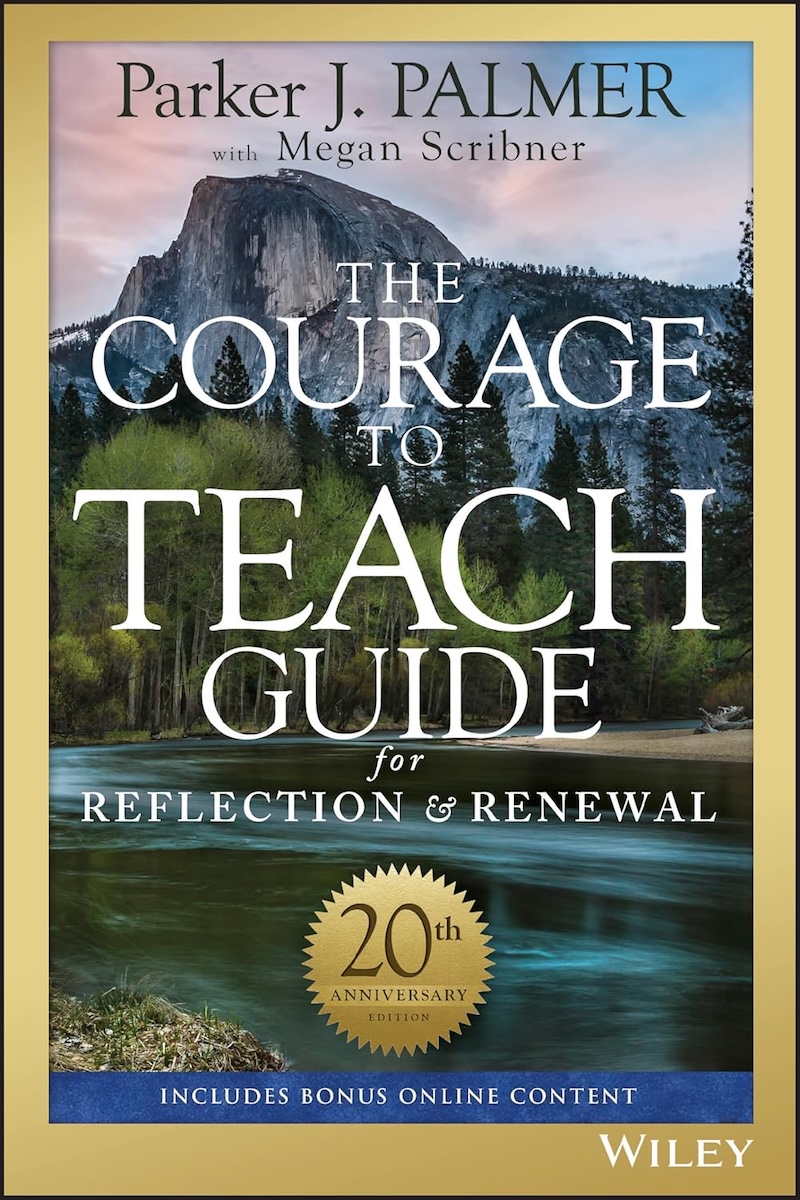
01 / Classic Textbook Recommendation
Classic Textbook Recommendation
Citation
Palmer, P. J. (2017). The Courage to Teach: Exploring the Inner Landscape of a Teacher's Life (20th Anniversary Edition). Jossey-Bass.
Intellectual & Historical Context
The Courage to Teach emerged from Parker Palmer's decades of experience as an educator, writer, and founder of the Center for Courage & Renewal. Written in the 1990s during a period of increased attention to teacher burnout and educational reform, the book offered a different perspective on educational improvement—one that focused on the inner life of teachers rather than external policies and practices.
The work draws from diverse traditions including Quaker spirituality, contemplative practices, and humanistic psychology. It was written in response to Palmer's observation that educational reform efforts typically ignored the human dimension of teaching, focusing instead on techniques, technologies, and institutional structures.
Thesis Statement
Palmer argues that good teaching cannot be reduced to technique but emerges from the identity and integrity of the teacher. Educational reform must address the inner landscape of teachers' lives—their fears, hopes, values, and sense of purpose—because teaching is fundamentally about creating connections between teacher, students, and subject matter.
Key Concepts
Identity and Integrity in Teaching
Good teaching flows from the identity and integrity of the teacher rather than from mastery of techniques or methods. Teachers must know themselves deeply to teach effectively and authentically.
The Inner Life of Teachers
The beliefs, feelings, values, and spiritual dimensions that teachers bring to their work significantly impact their effectiveness and the quality of learning environments they create.
Subject, Self, and Students
Effective teaching creates connections between three key elements: the subject being taught, the teacher's authentic self, and the students' lived experiences and needs.
Fear and Courage in Education
Fear—of exposure, failure, conflict, or vulnerability—often prevents teachers and students from engaging in authentic learning. Courage enables the openness and risk-taking necessary for meaningful education.
Community in Learning
Learning happens best in community where people feel safe to be vulnerable, ask questions, make mistakes, and support each other's growth and development.
The Divided Life
Many teachers experience disconnection between their inner values and their professional practice, leading to burnout and ineffectiveness. Healing this division is essential for authentic teaching.
Circles of Trust
Small groups that provide safe space for educators to explore their inner lives, reflect on their practice, and support each other's professional and personal growth.
Chapter Summaries
Chapter 1: The Heart of a Teacher
Palmer introduces the central thesis that good teaching comes from the identity and integrity of the teacher, exploring what it means to teach from the heart and challenging purely technical approaches to education.
Chapter 2: A Culture of Fear
This chapter examines how fear pervades educational culture, preventing both teachers and students from engaging in authentic learning. Palmer explores the sources of educational fear and its impact on teaching and learning.
Chapter 3: The Hidden Wholeness
Palmer discusses the concept of wholeness and how teachers can integrate their inner and outer lives, connecting their deepest values with their professional practice.
Chapter 4: Knowing in Community
This chapter explores learning as a communal activity, examining how knowledge is constructed through relationship and dialogue rather than individual acquisition of information.
Chapter 5: Teaching in Community
Palmer extends the concept of community from learning to teaching, showing how teachers can create classroom environments that honor both individual growth and collective wisdom.
Chapter 6: Learning in Community
The chapter examines student learning in community contexts, exploring how peer relationships and collaborative learning contribute to educational outcomes.
Chapter 7: Divided No More
Palmer discusses the journey toward undivided living, where teachers align their inner values with their outer actions, leading to more authentic and effective teaching.
Chapter 8: The Mission of Mentors
The final chapter explores the role of mentoring in education, examining how experienced teachers can support newcomers while continuing their own growth and development.
Critical Analysis
Holistic Approach
Palmer's work offers a much-needed holistic perspective on education that addresses the emotional, spiritual, and personal dimensions of teaching often ignored in technical discussions of educational practice.
Personal Transformation
The book emphasizes that effective teaching requires ongoing personal growth and self-reflection, challenging teachers to examine their own lives and motivations.
Community Building
Palmer's emphasis on community provides valuable insights for creating more supportive and collaborative educational environments for both teachers and students.
Practical Applications
While deeply philosophical, the book offers practical approaches such as Circles of Trust that educators can implement to support their professional and personal development.
Limitations
Some critics argue that Palmer's approach is too individualistic and doesn't adequately address systemic issues in education such as inequality, funding, and institutional constraints.
Real-World Applications
Teacher Development Programs
Many schools and districts have implemented Circles of Trust and other practices inspired by Palmer's work to support teacher reflection, renewal, and community building.
Teacher Education
Education schools have incorporated Palmer's insights about identity and integrity into their preparation programs, helping future teachers understand the personal dimensions of their work.
Educational Leadership
School leaders have used Palmer's principles to create more supportive work environments that honor teachers' inner lives while promoting professional growth.
Retreat Programs
Organizations worldwide offer retreats and workshops based on Palmer's approach, providing spaces for educators to reflect on their calling and renew their commitment to teaching.
Significance & Impact
The Courage to Teach has become a classic in educational literature, influencing thousands of educators worldwide to approach their work more thoughtfully and authentically. The book has spawned a movement focused on the inner life of educators and the importance of wholeness in teaching.
Palmer's work has contributed to broader conversations about teacher retention, professional development, and the spiritual dimensions of education. His Circles of Trust model has been implemented in various forms across educational institutions and other professions.
Key Quotes
Good teaching cannot be reduced to technique; good teaching comes from the identity and integrity of the teacher.
This quote encapsulates Palmer's central argument that effective teaching is fundamentally about who teachers are as people, not just what they do.
We teach who we are.
Here, Palmer emphasizes the inseparable connection between teachers' personal identity and their professional practice.
The courage to teach is the courage to keep one's heart open in those very moments when the heart is asked to hold more than it is able.
This statement captures the emotional demands of teaching and the courage required to remain open and vulnerable in challenging educational situations.
Conclusion
The Courage to Teach offers a profound and necessary perspective on education that honors the full humanity of teachers and students. Palmer's insights about the connection between inner life and outer practice provide essential wisdom for anyone seeking to teach and learn authentically.
The book's enduring relevance lies in its recognition that educational improvement must address the human dimensions of teaching and learning, not just technical or institutional factors. As educational systems worldwide grapple with teacher shortages and burnout, Palmer's call for courage, authenticity, and community offers both hope and practical direction.
Through its exploration of the inner landscape of teaching, The Courage to Teach demonstrates that education is fundamentally about human connection and transformation, requiring not just skill and knowledge but courage, integrity, and heart.