01 / Classic Textbook Recommendation
Classic Textbook Recommendation
Citation
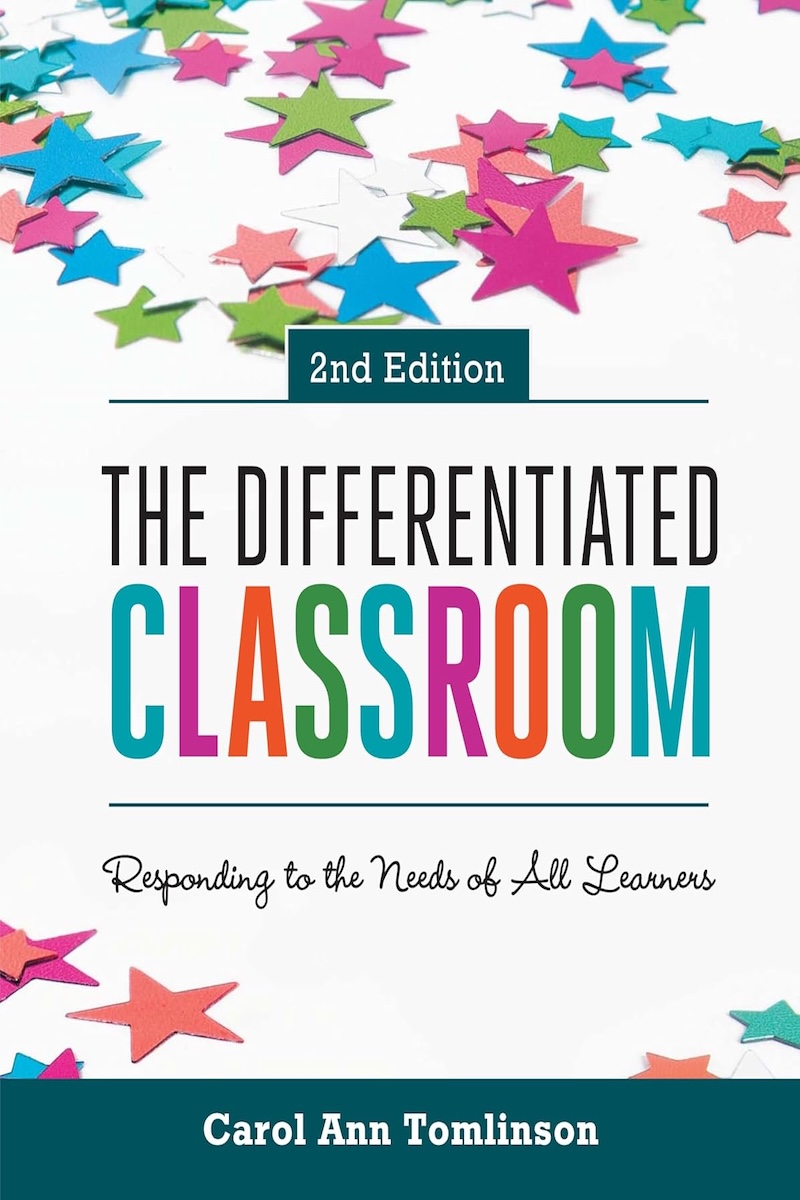
Tomlinson, C. A. (2017). The Differentiated Classroom: Responding to the Needs of All Learners (2nd ed.). ASCD.
Intellectual & Historical Context
The Differentiated Classroom emerged from Carol Ann Tomlinson's extensive experience as a classroom teacher and educational researcher during the late 20th century movement toward inclusive education. Written in response to increasing classroom diversity and the recognition that one-size-fits-all instruction fails many students, this work synthesizes research on learning differences, multiple intelligences, and effective teaching practices.
The book reflects the growing understanding that students come to school with varying backgrounds, readiness levels, interests, and learning preferences. It represents a shift from standardized approaches to more individualized, responsive teaching methods that honor student diversity while maintaining high expectations for all learners.
Thesis Statement
Tomlinson argues that effective teaching requires ongoing assessment of student needs and flexible adjustment of instruction to ensure that all students can access challenging, meaningful learning experiences. Differentiated instruction is not about lowering standards but about providing multiple pathways for students to achieve excellence.
Key Concepts
Differentiated Instruction
A philosophy and methodology that involves modifying instruction based on students' readiness, interests, and learning profiles to maximize each student's growth and individual success.
The Three Elements of Differentiation
Content: What students learn - the knowledge, skills, and concepts being taught Process: How students learn - the activities and strategies used to help students make sense of content Product: How students demonstrate learning - the ways students show what they know and can do
Student Readiness
A student's current knowledge, understanding, and skill level relative to a particular sequence of learning. Readiness is not a fixed characteristic but varies by subject and changes over time.
Student Interest
Topics, subjects, and activities that engage and motivate individual students. Incorporating student interests increases engagement and deepens learning.
Learning Profile
The way a student learns best, influenced by learning style, intelligence preferences, gender, and culture. Understanding learning profiles helps teachers provide appropriate instructional approaches.
Flexible Grouping
Strategically organizing students into different group configurations based on readiness, interest, or learning profile. Groups should be fluid and change frequently based on learning goals.
Chapter Summaries
Chapter 1: An Introduction to Differentiated Instruction
Tomlinson introduces the concept of differentiated instruction and explains why traditional one-size-fits-all teaching approaches are inadequate for today's diverse classrooms. She establishes the foundation for understanding how differentiation can benefit all students.
Chapter 2: Understanding Student Differences
This chapter explores the various ways students differ in their approaches to learning, including differences in readiness, interest, and learning profile. Tomlinson emphasizes that these differences are assets to be leveraged rather than problems to be solved.
Chapter 3: Learning Environment in the Differentiated Classroom
The chapter discusses how to create a classroom environment that supports differentiated instruction, including establishing routines, building community, and creating physical spaces that facilitate flexible learning arrangements.
Chapter 4: Differentiating Content
Tomlinson provides strategies for modifying what students learn, including using varied texts, providing choice in topics, and ensuring that all students have access to high-quality, grade-appropriate content while meeting them at their current level.
Chapter 5: Differentiating Process
This chapter focuses on how to vary the learning activities and strategies students use to make sense of content. It includes discussion of multiple intelligences, learning styles, and various instructional methods.
Chapter 6: Differentiating Products
The chapter explores ways to allow students to demonstrate their learning through different types of products and assessments, providing multiple ways for students to show what they know and can do.
Chapter 7: The Role of Assessment in Differentiated Instruction
Tomlinson discusses how ongoing assessment informs differentiated instruction, including formative assessment strategies, rubrics, and how to use assessment data to guide instructional decisions.
Chapter 8: Managing a Differentiated Classroom
This chapter addresses practical considerations for implementing differentiated instruction, including time management, record keeping, and strategies for helping students become independent learners.
Critical Analysis
Practical Framework
Tomlinson provides a clear, actionable framework for differentiated instruction that teachers can implement immediately. Her emphasis on the three elements (content, process, product) and three student characteristics (readiness, interest, learning profile) offers practical guidance.
Research-Based Approach
The book effectively synthesizes educational research on learning differences, motivation, and effective teaching practices. Tomlinson grounds her recommendations in evidence while making them accessible to practitioners.
Inclusive Philosophy
The work promotes an inclusive approach to education that values diversity and sees differences as strengths rather than deficits. This philosophy supports both academic achievement and social-emotional development.
Implementation Challenges
While the book provides excellent theoretical foundation and practical strategies, some critics note that implementing differentiated instruction requires significant time, resources, and administrative support that may not be available in all contexts.
Real-World Applications
Classroom Implementation
Teachers worldwide have used Tomlinson's strategies to create more responsive, inclusive classrooms. Examples include tiered assignments, learning contracts, choice boards, and flexible grouping arrangements.
Special Education
The principles of differentiated instruction align closely with special education practices, providing frameworks for meeting individual student needs while maintaining inclusion in general education settings.
Gifted Education
Differentiated instruction provides strategies for challenging high-achieving students through acceleration, complexity, and depth while keeping them engaged in classroom learning.
Professional Development
School districts use this work as a foundation for teacher training and professional development programs focused on meeting diverse student needs.
Significance & Impact
The Differentiated Classroom has become a foundational text in teacher education and professional development programs worldwide. It has influenced educational policy discussions about inclusive education and has provided practical tools for teachers seeking to meet diverse student needs.
The book's impact extends to curriculum design, assessment practices, and school organization. Its emphasis on student-centered learning has supported broader movements toward personalized education and competency-based learning.
Key Quotes
Differentiated instruction is not a recipe for teaching. It is not an instructional strategy or model. It is a way of thinking about teaching and learning.
This quote emphasizes that differentiation is a mindset rather than a set of techniques, requiring teachers to think differently about their practice.
In a differentiated classroom, the teacher accepts that students differ in their readiness to learn, their interests, and their learning profiles.
Here, Tomlinson establishes the fundamental premise that student differences should be acknowledged and addressed rather than ignored.
The goal of differentiated instruction is to ensure that all students grow as much as they possibly can.
This statement clarifies that differentiation is about maximizing growth for all students, not just accommodating struggling learners.
Conclusion
The Differentiated Classroom remains an essential resource for educators seeking to create inclusive, responsive learning environments. Tomlinson's clear framework and practical strategies provide both novice and experienced teachers with tools for meeting diverse student needs while maintaining high expectations.
The book's enduring relevance lies in its recognition that effective teaching requires ongoing attention to student differences and flexible responses to diverse learning needs. As classrooms become increasingly diverse, Tomlinson's approach offers a path toward more equitable and effective education for all students.