01 / Classic Textbook Recommendation
Classic Textbook Recommendation
Citation
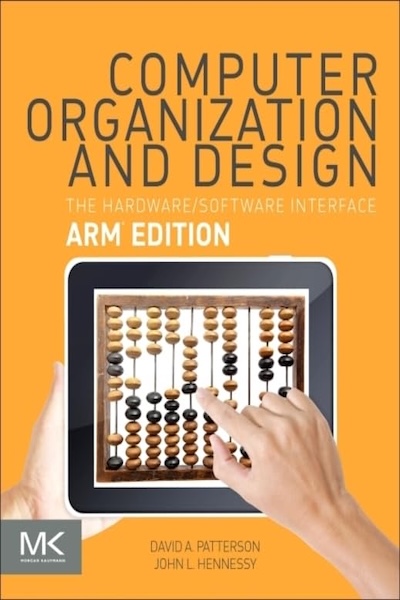
Patterson, D. A., & Hennessy, J. L. (2024). Computer Organization and Design: The Hardware/Software Interface (6th ed.). Morgan Kaufmann.
Knowledge and Historical Context
Computer architecture emerged as a distinct field in the 1960s with the development of IBM System/360, which established the concept of instruction set architecture. The field has evolved rapidly with advances in semiconductor technology, leading to modern multicore processors and specialized computing architectures.
David Patterson and John Hennessy's textbook, first published in the 1990s, revolutionized computer architecture education by emphasizing the hardware/software interface and quantitative analysis of computer performance. Both authors are Turing Award winners whose research has profoundly influenced modern computer design.
Educational Philosophy
The textbook emphasizes that computer architecture should be understood through the lens of performance, cost, and design trade-offs. It teaches students to think quantitatively about computer systems while understanding how hardware and software interact to achieve computational goals.
Core Concepts
Computer Abstractions and Performance
Introduction to computer system layers, performance metrics, and the relationship between hardware and software in determining system performance.
Instructions and Computer Languages
Instruction set architectures, assembly language programming, and the translation from high-level languages to machine code.
Arithmetic for Computers
Computer arithmetic including integer and floating-point operations, with emphasis on hardware implementation and performance considerations.
The Processor Design
Single-cycle and multi-cycle processor implementations, datapath and control unit design, and introduction to pipelined processors.
Large and Fast Memory Systems
Memory hierarchy design including cache memory, virtual memory, and the principles governing memory system performance.
Storage and Input/Output
Secondary storage systems, I/O devices, and the interface between processors and external devices in computer systems.
Multiprocessor and Multicore Systems
Parallel processing concepts, shared memory systems, and the challenges of designing efficient multicore processors.
Advanced Topics in Computer Architecture
Emerging trends including graphics processing units, domain-specific architectures, and energy-efficient computing.
Significance and Impact
This textbook has shaped computer engineering and computer science education worldwide by establishing the standard approach to teaching computer architecture. Its quantitative methodology and emphasis on real-world examples have influenced how computer systems are designed and analyzed.
The book's impact extends beyond education to industry practice, where the design principles and performance analysis techniques it teaches are fundamental to processor design, system optimization, and computer system evaluation.
Conclusion
Computer Organization and Design remains the definitive textbook for undergraduate computer architecture education. Its comprehensive coverage of processor design, memory systems, and performance analysis provides students with the fundamental knowledge essential for computer engineering careers.
The textbook's evolution with advancing technology, including coverage of multicore systems and emerging architectures, ensures its continued relevance for students entering the rapidly evolving field of computer systems design and optimization.