01 / Classic Textbook Recommendation
Classic Textbook Recommendation
Citation
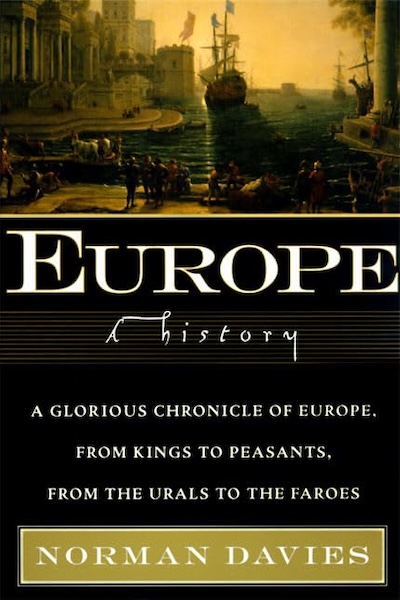
Davies, N. (2024). Europe: A History (2nd ed.). Oxford University Press.
Knowledge and Historical Context
Norman Davies' Europe: A History revolutionized European history education by challenging traditional Western European-centered narratives and giving equal attention to Eastern and Central Europe. First published in 1996, this comprehensive work reflects Davies' expertise in Polish and Eastern European history and his commitment to a truly continental perspective.
The textbook emerged during the post-Cold War period when the artificial division between Western and Eastern Europe was ending, allowing for a more integrated understanding of European history. It incorporates insights from social history, cultural history, and environmental history while maintaining narrative coherence across centuries.
Educational Philosophy
The textbook emphasizes that European history cannot be understood through national frameworks alone but requires a continental perspective that recognizes both unity and diversity. It teaches students to think critically about historical narratives, understand the complexity of European identity, and appreciate the interconnections between different regions and periods.
Core Concepts
Ancient and Medieval Foundations
Pre-history, classical antiquity, medieval Christendom, and the formation of European identity through cultural, religious, and political developments.
Renaissance and Reformation
Cultural transformation, religious revolution, political fragmentation, and the emergence of early modern European states and societies.
Absolutism and Enlightenment
Monarchical power, intellectual revolution, scientific advancement, and the development of modern European political and social thought.
Revolutionary Era
French Revolution, Napoleonic period, nationalism, liberalism, and the transformation of European political and social order.
Industrial and Imperial Europe
Industrialization, urbanization, imperial expansion, and the social and economic transformation of European societies.
Crisis and Transformation
World Wars, totalitarianism, Holocaust, Cold War division, and the destruction and reconstruction of European civilization.
Contemporary Europe
European integration, decolonization, democratization, and the challenges facing contemporary European societies and institutions.
European Diversity
Regional variations, minority cultures, linguistic diversity, and the complex relationship between local, national, and European identities.
Significance and Impact
Europe: A History has transformed European history education by providing a genuinely continental perspective that includes traditionally marginalized regions and peoples. Its comprehensive approach has influenced how European history is taught, moving beyond national narratives toward integrated understanding.
The textbook's attention to cultural and social history alongside political developments has shaped contemporary approaches to European history education, emphasizing the complexity and diversity of European experience.
Conclusion
Europe: A History provides essential knowledge for understanding European civilization in its full complexity and diversity. Its comprehensive coverage and innovative approach prepare students for advanced study in European history and related fields.
The textbook's integration of different regions, periods, and perspectives makes it invaluable for students seeking to understand how European history connects to broader global developments and contemporary European challenges.