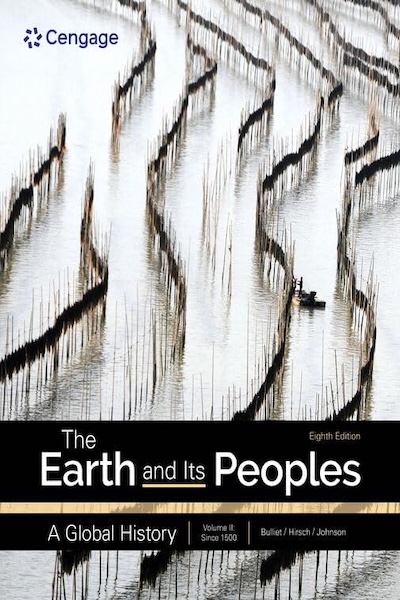
01 / Classic Textbook Recommendation
Classic Textbook Recommendation
Citation
Bulliet, R. W., Crossley, P. K., Headrick, D. R., Hirsch, S. W., Johnson, L. L., & Northrup, D. (2023). The Earth and Its Peoples: A Global History (8th ed.). Cengage Learning.
Knowledge and Historical Context
The Earth and Its Peoples emerged from the need for a truly global approach to ancient history that moves beyond traditional Western-centered narratives. The textbook incorporates archaeological discoveries, environmental history, and comparative methodologies that have transformed ancient history scholarship in recent decades.
This comprehensive approach reflects contemporary understanding that ancient civilizations developed through complex networks of interaction, trade, and cultural exchange rather than in isolation. It emphasizes the importance of material culture, environmental factors, and social structures in shaping early human societies.
Educational Philosophy
The textbook emphasizes that ancient history should be understood through comparative analysis across different civilizations and regions. It teaches students to analyze archaeological and textual evidence, understand environmental influences on historical development, and recognize patterns of cultural exchange and innovation.
Core Concepts
Origins of Human Civilization
Agricultural revolution, development of cities, emergence of complex societies, and the transition from hunter-gatherer to settled agricultural communities.
Mesopotamia and the Ancient Near East
Sumerian, Babylonian, and Assyrian civilizations, development of writing, law codes, and the first urban centers in human history.
Ancient Egypt
Pharaonic civilization, Nile River culture, religious beliefs, monumental architecture, and Egypt's role in ancient Mediterranean trade networks.
Ancient India
Indus Valley civilization, Vedic period, rise of Buddhism and Hinduism, Mauryan Empire, and classical Indian culture and philosophy.
Ancient China
Shang and Zhou dynasties, Confucianism and Daoism, Qin unification, Han dynasty, and the development of Chinese imperial traditions.
Ancient Greece
Greek city-states, democracy, philosophy, literature, and Greek influence on Mediterranean and Near Eastern civilizations.
Ancient Rome
Roman Republic and Empire, law and government, cultural achievements, and the transformation of the Mediterranean world.
Ancient Americas
Maya, Aztec, and Inca civilizations, North American indigenous societies, and the development of complex societies in the Americas.
Significance and Impact
The Earth and Its Peoples has influenced ancient history education by providing a balanced, global perspective that treats all ancient civilizations with equal scholarly attention. Its comparative approach helps students understand universal patterns in human development while appreciating cultural diversity.
The textbook's integration of archaeological evidence with textual sources has shaped how ancient history is taught, emphasizing the importance of material culture and environmental factors in historical analysis.
Conclusion
The Earth and Its Peoples provides essential knowledge for understanding the foundations of human civilization across all continents. Its comprehensive coverage and comparative methodology prepare students for advanced study in ancient history, archaeology, and related fields.
The textbook's global perspective and emphasis on cultural exchange makes it invaluable for students seeking to understand how ancient developments continue to influence contemporary societies worldwide.