01 / Classic Textbook Recommendation
Classic Textbook Recommendation
Citation
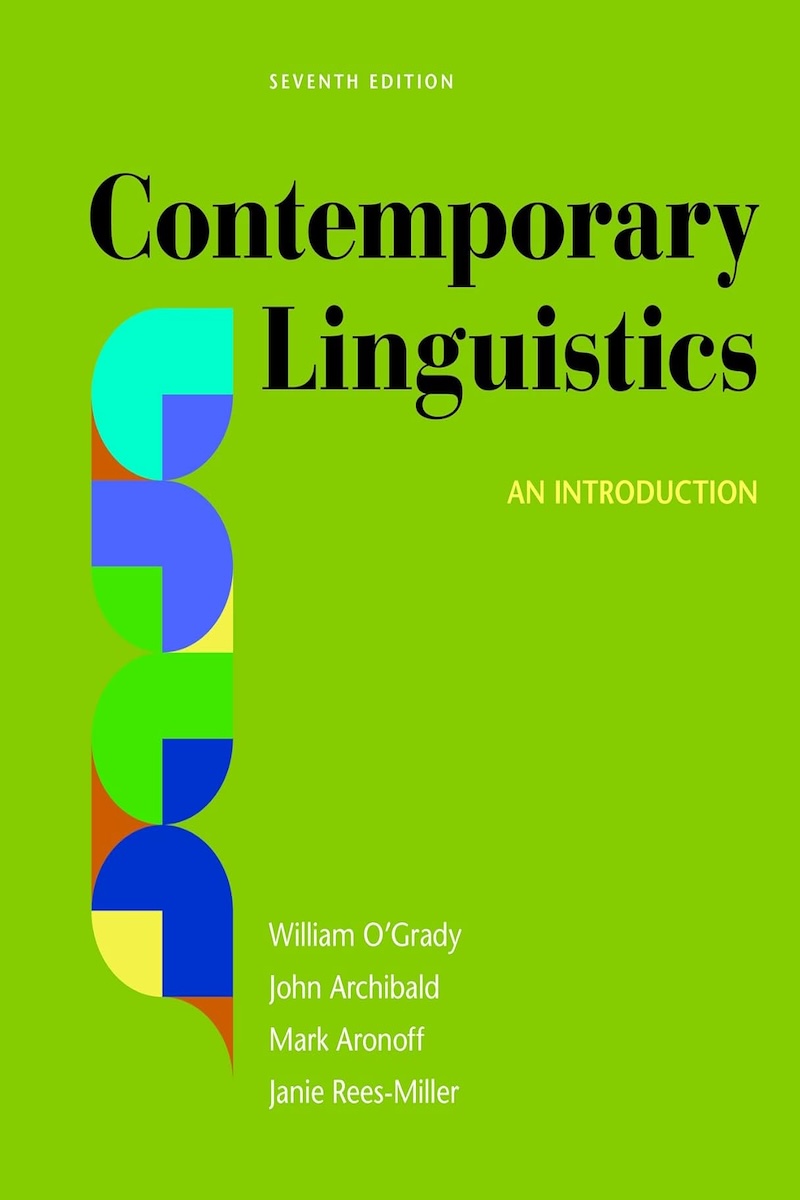
O'Grady, W., Archibald, J., Aronoff, M., & Rees-Miller, J. (2024). Contemporary Linguistics: An Introduction (8th ed.). Bedford/St. Martin's.
Knowledge and Historical Background
"Contemporary Linguistics" emerged from the need for a textbook that could present modern linguistic theory in an accessible format while maintaining theoretical rigor. Developed by leading linguists across North America, it reflects the evolution of linguistics from a purely theoretical discipline to one with broad practical applications.
The textbook represents the integration of different theoretical traditions in linguistics, synthesizing insights from generative grammar, functional linguistics, and cognitive approaches. It reflects the contemporary understanding that linguistics must engage with questions about language processing, acquisition, and social variation.
Teaching Philosophy
The textbook emphasizes linguistics as both a theoretical science and a practical discipline with applications across many fields. It teaches students to understand language as a complex system while appreciating its role in human cognition, communication, and society.
Core Concepts
Sound Systems
Phonetics and phonology, articulatory and acoustic properties of speech, phonological patterns, and sound change.
Word Structure
Morphology, word formation processes, inflection and derivation, and morphophonological alternations.
Sentence Structure
Syntax, phrase structure, syntactic categories, movement, and cross-linguistic syntactic variation.
Meaning
Semantics and pragmatics, word meaning, sentence meaning, context and interpretation, and meaning change.
Language Acquisition
First language development, second language learning, critical period effects, and universal grammar.
Language Processing
Psycholinguistics, speech perception and production, sentence processing, and the neural basis of language.
Language in Society
Sociolinguistics, language variation, multilingualism, language contact, and language policy.
Historical Development
Historical linguistics, sound change, grammatical change, language families, and reconstruction.
Significance and Impact
"Contemporary Linguistics" has influenced undergraduate linguistics education by successfully balancing theoretical sophistication with practical accessibility. Its comprehensive coverage has made it a standard reference for introductory courses worldwide.
The textbook's integration of traditional core areas with contemporary applications has helped demonstrate the relevance of linguistic knowledge to fields such as education, psychology, computer science, and anthropology.
Conclusion
"Contemporary Linguistics" provides essential knowledge for understanding language as a complex, dynamic system. Its comprehensive approach and clear explanations prepare students for advanced study while demonstrating the practical relevance of linguistic knowledge.
The textbook's emphasis on both theoretical understanding and practical application makes it invaluable for students seeking to understand how language works and how linguistic knowledge can be applied to real-world problems.