01 / Classic Textbook Recommendation
Classic Textbook Recommendation
Citation
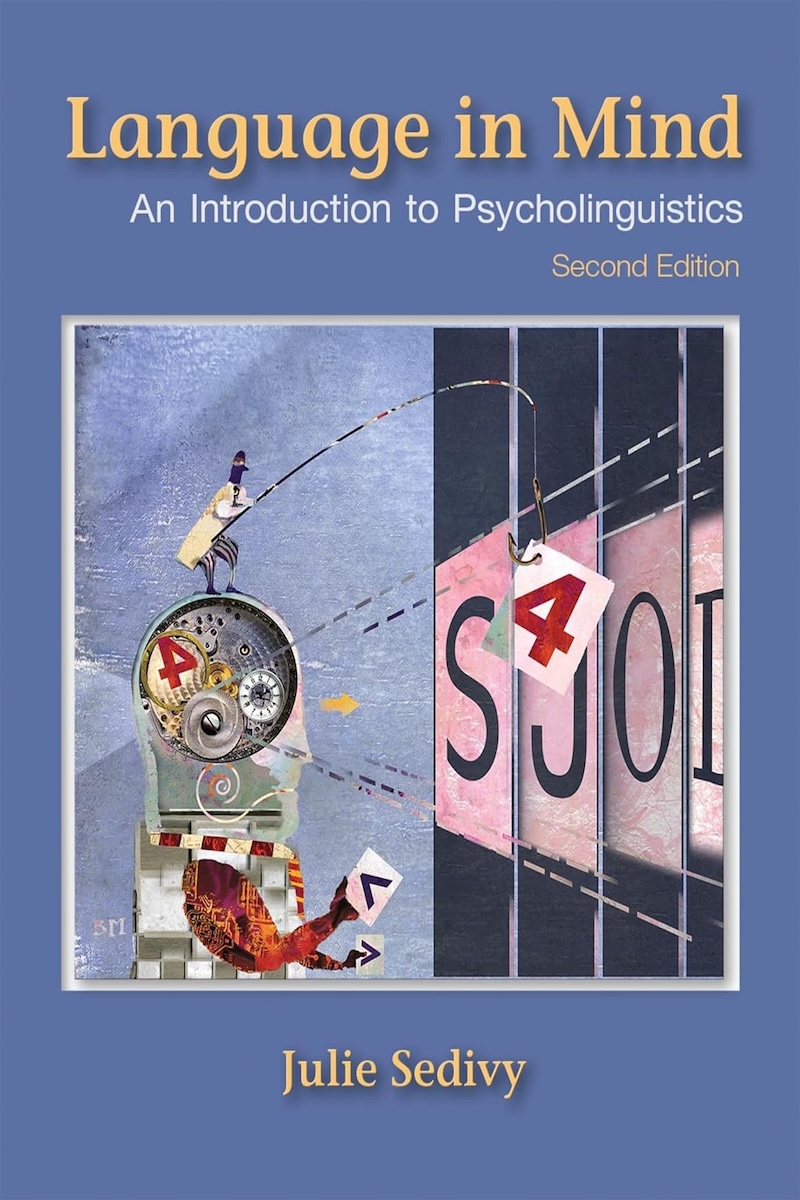
Sedivy, J. (2014). Language in Mind: An Introduction to Psycholinguistics (2nd ed.). Oxford University Press.
Knowledge and Historical Background
"Language in Mind" represents the evolution of psycholinguistics from a primarily theoretical discipline to one grounded in experimental research and cognitive science. Julie Sedivy's textbook emerges from decades of research into language processing and the cognitive mechanisms underlying human language use.
The work reflects the integration of linguistics with psychology, neuroscience, and computer science, demonstrating how interdisciplinary approaches have advanced our understanding of language as a cognitive phenomenon. It represents the modern synthesis of theoretical linguistics with empirical investigation of language in the mind and brain.
Teaching Philosophy
The textbook emphasizes that understanding language requires examining both its structural properties and its psychological reality. It teaches students to evaluate empirical evidence about language processing while understanding how theoretical linguistic insights contribute to psychological models of language use.
Core Concepts
Language Processing
Word recognition, sentence comprehension, speech production, and the real-time mechanisms of language use.
Language Acquisition
First language development, critical periods, universal grammar, and the mechanisms of language learning.
Bilingualism and Multilingualism
Bilingual language processing, code-switching, language separation, and the cognitive effects of multilingualism.
Language and Thought
Linguistic relativity, conceptual development, the relationship between language and cognition, and cross-linguistic differences in thinking.
Neurolinguistics
Brain organization for language, language disorders, aphasia, and neuroimaging studies of language.
Language Evolution
Origins of human language capacity, comparative studies with animals, and the evolution of linguistic abilities.
Language Disorders
Developmental language disorders, acquired language impairments, and what they reveal about normal language processing.
Experimental Methods
Research techniques in psycholinguistics, experimental design, and interpretation of empirical findings.
Significance and Impact
"Language in Mind" has influenced how psycholinguistics is taught by successfully integrating theoretical linguistics with empirical psychology. Its comprehensive coverage of research methods has helped students understand how scientific questions about language are investigated.
The textbook's emphasis on current research findings and their implications has shaped how students learn to evaluate evidence and understand the ongoing development of psycholinguistic theory.
Conclusion
"Language in Mind" provides essential knowledge for understanding language as both a cognitive capacity and a tool for communication. Its integration of theoretical insights with empirical findings prepares students for advanced work in psycholinguistics and related fields.
The textbook's comprehensive coverage of research methods and current findings makes it invaluable for students seeking to understand how language works in the human mind and how this knowledge can be applied to education, therapy, and technology.