01 / Classic Textbook Recommendation
Classic Textbook Recommendation
Citation
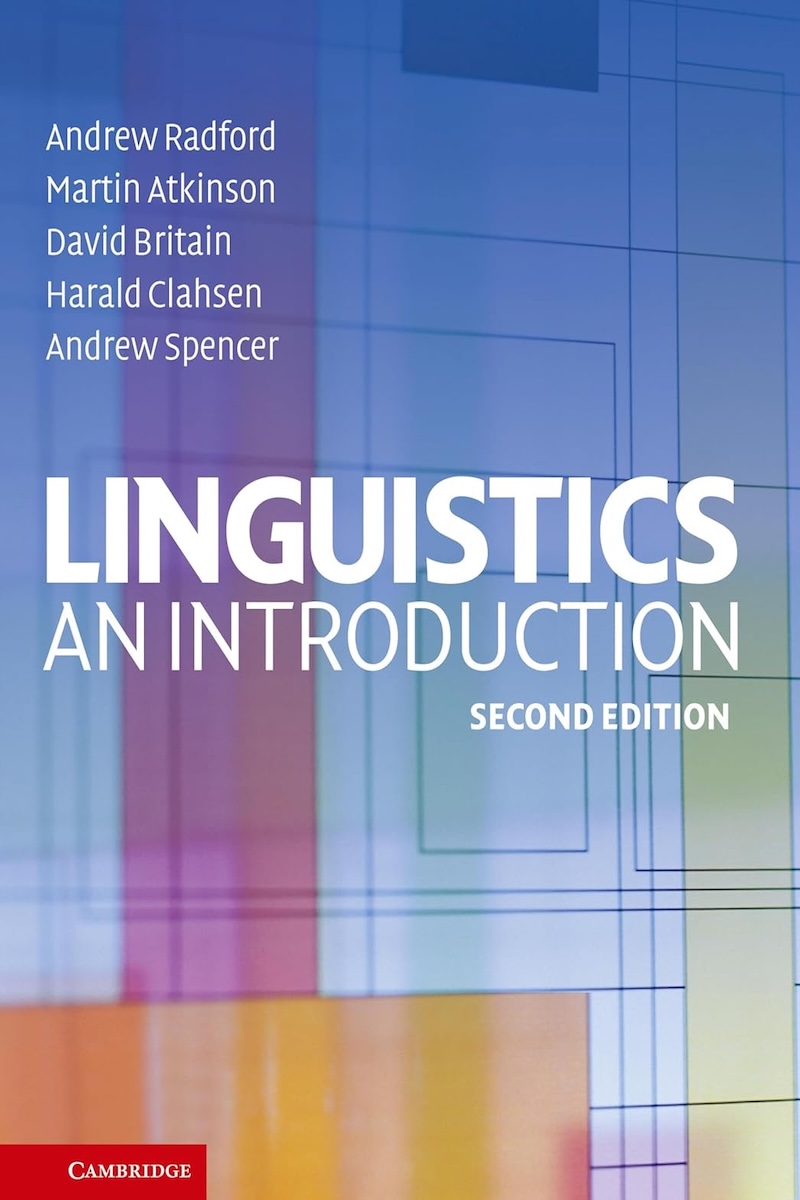
Radford, A., Atkinson, M., Britain, D., Clahsen, H., & Spencer, A. (2009). Linguistics: An Introduction (2nd ed.). Cambridge University Press.
Knowledge and Historical Background
"Linguistics: An Introduction" represents a collaborative effort by leading British linguists to provide a theoretically sophisticated yet accessible introduction to modern linguistic theory. The textbook emerged from the Cambridge linguistics program's emphasis on rigorous theoretical analysis combined with empirical investigation.
This work reflects the maturation of linguistics as a scientific discipline, integrating insights from generative grammar, cognitive science, and sociolinguistics. It represents the European tradition of linguistic scholarship while engaging with international developments in linguistic theory and methodology.
Teaching Philosophy
The textbook emphasizes linguistics as a scientific enterprise requiring theoretical sophistication and empirical rigor. It teaches students to engage critically with linguistic data, evaluate theoretical proposals, and understand the relationship between linguistic theory and broader questions about human cognition and society.
Core Concepts
Syntactic Theory
Phrase structure, X-bar theory, movement operations, government and binding theory, and minimalist approaches to syntax.
Phonological Theory
Generative phonology, autosegmental phonology, metrical phonology, and optimality theory approaches to sound patterns.
Morphological Theory
Word structure, inflection and derivation, morphophonological processes, and distributed morphology.
Semantic Theory
Formal semantics, truth conditions, quantification, reference and anaphora, and the syntax-semantics interface.
Psycholinguistics
Language processing, sentence comprehension, lexical access, and the psychological reality of linguistic structures.
Sociolinguistics
Language variation and change, dialectology, language contact, and the social embedding of linguistic structures.
Language Acquisition
First language acquisition, universal grammar, parameter setting, and second language learning.
Historical Linguistics
Sound change, grammaticalization, language reconstruction, and mechanisms of linguistic change.
Significance and Impact
"Linguistics: An Introduction" has influenced linguistics education by demonstrating how theoretical depth can be made accessible to undergraduate students. Its integration of different theoretical frameworks has helped students understand the diversity and evolution of linguistic thought.
The textbook's emphasis on critical evaluation of theories and careful analysis of data has shaped how students learn to think like linguists, developing skills in argumentation and empirical investigation.
Conclusion
"Linguistics: An Introduction" provides essential theoretical foundations for understanding language as a complex cognitive and social phenomenon. Its comprehensive coverage and analytical approach prepare students for advanced work in theoretical and applied linguistics.
The textbook's integration of multiple theoretical perspectives and emphasis on critical thinking make it invaluable for students seeking to understand current debates in linguistic theory and their implications for understanding human language capacity.