01 / Classic Textbook Recommendation
Classic Textbook Recommendation
Citation
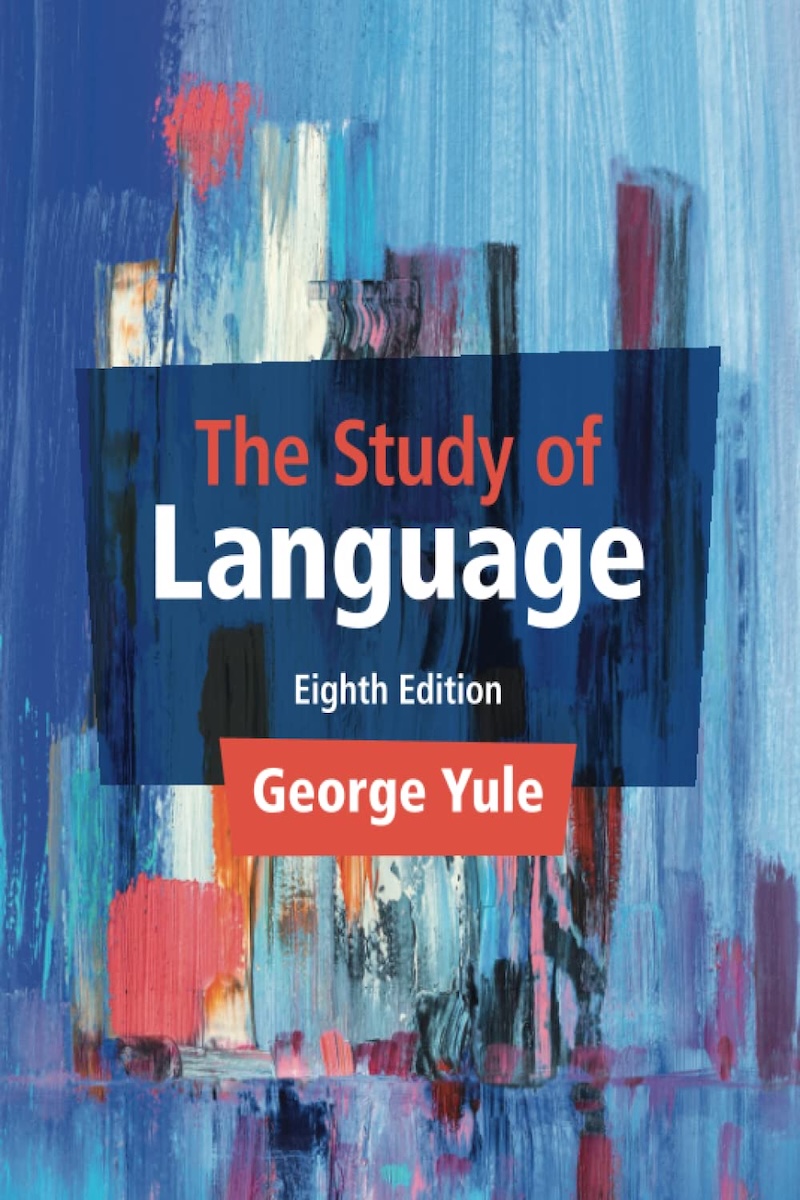
Yule, G. (2024). The Study of Language (8th ed.). Cambridge University Press.
Knowledge and Historical Background
George Yule's "The Study of Language" has been a popular introductory linguistics textbook since its first publication in the 1980s. Written by a scholar known for his work in pragmatics and discourse analysis, the book reflects a practical approach to linguistics that emphasizes real-world applications and everyday language phenomena.
The textbook emerged from Yule's experience teaching linguistics to diverse student populations, including those in applied linguistics, education, and English as a second language programs. It represents an approach that makes linguistic concepts accessible without sacrificing accuracy or depth.
Teaching Philosophy
The textbook emphasizes that linguistics is fundamentally about understanding how language works in real human contexts. It teaches students to observe and analyze language phenomena they encounter daily, fostering an appreciation for the complexity and systematicity underlying seemingly simple linguistic behaviors.
Core Concepts
Origins of Language
Theories about how human language evolved, what makes language uniquely human, and the relationship between language and thought.
Sound Production
Phonetics, speech organs, vowels and consonants, and the articulatory basis of speech sound production.
Sound Patterns
Phonology, phonemes and allophones, phonological rules, and sound changes in language.
Word Formation
Morphology, morphemes, types of morphemes, morphological processes, and word formation across languages.
Grammar
Syntax, phrase structure, grammatical categories, and the systematic nature of sentence structure.
Meaning
Semantics, word meaning, semantic relationships, sentence meaning, and how meaning is constructed.
Using Language
Pragmatics, speech acts, conversational principles, politeness, and context-dependent meaning.
Language and Context
Discourse analysis, conversation analysis, and how language functions in extended communication.
Significance and Impact
"The Study of Language" has influenced linguistics education by demonstrating how complex linguistic concepts can be presented clearly and engagingly. Its focus on practical examples and real-world applications has helped make linguistics accessible to students from diverse academic backgrounds.
The textbook's conversational style and use of interesting examples from various languages has shaped how introductory linguistics is taught, showing that rigorous analysis can be combined with engaging presentation.
Conclusion
"The Study of Language" provides essential knowledge for understanding how language works as a tool for human communication. Its accessible approach and comprehensive coverage prepare students for further study while fostering an appreciation for the complexity of everyday language use.
The textbook's emphasis on practical applications and real-world examples makes it invaluable for students seeking to understand the relevance of linguistic knowledge to education, communication, and intercultural understanding.