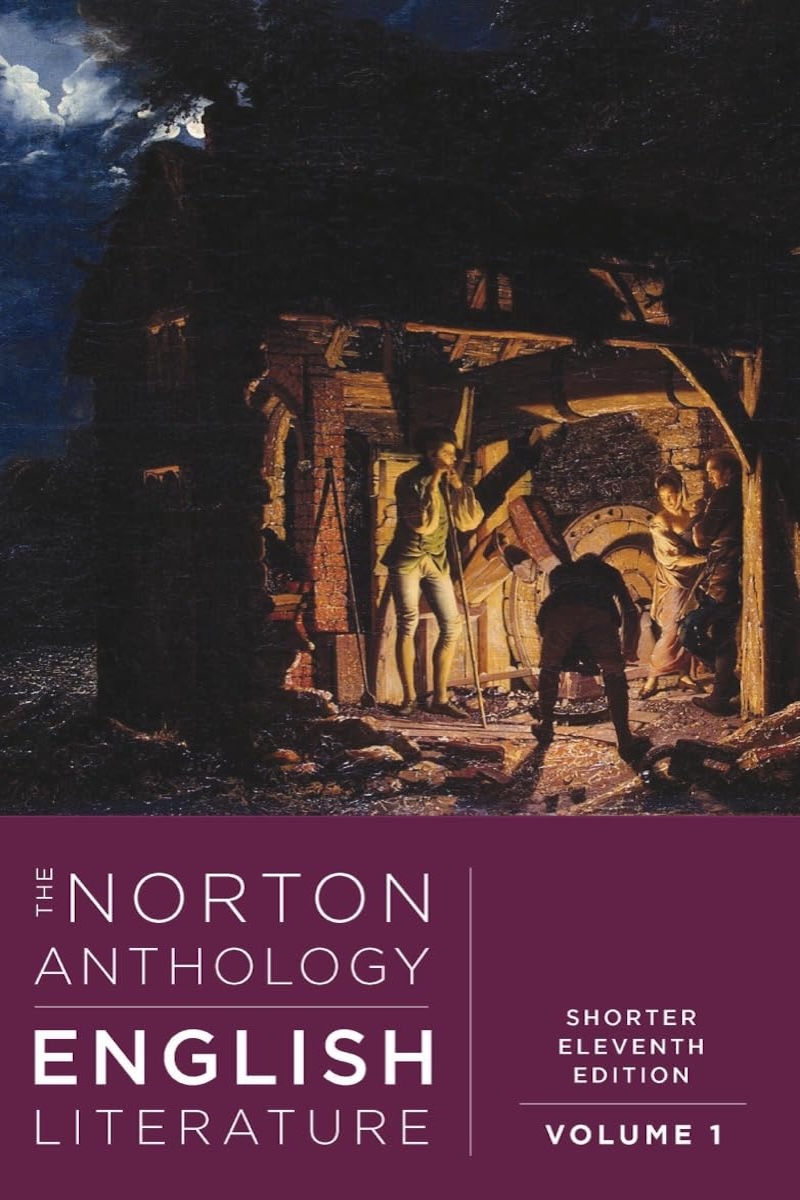
01 / Classic Textbook Recommendation
Classic Textbook Recommendation
Citation
Greenblatt, S., Christ, C. T., David, A., Lewalski, B. K., Lipking, L., Logan, G. M., Maus, K. E., Miller, J. H., Ramazani, J., Rivkin, J., Robbins, B., Simpson, C., Tuck, J., Vendler, H., & Wicke, J. (2024). The Norton Anthology of English Literature (11th ed.). W. W. Norton & Company.
Knowledge and Historical Background
"The Norton Anthology of English Literature" has been the foundational text for English literature survey courses since its first publication in 1962. Developed under the editorial leadership of M. H. Abrams and later Stephen Greenblatt, this anthology has shaped how generations of students encounter English literary tradition.
The anthology emerged from the need for a comprehensive yet teachable collection that could provide historical context while presenting literary works in their full complexity. It reflects the evolution of literary studies from New Critical approaches to contemporary theoretical perspectives, incorporating diverse voices and critical frameworks.
Teaching Philosophy
The anthology emphasizes literature as both aesthetic achievement and historical document, encouraging students to understand works within their cultural contexts while appreciating their enduring artistic value. It teaches students to engage with texts critically, considering both their original contexts and their ongoing relevance.
Core Concepts
Medieval Literature
Old and Middle English texts, including Beowulf, Chaucer's Canterbury Tales, and medieval drama, with attention to manuscript culture and oral tradition.
Renaissance Literature
Sixteenth and early seventeenth-century poetry and prose, including Shakespeare, Spenser, and Marlowe, emphasizing humanism and cultural transformation.
Restoration and Eighteenth Century
Literature from Dryden through Johnson, including satire, the novel's emergence, and Enlightenment thought.
Romantic Period
Poetry and prose from Blake through Keats, exploring nature, imagination, and revolutionary consciousness.
Victorian Literature
Nineteenth-century poetry, fiction, and non-fiction prose reflecting industrial society, empire, and social change.
Modern Literature
Twentieth-century experimental writing, including modernist poetry and fiction, and responses to war and social upheaval.
Contemporary Literature
Post-1945 writing reflecting postcolonial perspectives, feminist voices, and ongoing literary innovation.
Critical Contexts
Historical backgrounds, critical essays, and theoretical frameworks that illuminate literary works and their interpretation.
Significance and Impact
"The Norton Anthology of English Literature" has defined the English literary canon for undergraduate education, influencing curriculum design and pedagogical approaches worldwide. Its comprehensive scope and scholarly apparatus have made it the standard reference for English literature survey courses.
The anthology's evolution has reflected changing perspectives in literary studies, incorporating previously marginalized voices and contemporary critical approaches while maintaining scholarly rigor and accessibility.
Conclusion
"The Norton Anthology of English Literature" provides essential knowledge for understanding the development and significance of English literary tradition. Its comprehensive coverage and critical apparatus prepare students for advanced study while fostering appreciation for literary achievement.
The anthology's integration of diverse perspectives and critical contexts makes it invaluable for students seeking to understand how English literature has evolved and continues to shape cultural understanding and artistic expression.