01 / Classic Textbook Recommendation
Classic Textbook Recommendation
Citation:
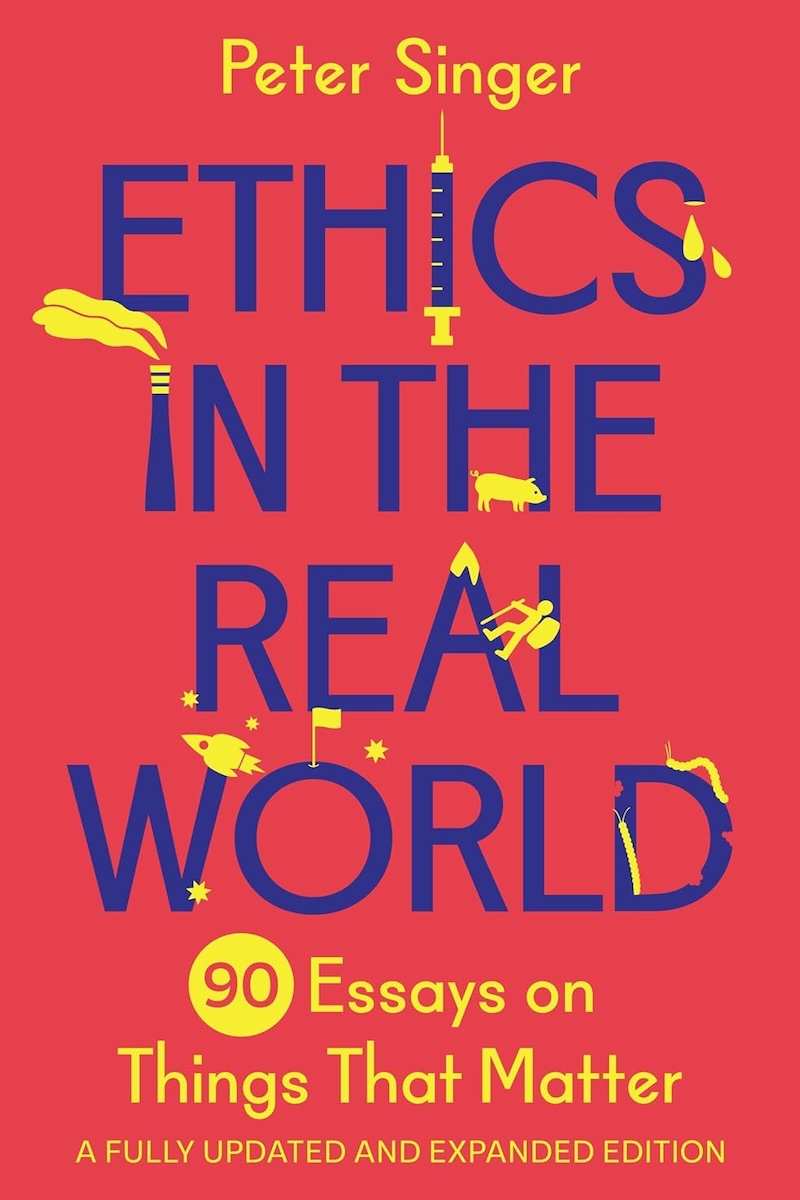
Singer, P. (2023). Ethics In the Real World: 90 Brief Essays on Things That Matter. Princeton University Press.
Intellectual and Historical Context
Peter Singer’s Ethics in the Real World is an extensive collection of short essays addressing practical and theoretical moral questions. It reflects Singer’s commitment to utilitarian principles, his focus on effective altruism, and his engagement with contemporary ethical issues. This expanded 2023 edition incorporates new essays on topics like climate change, artificial intelligence, pandemic ethics, and geopolitical conflicts, demonstrating Singer’s responsiveness to evolving global challenges.
The book is grounded in Singer’s long-standing effort to make philosophy relevant to non-academic audiences. He builds on his legacy of advocating for animal rights, combating poverty, and promoting rational moral discourse. Singer’s method—balancing rigorous philosophical analysis with real-world applicability—underscores the enduring relevance of philosophy in addressing both personal and collective moral dilemmas.
Thesis Statement
The collection argues that ethical reasoning is indispensable for navigating the complexities of modern life. By confronting readers with diverse issues ranging from global poverty to personal behavior, Singer challenges them to think critically, act compassionately, and adopt solutions informed by reason and evidence.
Key Concepts
Moral Reasoning and Practical Ethics
Singer advocates for reason as a tool for ethical decision-making, rejecting mere intuition or tradition. He emphasizes the importance of aligning personal actions with broader moral principles.
Effective Altruism
Several essays champion the efficient allocation of resources to maximize good, reflecting Singer’s commitment to impactful philanthropy.
Animal Rights and Beyond
Singer reiterates his groundbreaking arguments against speciesism, extending moral consideration to non-human animals based on their capacity to suffer.
Pandemic Ethics and Public Health
Essays on COVID-19 and related crises explore the balance between individual freedom and collective responsibility.
Technological and Environmental Futures
The book examines emerging ethical challenges, including AI ethics, genetic engineering, and climate change, emphasizing humanity’s responsibility to mitigate risks for future generations.
Global Justice and Inequality
Singer critiques wealth disparities and advocates systemic reforms to address the suffering of marginalized populations.
Cultural and Personal Morality
Essays probe everyday ethical choices, from dietary habits to parenting styles, showing that morality pervades all aspects of life.
Chapter Summaries
Introduction
Singer introduces the book as a response to the need for ethical reflection in modern society. He explains his approach to ethics, grounded in reason and utilitarianism, while emphasizing the practical importance of ethical inquiry. Singer situates the essays as tools to provoke thought and inspire action on both enduring and contemporary moral challenges.
Big Questions
Singer tackles foundational ethical issues, including the objectivity of moral truths and the possibility of moral progress. Essays like Does Anything Matter? engage with Derek Parfit’s arguments on the universality of moral reasoning, while Is There Moral Progress? examines historical and empirical evidence supporting ethical advancement over time.
Animals
This section revisits Singer’s pioneering work on animal rights, including The Case for Going Vegan and If Fish Could Scream. He critiques speciesism and emphasizes extending moral consideration to non-human animals based on their capacity to suffer. Practical essays like Learning from Europe’s More Ethical Eggs explore incremental reforms in animal agriculture.
Life and Death
Singer examines bioethical issues, including euthanasia, abortion, and end-of-life care. Essays such as The Real Abortion Tragedy and Should Children Have the Right to Die? explore controversial topics with sensitivity and philosophical rigor, highlighting the tension between personal autonomy and societal norms.
Public Health and Pandemic Ethics
Singer reflects on ethical dilemmas arising from the COVID-19 pandemic in essays like Were the Lockdowns Justified? and Victims of the Unvaccinated. He explores the balance between individual freedoms and collective welfare, offering insights into vaccine mandates, lockdown policies, and global public health inequities.
Sex and Gender
This section addresses ethical issues surrounding sexuality and gender identity. Essays such as How Much Should Sex Matter? and The Case for Legalizing Sex Work challenge societal taboos while advocating for policies that prioritize individual autonomy and harm reduction.
Doing Good
Singer’s essays on effective altruism, such as Heartwarming Causes Are Nice, But… and The Lives You Saved, emphasize rational decision-making in philanthropy. He critiques inefficient charitable practices and advocates for maximizing impact through evidence-based giving.
Happiness
Essays like Happiness, Money, and Giving It Away and Can We Increase Gross National Happiness? explore the relationship between wealth, altruism, and well-being. Singer reflects on the philosophical and practical dimensions of happiness, urging readers to consider how ethical behavior can contribute to personal and societal flourishing.
Politics
Singer examines political ethics, including the morality of violence, free speech, and systemic injustice. Essays like Should We Honor Racists? and Is Violence the Way to Fight Racism? probe the ethical limits of activism, emphasizing rational discourse and nonviolence.
Global Problems
In essays such as The Refugee Dilemma and Stopping Putin, Singer discusses ethical responses to international crises, including immigration, climate change, and armed conflict. He underscores the moral responsibilities of individuals, nations, and global institutions in addressing these challenges.
Science and Technology
Singer explores the ethical implications of emerging technologies, including AI, genetic engineering, and organ markets. Essays like Rights for Robots? and An Ethical Pathway for Gene Editing examine the opportunities and risks posed by scientific advancements, advocating for careful regulation and ethical foresight.
Freedom and Responsibility
This section explores tensions between individual rights and societal responsibilities. Essays such as Free Speech and Fake News and Keeping Discussion Free emphasize the importance of open discourse while addressing the ethical challenges of misinformation and censorship.
Living, Working, Playing
Singer examines everyday moral dilemmas, from parenting styles (Tiger Mothers or Elephant Mothers?) to ethical consumption (Why Pay More?). He illustrates how small, personal choices have broader moral significance.
The Future
The closing section focuses on humanity’s potential and existential risks. Essays like Should We Live to 1,000? and Preventing Human Extinction challenge readers to consider their responsibility to future generations. Singer explores space colonization, AI, and climate change as pivotal issues shaping our collective destiny.
Key Quotes and Broader Implications
We all make ethical choices, frequently without being aware that we are doing so.
Analysis: Singer highlights the pervasive nature of ethics in everyday life, suggesting that even mundane decisions have moral dimensions. This framing encourages readers to reflect on the broader implications of their actions.
Broader Implications: This insight underscores the importance of ethical awareness and the necessity of reasoning about choices in a world of interconnected consequences. It invites readers to approach decision-making with intentionality and moral clarity.
The good of any one individual is of no more importance, from the point of view of the Universe, than the good of any other.
Analysis: Drawing on Henry Sidgwick’s utilitarian principle, Singer challenges anthropocentric and self-centered ethics. This assertion is central to his advocacy for equal consideration of interests, regardless of species or geographic location.
Broader Implications: The quote serves as a foundation for global justice, effective altruism, and animal rights. It compels readers to extend their moral considerations beyond personal and cultural biases.
If we can prevent great suffering without sacrificing something of comparable importance, we ought to do so.
Analysis: This principle, rooted in Singer’s famous Famine, Affluence, and Morality, calls for moral responsibility in addressing preventable suffering, particularly through effective philanthropy.
Broader Implications: It underpins the effective altruism movement, urging individuals and institutions to prioritize high-impact interventions in areas like global poverty and public health.
Reason leads us to care for others, even when our intuitions and emotions might fail us.
Analysis: This principle, rooted in Singer’s famous Famine, Affluence, and Morality, calls for moral responsibility in addressing preventable suffering, particularly through effective philanthropy.
Broader Implications: It underpins the effective altruism movement, urging individuals and institutions to prioritize high-impact interventions in areas like global poverty and public health.
Our failure to act is as morally significant as harmful actions we deliberately perform.
Analysis: Singer argues that omissions, like failing to mitigate climate change or combat poverty, carry significant ethical weight. This challenges traditional distinctions between acts and omissions in moral philosophy.
Broader Implications: It underpins the effective altruism movement, urging individuals and institutions to prioritize high-impact interventions in areas like global poverty and public health.
Thinking ethically means looking beyond our own lives and imagining the impact of our actions on future generations.
Analysis: Singer argues that omissions, like failing to mitigate climate change or combat poverty, carry significant ethical weight. This challenges traditional distinctions between acts and omissions in moral philosophy.
Broader Implications: It underpins the effective altruism movement, urging individuals and institutions to prioritize high-impact interventions in areas like global poverty and public health.
Significance and Impact
Theoretical Contributions
Singer’s work bridges academic philosophy and practical ethics, offering accessible arguments grounded in utilitarianism. His exploration of topics like animal rights, global poverty, and pandemic ethics has reshaped moral discourse by integrating empirical evidence with normative analysis.
Societal Influence
Singer has significantly impacted public attitudes toward philanthropy, animal welfare, and environmentalism. His arguments for effective altruism have inspired organizations like GiveWell and The Life You Can Save, promoting transparency and impact-driven charity.
Policy Implications
Singer’s writings advocate systemic reforms, including wealth redistribution, ethical governance of technology, and climate action. His emphasis on cost-effectiveness and moral responsibility has influenced policymakers, NGOs, and global institutions.
Challenges and Critiques
While widely influential, Singer’s utilitarian approach faces critiques for its demanding nature and potential conflicts with cultural and personal values. His arguments about controversial topics like euthanasia and abortion provoke important debates on the limits of ethical reasoning.