01 / Classic Textbook Recommendation
Classic Textbook Recommendation
Citation
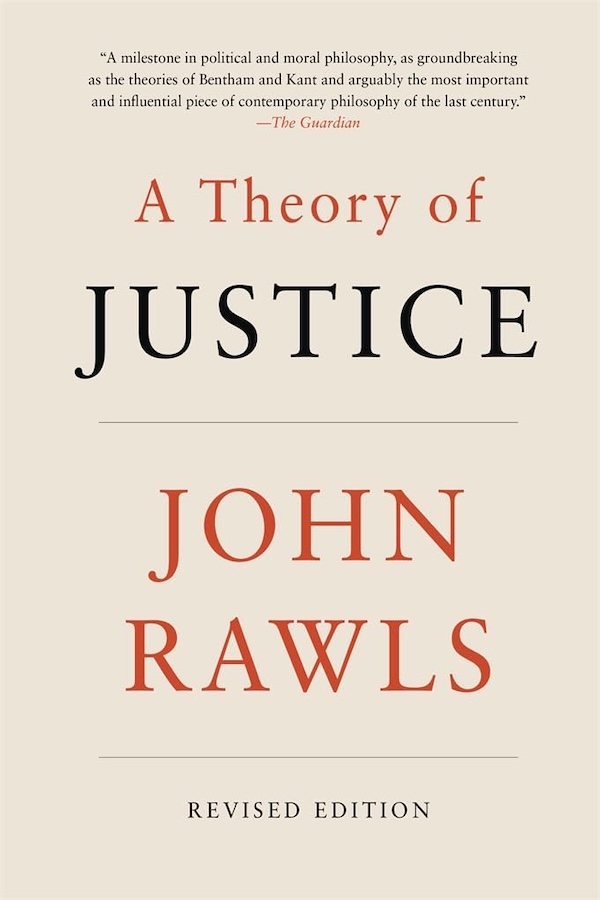
Rawls, J. (1999). A Theory of Justice: Revised Edition. Harvard University Press. (Original work published 1971).
Intellectual & Historical Context
A Theory of Justice was published in 1971, at a time when political philosophy had been largely dormant, with many considering normative political theory dead due to the dominance of logical positivism and value-neutral social science. Rawls's work single-handedly revitalized the field and established the framework for virtually all subsequent discussions of justice and political philosophy.
Writing in the context of post-World War II America, Rawls sought to defend liberal democratic institutions against both utilitarian and libertarian challenges while addressing growing concerns about inequality and social justice. The civil rights movement, the Vietnam War, and the Great Society programs provided the backdrop for his attempt to articulate principles of justice that could command broad consensus in a pluralistic society.
Rawls drew on the social contract tradition of Locke, Rousseau, and Kant while incorporating insights from modern economics, game theory, and moral psychology. His work represented a sophisticated attempt to ground liberal institutions in rational choice theory while maintaining commitments to individual rights and democratic equality.
Thesis Statement
Rawls argues that principles of justice should be chosen from an "original position" behind a "veil of ignorance" where rational individuals, deprived of knowledge about their particular circumstances, would select principles to govern their society. He contends that under these conditions, people would choose his two principles of justice: equal basic liberties for all, and social and economic inequalities arranged to benefit the least advantaged members of society.
Key Concepts
Justice as Fairness
Rawls's conception of justice that emphasizes fairness in the basic structure of society rather than individual transactions or overall outcomes.
The Original Position
A hypothetical situation designed to represent equality between persons as moral agents, where principles of justice are chosen behind a veil of ignorance.
The Veil of Ignorance
A condition in the original position where decision-makers are deprived of knowledge about their particular circumstances, forcing them to choose impartially.
Two Principles of Justice
First Principle: Equal basic liberties for all citizens (liberty principle) Second Principle: Social and economic inequalities must be arranged to benefit the least advantaged (difference principle) and attached to positions open to all under fair equality of opportunity.
The Difference Principle
The idea that inequalities are justified only if they improve the position of the worst-off members of society.
Basic Structure
The way major social institutions distribute fundamental rights and duties and determine the distribution of advantages from social cooperation.
Reflective Equilibrium
The method of moral reasoning that seeks coherence between our considered moral judgments and general principles.
Primary Goods
Basic resources that rational persons want regardless of their particular life plans: rights, liberties, opportunities, income, wealth, and self-respect.
Structure and Chapter Analysis
Part One: Theory
Chapter 1: Justice as Fairness
Rawls introduces his approach to justice, distinguishing it from utilitarianism and intuitionism. He outlines the role of justice in social cooperation and introduces the concept of the basic structure of society.
Chapter 2: The Principles of Justice
Presentation of the original position and the reasoning that leads to the two principles of justice. Rawls argues these principles would be chosen by rational actors behind the veil of ignorance.
Chapter 3: The Original Position
Detailed analysis of the original position as a theoretical device for selecting principles of justice. Discussion of why the veil of ignorance ensures fair choice and impartial reasoning.
Part Two: Institutions
Chapter 4: Equal Liberty
Exploration of the first principle of justice, focusing on basic liberties like freedom of speech, assembly, thought, and the rule of law. Analysis of how these liberties can be equally distributed.
Chapter 5: Distributive Shares
Examination of the second principle, particularly the difference principle. Discussion of how economic institutions should be arranged to satisfy requirements of justice.
Chapter 6: Duty and Obligation
Analysis of political obligation and the duty to comply with just institutions. Discussion of civil disobedience and conscientious refusal.
Part Three: Ends
Chapter 7: Goodness as Rationality
Development of a theory of the good compatible with the right. Discussion of rational life plans and the relationship between justice and individual good.
Chapter 8: The Sense of Justice
Psychological account of how people develop moral sentiments and commitment to justice. Discussion of moral development and stability.
Chapter 9: The Good of Justice
Argument that just institutions are good for individuals and that the principles of justice are congruent with human good.
Key Arguments
Against Utilitarianism
Rawls argues that utilitarianism fails to take seriously the distinction between persons, potentially sacrificing some individuals for greater overall welfare. The difference principle provides a superior alternative that protects individual rights while addressing distributive concerns.
The Argument from the Original Position
Behind the veil of ignorance, rational choosers would prefer principles that protect them against the worst possible outcomes, leading them to choose Rawls's principles rather than utilitarian or libertarian alternatives.
Priority of Liberty
The first principle of justice has lexical priority over the second, meaning basic liberties cannot be traded off for economic advantages once a certain level of material well-being is achieved.
Fair Equality of Opportunity
Inequalities in outcome are acceptable only if there is genuine equality of opportunity, which requires not just formal equality but substantive measures to ensure fair competition.
Critical Analysis
Strengths
Rawls provides a systematic and rigorous approach to thinking about justice that incorporates both individual rights and social cooperation. His method of reflective equilibrium offers a plausible account of moral reasoning. The original position provides an intuitive way of thinking about fairness and impartiality.
Criticisms
Communitarian Critiques: Thinkers like Michael Sandel argue that Rawls's theory relies on an impoverished conception of the self that ignores the importance of community and shared values.
Libertarian Objections: Robert Nozick contends that Rawls's difference principle violates individual rights and that any patterned theory of justice is incompatible with liberty.
Feminist Criticisms: Susan Moller Okin and others argue that Rawls fails to adequately address gender inequality and the injustices within families.
Cultural Relativist Concerns: Critics question whether Rawls's principles are universal or reflect specifically Western liberal values.
Methodological Issues
The Original Position: Critics argue that the constraints of the original position may be either too strong (producing determinate but artificial results) or too weak (allowing multiple incompatible principles).
Primary Goods: The list of primary goods may be incomplete or culturally biased, failing to capture what people actually value across different societies.
Influence and Legacy
Academic Impact
A Theory of Justice transformed political philosophy from a marginal field into a central area of philosophical inquiry. It established the framework for contemporary debates about distributive justice, equality, and the role of the state.
Policy Influence
While not directly translated into policy, Rawlsian ideas have influenced discussions of:
- Healthcare reform and universal coverage
- Educational policy and equality of opportunity
- Progressive taxation and welfare policy
- Constitutional design and bill of rights
Theoretical Developments
The work spawned numerous theoretical developments:
- Liberal Egalitarianism: Further development by thinkers like Ronald Dworkin and G.A. Cohen
- Luck Egalitarianism: Focus on neutralizing the effects of brute luck
- Capability Approach: Amartya Sen's alternative focusing on capabilities rather than primary goods
Later Developments
Political Liberalism (1993)
Rawls's later work addressed criticisms about the comprehensiveness of his theory, focusing on political rather than metaphysical foundations for justice.
The Law of Peoples (1999)
Extension of the theory to international relations, addressing global justice and the rights of peoples.
Justice as Fairness: A Restatement (2001)
Final systematic presentation of Rawls's mature theory, incorporating responses to critics and refinements developed over thirty years.
Contemporary Relevance
Economic Inequality
Rawls's difference principle provides a framework for evaluating growing economic inequality in developed countries. The principle suggests inequality is justified only if it benefits the worst-off.
Global Justice
Although Rawls was cautious about extending his theory globally, contemporary theorists use Rawlsian methods to address issues of international distributive justice and global poverty.
Constitutional Design
The original position methodology has been applied to constitutional design and institutional reform, particularly in transitional democracies.
Technology and Justice
Contemporary applications include discussions of artificial intelligence, automation, and digital inequality through a Rawlsian lens.
Real-World Applications
Healthcare Policy
Arguments for universal healthcare often draw on Rawlsian principles, contending that healthcare is a primary good that should be distributed fairly.
Education Reform
Policies aimed at educational equality of opportunity reflect Rawlsian concerns about fair distribution of life chances.
Progressive Taxation
Arguments for progressive taxation often invoke the difference principle, claiming such policies can benefit the least advantaged.
Affirmative Action
Debates about affirmative action frequently reference Rawlsian ideas about fair equality of opportunity and correcting for disadvantage.
Criticisms and Debates
The Difference Principle
Incentive Problems: Critics argue the difference principle may reduce productivity by limiting incentives for talented individuals.
Measurement Issues: Determining who counts as "worst-off" and measuring their welfare presents practical challenges.
Global Application: Questions arise about whether the principle applies within nations or globally.
Cultural Universalism
Western Bias: Critics argue Rawlsian liberalism reflects specifically Western values that may not apply universally.
Religious Pluralism: Questions about how religious communities with comprehensive doctrines can accept political liberalism.
Procedural vs. Substantive Justice
Debate over whether Rawls's theory is primarily procedural (focusing on fair processes) or substantive (specifying particular outcomes).
Feminist Engagements
The Public/Private Distinction
Feminist philosophers argue that Rawls's focus on the basic structure neglects injustices within families and other "private" institutions.
Care Ethics
Care ethicists contend that Rawls's emphasis on justice neglects other important moral considerations like care, relationships, and interdependence.
Gender and Work
Critics argue that the theory fails to adequately address the gendered division of labor and its effects on women's opportunities.
Conclusion
A Theory of Justice stands as one of the most important works of political philosophy in the 20th century. While subject to extensive criticism and debate, it successfully revived normative political theory and established the terms for contemporary discussions of justice, equality, and democracy.
Rawls's greatest achievement may be demonstrating that rigorous philosophical argument can be brought to bear on fundamental questions of political morality. Whether one accepts his particular principles or not, the framework he provides for thinking about justice—emphasizing fairness, reciprocity, and the moral equality of persons—continues to shape political philosophy and public policy debates.
In an era of growing inequality, polarization, and global challenges, Rawls's vision of justice as fairness offers both analytical tools and normative guidance for thinking about how societies should be organized. His commitment to finding principles that free and equal citizens can endorse provides a model for democratic reasoning about justice that remains relevant for contemporary challenges.
The work's influence extends far beyond academic philosophy, informing legal scholarship, economic policy, and political reform efforts around the world. While the specific institutions Rawls envisioned may need updating for contemporary challenges, his fundamental insight—that social institutions should be designed to work fairly for all members of society—continues to provide essential guidance for anyone committed to creating more just and democratic societies.