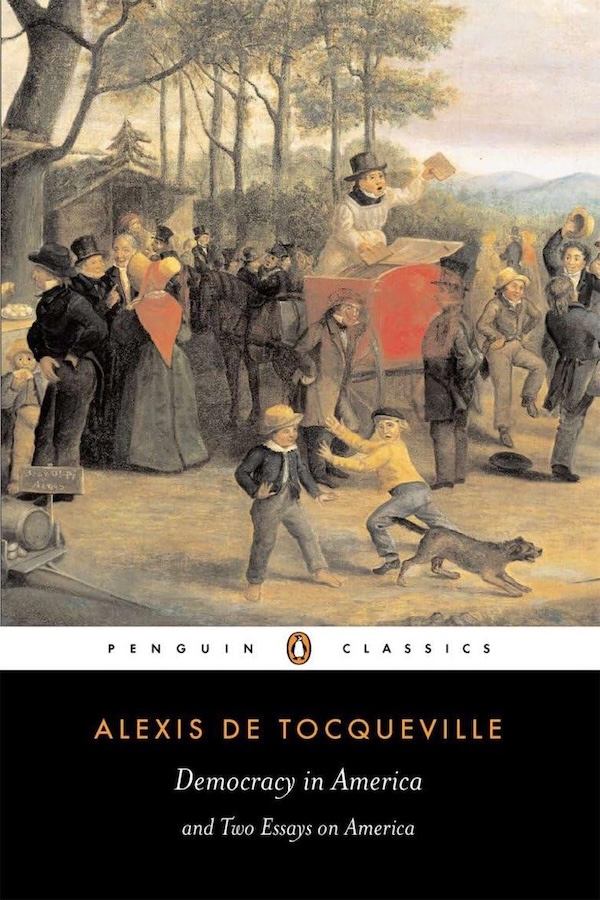
01 / Classic Textbook Recommendation
Classic Textbook Recommendation
Citation
Tocqueville, A. de. (2000). Democracy in America (H. C. Mansfield & D. Winthrop, Trans.). University of Chicago Press. (Original work published 1835-1840).
Intellectual & Historical Context
Democracy in America emerged from Alexis de Tocqueville's nine-month journey through the United States in 1831-1832, ostensibly to study the American prison system but actually to observe the functioning of democratic society. Writing during a period of democratic revolution sweeping across Europe, Tocqueville sought to understand the implications of democracy's spread.
As a young French aristocrat witnessing the collapse of the old European order, Tocqueville recognized that democracy was an irresistible historical force. Rather than simply lamenting this change, he sought to understand democracy's nature, benefits, and dangers. His observations of American society provided a laboratory for studying democracy in practice.
The work was published in two volumes: the first (1835) focusing on political institutions and democratic government, and the second (1840) examining democratic society and culture. Tocqueville's perspective as a foreign observer allowed him to see patterns and characteristics that Americans themselves might take for granted.
Thesis Statement
Tocqueville argues that democracy is an irresistible historical force characterized by the equality of conditions, but that democratic societies face the perpetual challenge of balancing equality with liberty. He contends that while democracy brings many benefits, it also poses unique dangers, particularly the tyranny of the majority and democratic despotism, which can only be countered through strong intermediate institutions and civic engagement.
Key Concepts
Equality of Conditions
The fundamental characteristic of democratic society, where social distinctions are minimized and individuals are considered equal in rights and dignity.
Tyranny of the Majority
The danger that democratic majorities might oppress minorities, not through legal persecution but through social pressure and conformity.
Democratic Despotism
A soft, paternalistic form of tyranny where government provides for citizens' needs while gradually eroding their capacity for self-government.
Civil Society
The network of voluntary associations, institutions, and organizations that mediate between individuals and the state, essential for democratic health.
Individualism
The democratic tendency for people to withdraw into private life and personal concerns, potentially weakening social bonds and civic engagement.
Administrative Centralization
The concentration of governmental power in central authorities, which Tocqueville saw as a threat to local self-government and democratic participation.
Mores
The habits of mind and heart that shape a society's character and make democratic institutions possible.
Democratic Revolution
The long-term historical process by which aristocratic societies transform into democratic ones, characterized by increasing equality.
Structure and Volume Analysis
Volume One: Democratic Government and Political Institutions
Part I: Chapters 1-8: Origins and Foundation
Tocqueville examines the historical origins of American democracy, the influence of geography, and the role of law in shaping democratic institutions.
Chapter 1: Exterior Configuration of North America
Analysis of how geography and natural features shaped American development and democratic character.
Chapter 2: Of the Point of Departure and Its Importance for the Future of the Anglo-Americans
Examination of the Puritan founding and its lasting influence on American democracy and culture.
Chapters 3-5: Social State and Political Constitution
Discussion of equality of conditions in America and the structure of democratic government.
Part II: Chapters 9-10: Federal and State Government
Analysis of American federalism, the relationship between state and federal power, and the advantages of decentralized government.
Chapters 6-8: Local Government and Democracy
Examination of townships, counties, and local self-government as schools of democracy.
Volume Two: Democratic Society and Culture
Part I: Influence of Democracy on Intellectual Movement
Analysis of how democracy affects thinking, science, literature, and the arts.
Part II: Influence of Democracy on Sentiments
Examination of democratic effects on family life, social relations, and individual character.
Part III: Influence of Democracy on Mores
Discussion of how democracy shapes social customs, political habits, and civic life.
Part IV: Influence of Democratic Ideas and Sentiments on Political Society
Analysis of democratic society's political tendencies and potential for both freedom and despotism.
Key Arguments
Democracy as Historical Necessity
Tocqueville argues that the democratic revolution is providential and irresistible, making it futile to oppose democracy but crucial to understand and guide it properly.
The American Exception
America offers unique advantages for democracy due to its historical circumstances, geographical situation, and absence of feudal traditions, but these conditions may not be replicable elsewhere.
The Importance of Associations
Voluntary associations serve as barriers against both individualism and despotism, teaching citizens civic skills and providing means for collective action.
Religion and Democracy
Religion provides moral foundation for democracy and helps counter materialistic tendencies, even though democratic spirit tends toward religious equality and tolerance.
The Danger of Soft Despotism
Democratic societies may gradually surrender freedom for security and comfort, leading to a paternalistic despotism more dangerous than traditional tyranny.
Local Government as Democratic Education
Participation in local government teaches citizens democratic skills and habits essential for maintaining free institutions.
Critical Analysis
Strengths
Tocqueville provides remarkably prescient insights into democratic development that have proven accurate over time. His balanced approach recognizes both democracy's benefits and dangers. The work combines empirical observation with theoretical analysis, offering both descriptive accuracy and analytical depth.
Criticisms
Limited Perspective: Tocqueville's aristocratic background and brief visit limited his understanding of certain aspects of American society, particularly the experiences of women, Native Americans, and enslaved people.
Racial Blindness: Despite acknowledging slavery and racial conflict, Tocqueville underestimated their fundamental importance to American society and democracy.
Class Analysis: His focus on equality of conditions obscured persistent class divisions and economic inequalities in American society.
Cultural Bias: Some observations reflect specifically French aristocratic perspectives rather than universal insights about democracy.
Influence and Legacy
Political Science
Democracy in America established comparative political analysis and remains foundational for understanding democratic development, civil society, and American exceptionalism.
Sociology
The work is considered one of the founding texts of political sociology, influencing understanding of how social conditions shape political institutions.
American Studies
Tocqueville's observations became central to American self-understanding and continue to influence debates about American character and institutions.
Democratic Theory
The work's insights about majority tyranny, civil society, and democratic culture remain central to contemporary democratic theory.
Contemporary Relevance
Civil Society and Social Capital
Tocqueville's emphasis on associations resonates with contemporary research on social capital and civic engagement in maintaining democratic health.
Political Polarization
His warnings about majority tyranny and social conformity speak to contemporary concerns about political polarization and echo chambers.
Administrative State
Tocqueville's concerns about administrative centralization remain relevant to debates about the growth of federal government and bureaucratic power.
Democratic Backsliding
His analysis of soft despotism provides framework for understanding contemporary threats to democratic institutions and norms.
Modern Applications
Comparative Democratization
Tocqueville's insights inform contemporary studies of democratic transitions and consolidation in new democracies worldwide.
American Political Development
His observations continue to influence understanding of American political culture, federalism, and institutional development.
Civil Society Studies
Contemporary research on NGOs, civic organizations, and community engagement draws heavily on Tocquevillian insights.
Political Culture
His analysis of how democratic culture shapes political behavior remains influential in political culture studies.
Criticisms and Debates
Historical Accuracy
Scholars debate the accuracy of Tocqueville's observations and whether his brief visit provided sufficient basis for his broad generalizations.
Normative vs. Descriptive
Questions arise about whether Tocqueville was primarily describing American democracy or prescribing solutions for democratic governance generally.
Eurocentrism
Critics argue that his analysis reflects European concerns and may not capture the full reality of American democratic experience.
Gender and Race
Feminist and critical race scholars point to significant blind spots in Tocqueville's analysis regarding women and racial minorities.
Methodological Contributions
Participant Observation
Tocqueville pioneered the method of extended field observation combined with theoretical analysis that became central to social science.
Comparative Method
His implicit comparison between American and European societies established comparative analysis as essential for understanding political systems.
Cultural Analysis
The integration of cultural factors with institutional analysis influenced subsequent political and social research methods.
Insights on American Democracy
Equality vs. Liberty
Tocqueville identified the central tension in democratic societies between the desire for equality and the preservation of individual liberty.
Federalism
His analysis of American federalism as balancing central authority with local self-government influenced understanding of federal systems.
Civic Participation
The emphasis on citizen participation in government and civil society as essential for democratic health remains influential.
Democratic Culture
His recognition that democracy requires supportive cultural values and social practices, not just institutional arrangements.
Warnings About Democratic Dangers
Majority Tyranny
The threat that democratic majorities pose to minority rights and individual freedom through social pressure and conformity.
Individualism
The tendency of democratic citizens to withdraw from public life into private concerns, weakening social solidarity.
Materialism
The danger that democratic focus on material well-being might erode civic virtue and spiritual values.
Centralization
The risk that democratic governments might gradually concentrate power, reducing local autonomy and citizen participation.
Global Impact
European Democracy
Tocqueville's analysis influenced European understanding of democratic possibilities and challenges during the 19th-century democratic revolutions.
Postcolonial Studies
Contemporary scholars of new democracies draw on Tocquevillian insights about the relationship between culture, institutions, and democratic success.
Transitional Societies
His analysis of how societies transition from aristocratic to democratic forms remains relevant for understanding contemporary political transformations.
Conclusion
Democracy in America remains the most influential foreign analysis of American society and one of the most important works in political science. Tocqueville's insights about the relationship between equality and liberty, the importance of civil society, and the dangers facing democratic societies continue to resonate in contemporary political debates.
The work's enduring value lies not in its specific observations about 1830s America, but in its theoretical framework for understanding democratic societies. Tocqueville's recognition that democracy brings both unprecedented opportunities and unique dangers provides essential guidance for contemporary democratic challenges.
In an era of democratic stress worldwide, Tocqueville's emphasis on the importance of intermediate institutions, civic participation, and democratic culture offers crucial insights. His warnings about majority tyranny, soft despotism, and the fragility of democratic institutions speak directly to contemporary concerns about democratic backsliding and the challenges facing free societies in the 21st century.