01 / Classic Textbook Recommendation
Classic Textbook Recommendation
Citation
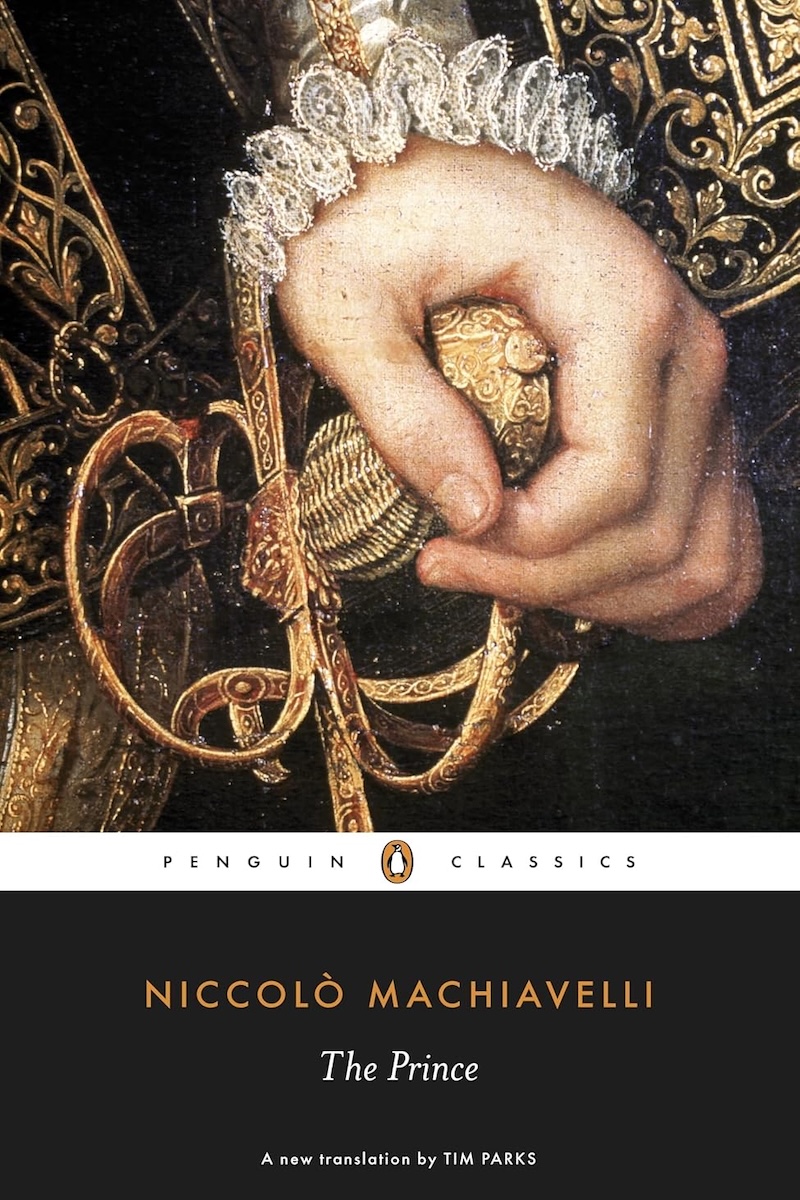
Machiavelli, N. (2003). The Prince. Penguin Classics. (Original work published 1532).
Intellectual & Historical Context
The Prince was written in 1513 by Niccolò Machiavelli during his political exile from Florence, but was not published until 1532, five years after his death. Originally titled De Principatibus (Of Principalities), the work emerged from the turbulent political landscape of Renaissance Italy, where city-states constantly warred and political power was fragmented.
Writing in the context of Italian political fragmentation and foreign invasion, Machiavelli sought to provide practical guidance for effective governance based on historical examples and contemporary observation rather than abstract moral principles. The work was influenced by the political chaos he witnessed, including the rise and fall of Cesare Borgia, whom he observed as a diplomatic envoy.
Machiavelli's approach marked a revolutionary departure from medieval political thought, which typically grounded political authority in divine right or moral virtue. Instead, he focused on the effective acquisition and maintenance of power, establishing what would later be called "political realism" or "realpolitik."
Thesis Statement
Machiavelli argues that successful political leadership requires pragmatic decision-making that prioritizes the stability and security of the state over traditional moral considerations. He contends that effective princes must be willing to employ both virtue and vice strategically, adapting their methods to circumstances while maintaining the appearance of conventional morality.
Key Concepts
Virtù
Not traditional virtue, but political skill, strength, and the ability to adapt to changing circumstances. A prince's effectiveness in achieving political goals regardless of moral implications.
Fortuna
Fortune or chance, representing the unpredictable elements of political life that a skilled prince must learn to navigate and influence.
The Lion and the Fox
Machiavelli's metaphor for the dual nature required of effective leadership: the lion represents force and strength, while the fox represents cunning and deception.
Effectual Truth
Machiavelli's focus on what actually works in practice rather than what should work in theory, emphasizing results over ideological purity.
Necessity
The concept that political circumstances often force leaders to act in ways that would be considered immoral in private life.
The Appearance of Virtue
The importance of maintaining a public image of traditional moral virtues while being prepared to act otherwise when necessary.
Structure and Chapter Analysis
Chapters 1-11: Types of Principalities
Chapters 1-2: Classification of States
Machiavelli categorizes different types of principalities (hereditary, new, mixed, and ecclesiastical) and analyzes the challenges specific to each form of governance.
Chapters 3-5: New Principalities
Analysis of how to acquire and maintain newly conquered territories, including the importance of eliminating potential rivals and managing local customs.
Chapters 6-9: Methods of Acquisition
Discussion of various means by which principalities are acquired, including merit, fortune, crime, and popular support.
Chapters 10-11: Defensive Strategies
Examination of how princes can defend their territories and the unique position of ecclesiastical principalities.
Chapters 12-14: Military Affairs
Chapter 12: Types of Armies
Critical analysis of mercenary, auxiliary, and native armies, with strong advocacy for citizen militias over hired soldiers.
Chapter 13: Auxiliary and Mixed Troops
Further discussion of the dangers of relying on foreign military assistance.
Chapter 14: Military Leadership
The prince's responsibilities as military commander and the importance of studying warfare.
Chapters 15-23: The Prince's Character and Behavior
Chapter 15: Reality vs. Idealism
Machiavelli's famous declaration that he will focus on "effectual truth" rather than imaginary ideals.
Chapters 16-19: Moral Qualities
Analysis of traditional virtues (generosity, cruelty, mercy, honesty) from a political perspective, arguing that circumstances determine appropriate behavior.
Chapter 18: Keeping Faith
The controversial chapter on when it is necessary to break promises and use deception.
Chapters 20-23: Practical Governance
Advice on fortifications, advisors, and avoiding flatterers.
Chapters 24-26: Italy's Political Situation
Chapter 24: Why Italian Princes Have Lost Power
Analysis of the failures of contemporary Italian rulers.
Chapter 25: The Role of Fortune
Discussion of how much human action can influence events versus the role of chance.
Chapter 26: Exhortation to Liberate Italy
Machiavelli's passionate appeal for Italian unification and independence from foreign domination.
Key Arguments
Separation of Politics from Morality
Machiavelli argues that political effectiveness requires different standards than private morality. What works in governing a state may be different from what is morally correct in personal relationships.
The Primacy of Security
State security and stability take precedence over other considerations. A prince who allows his state to collapse through moral squeamishness serves no one.
Adaptability as Leadership
Effective leaders must be able to change their approach based on circumstances. Rigid adherence to any single strategy will eventually lead to failure.
The Importance of Popular Support
While fear is more reliable than love, princes must avoid being hated by their subjects. Popular support provides crucial stability.
Military Independence
States must rely on their own military forces rather than mercenaries or foreign allies to maintain true independence and security.
Critical Analysis
Strengths
Machiavelli provides a realistic analysis of political power that acknowledges the gap between idealistic political theory and practical governance. His historical examples and careful observation of contemporary politics give weight to his arguments. The work's influence on subsequent political thought demonstrates its enduring insights.
Criticisms
Moral Objections: Critics argue that Machiavelli's separation of politics from ethics legitimizes tyranny and undermines the possibility of just governance.
Historical Context: Some argue that his recommendations were specific to Renaissance Italy and may not apply to modern democratic contexts.
Cynical View of Human Nature: Critics contend that Machiavelli's pessimistic view of human nature becomes a self-fulfilling prophecy.
Authoritarian Implications: The work has been criticized for providing intellectual justification for authoritarian rule.
Influence and Legacy
Political Realism
The Prince established the foundation for political realism, influencing thinkers from Thomas Hobbes to modern international relations theorists who emphasize power and security over idealistic concerns.
Modern Statecraft
The work's influence can be seen in modern political strategy, diplomacy, and leadership theory. The term "Machiavellian" has entered common usage to describe cunning political maneuvering.
Academic Impact
The work transformed political science by introducing empirical observation and historical analysis as methods for understanding political phenomena.
Controversial Interpretations
The "Evil" Interpretation
Some readers have interpreted Machiavelli as advocating immoral behavior for its own sake, leading to the negative connotations of "Machiavellian."
The Patriotic Interpretation
Others argue that the work should be read primarily as a desperate attempt to find solutions for Italian political fragmentation and foreign domination.
The Republican Interpretation
Some scholars emphasize Machiavelli's republican sympathies, arguing that The Prince was written ironically or as a practical guide for circumstances that require princely rule.
Contemporary Relevance
Leadership Studies
Modern leadership theory often grapples with Machiavellian insights about the tension between ethical behavior and effective leadership.
International Relations
Realist theories of international relations draw heavily on Machiavellian insights about power, security, and the anarchic nature of international politics.
Political Strategy
Campaign strategists and political advisors often reference Machiavellian principles in planning electoral and policy strategies.
Corporate Leadership
Business literature frequently adapts Machiavellian insights to corporate contexts, though usually with greater emphasis on ethical constraints.
Modern Applications
Crisis Leadership
Machiavelli's insights about adapting to circumstances and making difficult decisions remain relevant for leaders facing crises.
Democratic Theory
Modern democratic theorists continue to wrestle with Machiavellian questions about the relationship between popular will and effective governance.
Political Ethics
Contemporary discussions of political ethics often reference Machiavellian dilemmas about whether the ends justify the means.
Criticisms and Debates
The Dirty Hands Problem
Political philosophers continue to debate whether political leaders must sometimes act immorally for good ends, a dilemma Machiavelli first articulated clearly.
Effectiveness vs. Legitimacy
Ongoing debates about whether effective governance is sufficient justification for political authority or whether legitimacy requires additional moral foundations.
Cultural Relativism
Questions about whether Machiavellian insights apply across cultures or are specific to particular political traditions.
Conclusion
The Prince remains one of the most influential works in political thought, fundamentally changing how we understand the relationship between power, morality, and effective governance. While controversial, Machiavelli's insights about the challenges of political leadership continue to resonate in contemporary discussions of statecraft, leadership, and political ethics.
The work's lasting significance lies not necessarily in its specific recommendations, but in its unflinching examination of the realities of political power. Whether one agrees with Machiavelli's conclusions or not, The Prince forces readers to confront fundamental questions about the nature of political authority and the responsibilities of leadership.
In an era of complex global challenges and democratic difficulties, Machiavelli's emphasis on adaptability, practical wisdom, and the careful study of political circumstances remains relevant. His work serves as both a cautionary tale about the abuse of power and a realistic assessment of the challenges facing any leader who seeks to govern effectively in an imperfect world.