01 / Classic Textbook Recommendation
Classic Textbook Recommendation
Part 1. Citation, Context, Thesis & Key Concepts
Citation
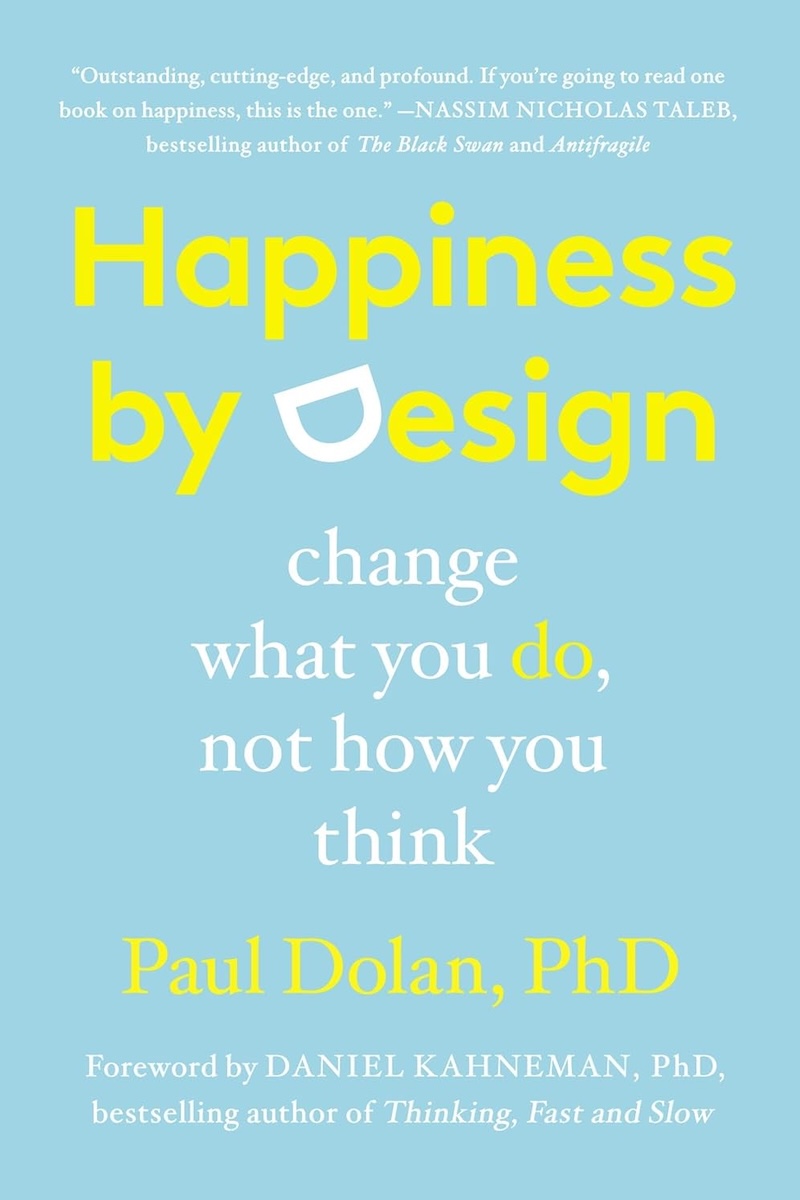
Dolan, P. (2014). Happiness by design: Finding pleasure and purpose in everyday life. Penguin Books.
Author & Publication Information
- Author: Paul Dolan, Professor of Behavioral Science at the London School of Economics, former chief academic advisor on economic appraisal for the UK Government, and internationally recognized well-being researcher.
- Publication: First published in 2014; the work synthesizes behavioral economics, psychology, and public policy research on happiness and well-being.
Intellectual & Historical Context
- Emerges from the convergence of behavioral economics, positive psychology, and the "happiness turn" in public policy during the 2000s-2010s.
- Builds upon Kahneman's work on experienced utility and the experiencing vs. remembering self.
- Responds to the limitations of traditional happiness measures and self-help approaches with evidence-based behavioral interventions.
- Written during a period when governments (particularly the UK) began incorporating well-being metrics into policy decisions.
Thesis Statement
Dolan argues that happiness consists of both pleasure (feeling good) and purpose (feeling meaningful), and that we can systematically design our environments and redirect our attention to optimize the balance of these experiences in daily life, rather than pursuing abstract life goals or relying on flawed memories of what makes us happy.
Key Concepts
- Pleasure-Purpose Principle (PPP): Happiness requires both hedonic pleasure and eudaimonic purpose in varying proportions.
- Attention as Resource: What we attend to determines our happiness more than objective circumstances.
- Design over Decide: Structuring environments and contexts to promote happiness works better than willpower.
- Production Process of Happiness: Inputs (what we do) + allocation of attention = happiness outputs.
- Mistaken Desires vs. Mistaken Projections: Why we're bad at predicting and remembering what makes us happy.
- Context Effects: How situations, priming, and defaults powerfully shape our experience of happiness.
Part 2. Chapter Summaries
Part I: Developing Happiness
- Chs. 1–3: Introduces the pleasure-purpose framework, arguing that happiness is experienced in moments, not achieved through reaching goals. Shows how traditional measures of happiness (life satisfaction surveys) miss the texture of daily experience.
Part II: Delivering Happiness
- Chs. 4–5: Explores why we make poor happiness decisions, including projection bias, focusing illusions, and the narrative fallacy. Demonstrates how social narratives about what "should" make us happy often mislead.
Part III: Deciding Happiness
- Chs. 6–7: Details practical strategies for happiness through attention management rather than changing circumstances. Introduces "deciding" (conscious choice) vs. "designing" (environmental structuring) approaches.
Part IV: Designing Happiness
- Chs. 8–10: Presents evidence-based design interventions:
- Priming: Using cues to direct attention toward positive experiences
- Defaults: Structuring choices to make happiness-promoting behaviors automatic
- Commitments: Pre-committing to activities that generate pleasure and purpose
- Social Networks: Leveraging social influences and accountability
Part V: Doing Happiness
- Chs. 11–12: Practical applications for work, relationships, and daily routines. Emphasizes small, sustainable changes over dramatic life transformations.
Conclusion
- Happiness is a production process we can optimize through behavioral design. Stop searching for happiness in achievement or possessions; instead, allocate attention wisely and structure environments to naturally generate pleasure and purpose.
Part 3. Key Quotes & Significance
Key Quotes
- "Your happiness is determined by how you allocate your attention."
- "The pleasure-purpose principle: happiness comes from experiences of both pleasure and purpose over time."
- "We need to stop thinking so much about what might make us happy and start doing things that actually do."
- "Design beats decide every time when it comes to changing behavior."
- "The stories we tell ourselves about our lives can make us miserable or happy, irrespective of the 'facts.'"
Significance & Impact
- Behavioral Policy: Influenced well-being measurement in public policy, particularly in the UK's national happiness indices.
- Workplace Design: Applied in organizational behavior to create environments that promote employee well-being.
- Personal Development: Shifted focus from goal achievement to attention management and environmental design.
- Academic Contribution: Bridged the gap between happiness research and practical behavioral interventions.
- Healthcare Applications: Informed interventions for mental health that focus on behavioral activation and environmental modification.
Broader Implications
- Challenges the self-help industry's focus on positive thinking and goal-setting.
- Demonstrates that happiness is more about process than outcomes.
- Shows how behavioral science can be applied to fundamental human concerns.
- Reinforces the importance of context and situation in shaping well-being.
- Provides evidence-based alternatives to pharmaceutical approaches to mood management.