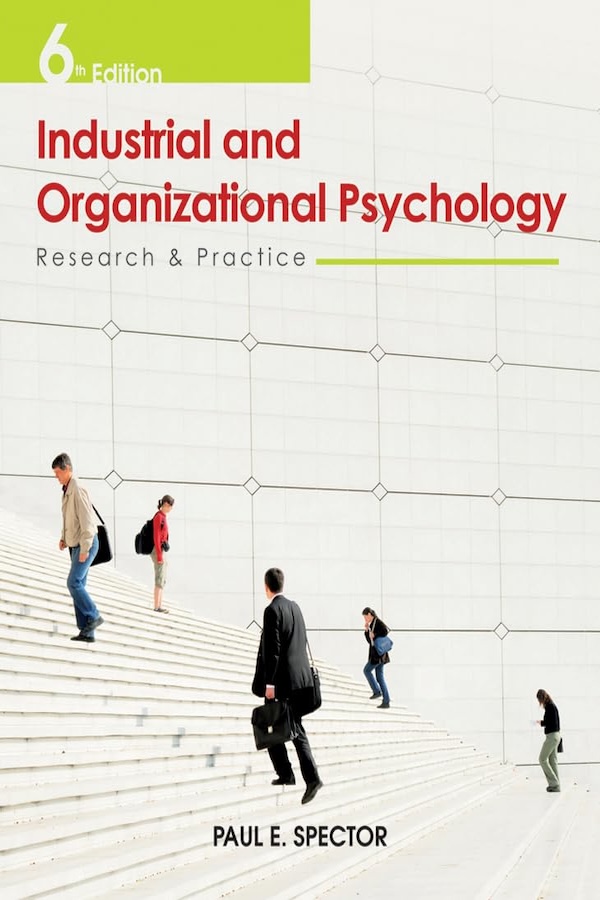
01 / Classic Textbook Recommendation
Classic Textbook Recommendation
Part 1. Citation, Context, Thesis & Key Concepts
Citation
Spector, P. E. (2012). Industrial and organisational psychology: Research and practice (6th ed.). John Wiley & Sons.
Author & Publication Information
- Author: Paul E. Spector, Distinguished University Professor at the University of South Florida, internationally recognized expert in industrial and organizational psychology, occupational stress, and research methodology.
- Publication: Sixth edition published by John Wiley & Sons in 2012, representing decades of research and teaching experience in I/O psychology.
Intellectual & Historical Context
- Written during the modern era of evidence-based practice in I/O psychology, emphasizing the integration of scientific research with practical applications.
- Reflects the evolution of the field from personnel psychology to comprehensive organizational psychology.
- Incorporates contemporary challenges including globalization, technology, diversity, and changing nature of work.
- Built on the scientist-practitioner model that characterizes professional I/O psychology.
Thesis Statement
Spector argues that industrial and organizational psychology provides a scientific foundation for understanding and improving workplace behavior, performance, and well-being through the systematic application of psychological principles to organizational challenges.
Key Concepts
- Scientist-Practitioner Model: The integration of scientific research with practical application in organizational settings.
- Job Analysis: Systematic methods for understanding job requirements and worker characteristics.
- Personnel Selection: Evidence-based approaches to hiring and placement decisions.
- Performance Management: Psychological approaches to measuring, evaluating, and improving work performance.
- Training and Development: Applying learning principles to enhance employee skills and knowledge.
- Organizational Behavior: Understanding individual and group behavior in organizational contexts.
Part 2. Chapter Summaries
Part I: Foundations of I/O Psychology
- Chs. 1-2: Introduction to the field:
- What is I/O Psychology: History, areas of practice, and career paths
- Research Methods: Scientific approaches to studying workplace behavior
Part II: Personnel Psychology
- Chs. 3-6: Individual-focused applications:
- Job Analysis: Methods for understanding work requirements and contexts
- Personnel Selection: Psychological testing, interviews, and assessment methods
- Performance Appraisal: Measuring and evaluating employee performance
- Training: Design and evaluation of workplace learning programs
Part III: Human Factors and Work Design
- Chs. 7-8: Person-environment fit:
- Human Factors: Psychology of human-machine interaction and workplace design
- Work Conditions: Environmental factors affecting performance and well-being
Part IV: Organizational Psychology
- Chs. 9-12: Group and organizational-level phenomena:
- Motivation: Theories and applications of work motivation
- Job Satisfaction: Determinants and consequences of workplace attitudes
- Leadership: Psychological approaches to understanding and developing leadership
- Team Effectiveness: Group dynamics and team performance
Part V: Organizational Development and Change
- Chs. 13-14: Organizational improvement:
- Organizational Development: Systematic approaches to organizational change
- Workplace Stress: Understanding and managing occupational stress and health
Part VI: Special Topics
- Chs. 15-16: Contemporary issues:
- International I/O Psychology: Cross-cultural considerations and global applications
- Future of I/O Psychology: Emerging trends and challenges in the field
Part 3. Key Quotes & Significance
Key Quotes
- "I/O psychology is the application of psychological principles, theory, and research to the work setting."
- "The scientist-practitioner model requires that we both consume and produce scientific research to guide our practice."
- "Effective personnel selection requires understanding both job requirements and individual capabilities."
- "Job satisfaction is one of the most studied variables in I/O psychology because of its importance to both employees and organizations."
- "The future of work will require I/O psychologists to address new challenges including technology, globalization, and changing workforce demographics."
Significance & Impact
- Educational Standard: Became one of the most widely used textbooks in I/O psychology programs, shaping how the field is taught.
- Professional Development: Influenced the training of thousands of I/O psychologists and HR professionals.
- Research Integration: Successfully integrated research findings with practical applications, demonstrating the value of scientific approaches.
- Global Influence: Used internationally, influencing I/O psychology practice worldwide.
- Evidence-Based Practice: Promoted the use of scientific evidence in organizational decision-making.
Broader Implications
- Demonstrates the practical value of psychological science for organizational effectiveness and employee well-being.
- Shows how systematic research can improve workplace practices and outcomes.
- Highlights the importance of individual differences in organizational settings.
- Contributes to the professionalization of human resource management and organizational development.
- Influences contemporary approaches to talent management, employee engagement, and organizational design.
- Provides frameworks for addressing contemporary workplace challenges including diversity, technology, and globalization.