01 / Classic Textbook Recommendation
Classic Textbook Recommendation
Part 1. Citation, Context, Thesis & Key Concepts
Citation
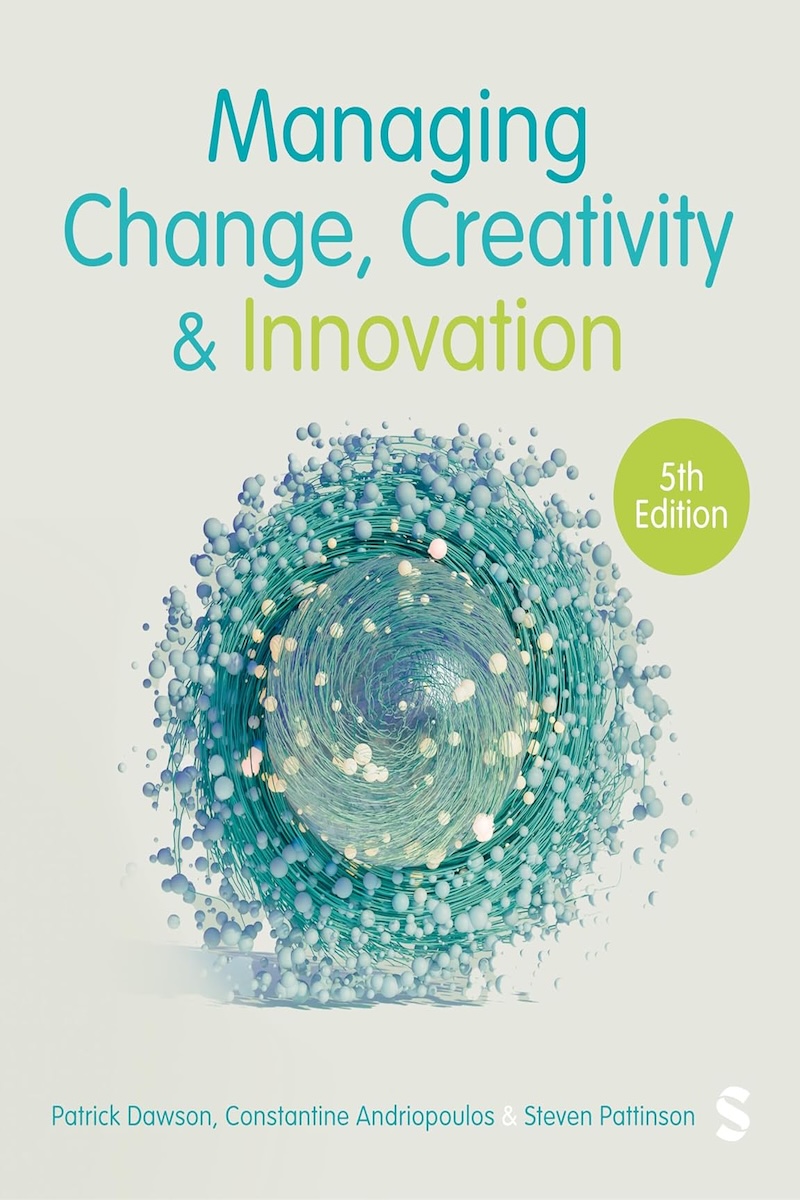
Dawson, P., & Andriopoulos, C. (2017). Managing change, creativity and innovation. Sage Publications.
Authors & Publication Information
- Authors:
- Patrick Dawson, Professor of Management at University of Aberdeen Business School, expert in organizational change and management
- Constantine Andriopoulos, Professor of Innovation and Entrepreneurship at Cass Business School, specialist in creativity and innovation management
- Publication: Published by Sage Publications in 2017, representing a comprehensive integration of change management with creativity and innovation theory.
Intellectual & Historical Context
- Written during a period of rapid technological change, globalization, and increasing competitive pressure requiring organizations to continuously innovate and adapt.
- Integrates traditional change management theory with contemporary understanding of creativity and innovation processes.
- Responds to the need for more dynamic and creative approaches to organizational transformation in the 21st century.
- Builds on decades of research in organizational development, innovation management, and creative processes.
Thesis Statement
Dawson and Andriopoulos argue that effective change management in contemporary organizations requires the deliberate integration of creativity and innovation processes, moving beyond traditional top-down change models to embrace emergent, creative, and participatory approaches to organizational transformation.
Key Concepts
- Integrated Change Management: Combining traditional change management with creativity and innovation principles.
- Creative Change Processes: Using creative methods and approaches to facilitate organizational transformation.
- Innovation-Driven Change: How innovation initiatives can drive broader organizational change.
- Change Leadership: Leadership approaches that foster creativity and innovation during change processes.
- Emergent Change: Change that emerges from creative processes rather than planned interventions.
- Transformational Creativity: Using creativity to reimagine organizational structures, processes, and cultures.
Part 2. Chapter Summaries
Part I: Foundations of Change, Creativity and Innovation
- Chs. 1-3: Theoretical foundations and integration:
- Understanding Change: Contemporary challenges in organizational change management
- Creativity in Organizations: The role of creative processes in organizational effectiveness
- Innovation Management: Frameworks for managing innovation in organizational contexts
Part II: Models and Approaches
- Chs. 4-6: Key models and theoretical approaches:
- Change Models: Traditional and contemporary approaches to managing organizational change
- Creative Processes: Models of individual and organizational creativity
- Innovation Systems: Understanding innovation as a systemic organizational capability
Part III: Leadership and Culture
- Chs. 7-9: Human and cultural dimensions:
- Change Leadership: Leading change through creativity and innovation
- Organizational Culture: Creating cultures that support change, creativity, and innovation
- Employee Engagement: Involving employees in creative change processes
Part IV: Implementation Strategies
- Chs. 10-12: Practical implementation approaches:
- Change Implementation: Strategies for implementing creative and innovative change initiatives
- Innovation Projects: Managing specific innovation projects and initiatives
- Measuring Success: Evaluating the effectiveness of change, creativity, and innovation efforts
Part V: Contemporary Challenges
- Chs. 13-15: Current and emerging issues:
- Digital Transformation: Managing change in the digital age
- Sustainable Innovation: Balancing innovation with sustainability concerns
- Global Change: Managing change across cultural and geographical boundaries
Part 3. Key Quotes & Significance
Key Quotes
- "Change is not just about implementing new processes; it's about unleashing the creative potential of the organization."
- "Innovation and change are two sides of the same coin—you cannot have sustainable change without innovation, and innovation always involves change."
- "The most successful change initiatives are those that tap into the creative energy and innovative capacity of employees at all levels."
- "Leading change in the 21st century requires leaders who can think creatively and foster innovation throughout the organization."
- "Change management is evolving from a top-down control process to a collaborative creative endeavor."
Significance & Impact
- Integrated Approach: Provided one of the first comprehensive integrations of change management with creativity and innovation theory.
- Practical Framework: Offered managers and consultants concrete tools for implementing creative approaches to organizational change.
- Academic Influence: Influenced curriculum development in change management and innovation management programs.
- Professional Practice: Shaped contemporary approaches to organizational development and transformation consulting.
- Research Direction: Opened new avenues for research at the intersection of change, creativity, and innovation.
Broader Implications
- Demonstrates the need for more dynamic and flexible approaches to organizational change in rapidly changing environments.
- Shows how creativity and innovation can be systematically integrated into change management processes.
- Highlights the importance of employee participation and engagement in successful change initiatives.
- Provides frameworks for understanding and managing the complexity of contemporary organizational transformation.
- Influences thinking about leadership development and organizational culture change.
- Contributes to understanding of how organizations can build adaptive capacity and resilience through creative change processes.