01 / Classic Textbook Recommendation
Classic Textbook Recommendation
Part 1. Citation, Context, Thesis & Key Concepts
Citation
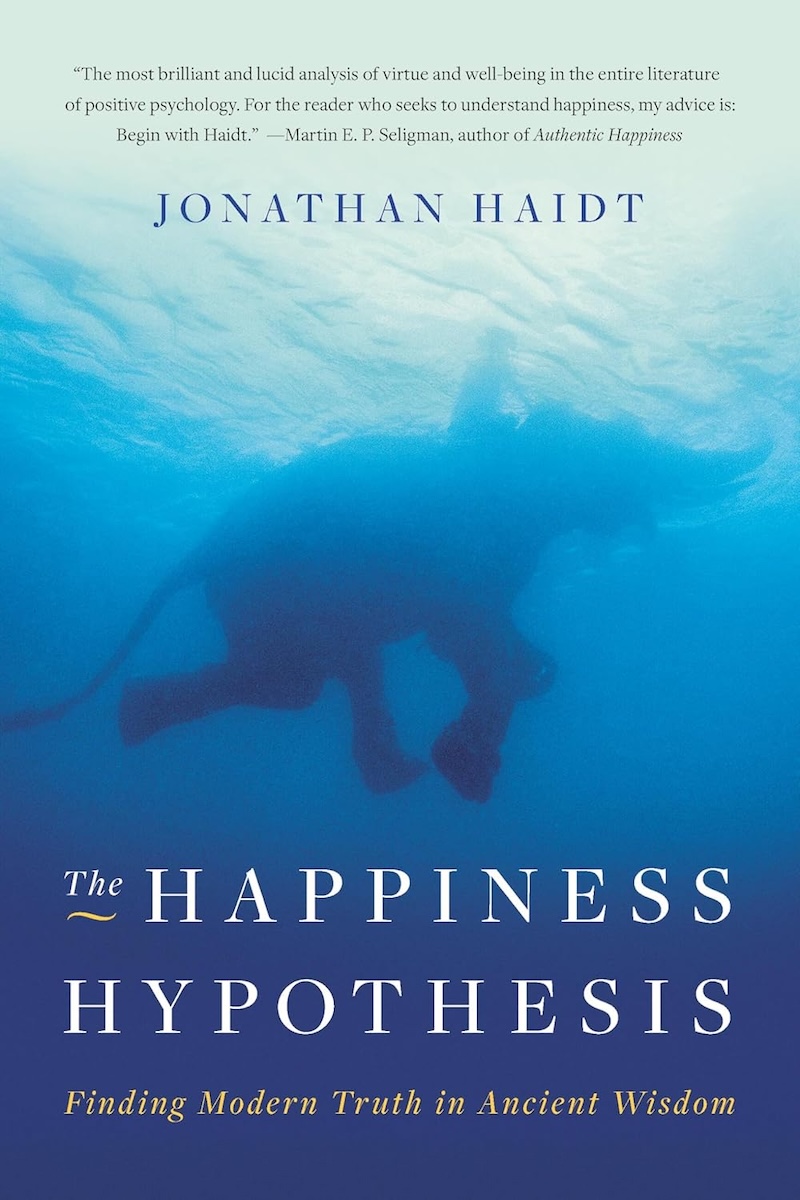
Haidt, J. (2005). The happiness hypothesis: Finding modern truth in ancient wisdom. Basic Books.
Author & Publication Information
- Author: Jonathan Haidt (b. 1963), American social psychologist, known for work on moral psychology and positive psychology.
- Publication: First published 2005; positions itself as a bridge between ancient wisdom traditions and modern empirical psychology.
Intellectual & Historical Context
- Emerged during the rise of positive psychology (Seligman, Csikszentmihalyi) emphasizing strengths, virtue, and flourishing rather than pathology.
- Written against backdrop of ancient philosophical traditions (Greek, Roman Stoicism, Buddhism, Confucianism, Judeo-Christian thought) and tested against modern science (social psychology, neuroscience, behavioral economics).
- Aims to filter enduring wisdom from cultural variability and integrate it with contemporary psychology to craft practical guidance for living.
Thesis Statement
Happiness is not reducible to either internal attitude or external conditions; rather, it emerges from the dynamic balance between inner mental processes and outer relationships, adversity, virtue, and meaning. The “rider and elephant” metaphor encapsulates the divided self: reason (rider) has limited control over automatic processes and emotions (elephant), and flourishing requires harmonizing both.
Key Concepts
- The Divided Self: Rider–elephant metaphor for conscious reason vs. unconscious/emotional processes.
- Changing Your Mind: Cognitive reframing and mental practices can reorient happiness.
- Reciprocity & Hypocrisy: Human cooperation and conflict shaped by fairness, vengeance, and moral blind spots.
- Pursuit of Happiness: Distinction between hedonic pleasure and eudaimonic fulfillment.
- Love & Attachment: Passionate vs. companionate love; attachment theory integrated with ancient insights.
- Uses of Adversity: Trauma can lead to post-traumatic growth, resilience, and strength.
- Virtue Ethics: Aristotelian and Confucian traditions updated through empirical psychology.
- Divinity and Awe: Sacredness as a psychological dimension of meaning, regardless of theism.
- Happiness Comes from Between: Emphasis on relationships, purpose, and integration of inner and outer life.
Part 2. Chapter Summaries
Introduction: Too Much Wisdom
- Overabundance of wisdom traditions risks superficiality. Haidt proposes ten “Great Ideas” that recur across civilizations.
- Goal: test these against modern science to identify enduring insights into happiness and flourishing.
1. The Divided Self
- Metaphor of rider and elephant: conscious reason vs. unconscious drives.
- Draws from Plato’s charioteer, Buddha’s elephant, Freud’s id/ego/superego.
- Neuroscience and split-brain studies confirm modular, divided mind.
- Key lesson: cultivate cooperation between rational and emotional systems.
2. Changing Your Mind
- Ancient maxim: “There is nothing either good or bad, but thinking makes it so.”
- Cognitive-behavioral therapy (CBT) and meditation as modern parallels.
- Three techniques to increase happiness: meditation, cognitive reframing, and pharmacological interventions.
- Happiness can be cultivated by training attention and interpretation.
3. Reciprocity with a Vengeance
- Golden Rule and fairness as universal moral mechanisms.
- Reciprocity as double-edged: cooperation and revenge.
- Game theory and evolutionary psychology: tit-for-tat strategies explain altruism and vengeance.
- Danger of exploitation by free-riders and manipulators.
4. The Faults of Others
- Humans excel at detecting hypocrisy in others but blind to own failings.
- “Righteous mind” shaped by confirmation bias, moral self-servingness.
- Practical lesson: cultivate humility and reduce self-righteousness to improve relationships.
5. The Pursuit of Happiness
- Hedonic treadmill: material gains quickly lose impact.
- Stoic and Buddhist insight: happiness from within, via detachment.
- Modern correction: external conditions (e.g., relationships, work) also matter.
- Happiness requires balance between internal attitudes and external goods.
6. Love and Attachments
- Passionate love (short-lived, intense) vs. companionate love (stable, nurturing).
- Attachment theory explains patterns of intimacy and dependence.
- Love as central to enduring happiness; social bonds trump solitude.
7. The Uses of Adversity
- “What doesn’t kill you makes you stronger” oversimplifies.
- Trauma can damage but also catalyze post-traumatic growth.
- Adversity reframed as opportunity for resilience, meaning, spiritual deepening.
8. The Felicity of Virtue
- Ancient emphasis on virtue as path to flourishing.
- Aristotle: happiness as activity in accordance with virtue.
- Modern psychology: virtues as measurable strengths; character education revalued.
- Virtue as relational and socially embedded, not solitary.
9. Divinity with or without God
- Universality of sacredness and awe; not dependent on theism.
- Emotions of elevation, awe, and disgust structure moral life.
- Vertical dimension of meaning important for moral cohesion and transcendence.
10. Happiness Comes from Between
- Happiness arises in the spaces between self and others, work, and community.
- Neither purely internal nor external; it is relational, contextual, and integrative.
- Final synthesis: flourishing requires balancing inner attitudes with external bonds and purposes.
11. Conclusion: On Balance
- Revisits the “happiness hypotheses” and affirms pluralism: no single formula.
- Integration of ancient wisdom and modern science offers pragmatic guidance.
- Enduring lesson: cultivate relationships, purpose, virtue, and balance.
Part 3. Key Quotes & Significance
Key Quotes
- “The mind is divided, like a rider on an elephant, and the rider’s control is precarious.”
- “Happiness comes not just from within, and not just from without. Happiness comes from between.”
- “There is nothing either good or bad, but thinking makes it so.” (Shakespeare, cited approvingly)
- “Love and attachments are the greatest external conditions of lasting happiness.”
- “The most powerful evidence for human resilience is the ability to grow from adversity.”
Significance & Impact
- Positive Psychology: Canonical text linking ancient traditions to empirical science; complements Seligman’s Authentic Happiness.
- Interdisciplinary Bridge: Combines philosophy, religion, psychology, and neuroscience.
- Popular Metaphors: Rider–elephant metaphor widely adopted in psychology, leadership, and self-help.
- Resilience & Growth: Contributed to public awareness of post-traumatic growth and adversity’s constructive uses.
- Ethics & Virtue: Rehabilitated Aristotelian and Confucian virtue ethics within modern psychology.
- Cultural Impact: Helped shape discourse on happiness in public debates, education, and policy.
Broader Implications
- Shows limits of hedonic materialism and emphasizes relational flourishing.
- Bridges secular and religious frameworks through focus on awe, virtue, and meaning.
- Encourages pluralism: multiple paths to happiness depending on temperament and context.
- Anticipates Haidt’s later work (The Righteous Mind) on morality, polarization, and sacredness in politics.