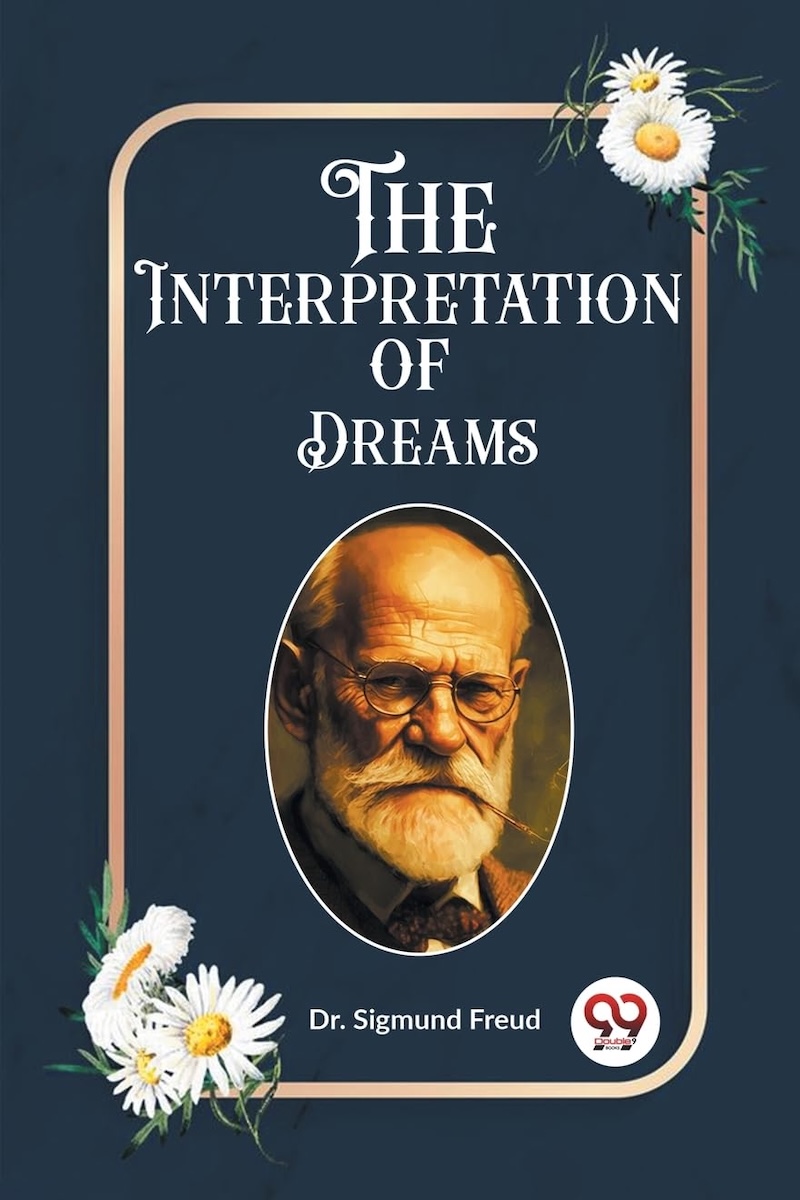
01 / Classic Textbook Recommendation
Classic Textbook Recommendation
Part 1. Citation, Context, Thesis & Key Concepts
Citation
Freud, S. (1900/2009). The interpretation of dreams (3rd ed.). IAP. (Original work published 1900)
Author & Publication Information
- Author: Sigmund Freud (1856–1939), Austrian neurologist, founder of psychoanalysis.
- Publication: First published 1899 (dated 1900); 3rd edition reflects subsequent revisions but retains Freud’s foundational formulations.
Intellectual & Historical Context
- Written during Freud’s formative period of developing psychoanalysis, just after Studies on Hysteria (1895) with Breuer.
- Dreams offered Freud an empirical entry into unconscious processes, bridging neurology, philosophy, and clinical psychopathology.
- Built upon classical, mystical, and medical traditions of dream-interpretation but recast them as a scientific psychology of the unconscious.
- Became the cornerstone of psychoanalysis, situating dream analysis as the “royal road” to unconscious processes.
Thesis Statement
Dreams are not random or meaningless but psychological formations that fulfill wishes, usually unconscious ones. Their strangeness results from disguise processes (condensation, displacement, symbolization) imposed by censorship between unconscious and preconscious systems. By analyzing dreams through free association, the latent content—underlying unconscious wishes and conflicts—can be uncovered.
Key Concepts
- Wish-Fulfilment: Every dream, even those of anxiety, expresses the realization of an unconscious wish.
- Manifest vs. Latent Content:
- Manifest content: the dream as remembered.
- Latent content: hidden thoughts and wishes revealed by analysis.
- Dream-Work: Processes transforming latent thoughts into manifest form:
- Condensation (multiple ideas compressed into one image).
- Displacement (emotional intensity shifted to less threatening elements).
- Symbolism (objects/scenes represent unconscious thoughts, often sexual).
- Secondary revision (smoothing incoherencies into a narrative).
- Day Residues: Fragments of recent experiences provide raw material for dream imagery.
- Irma’s Injection Dream: Freud’s self-analysis of his own dream, foundational demonstration of method, illustrating wish-fulfilment and self-exculpation.
- Unconscious vs. Preconscious Systems: Topographical model developed; repression central to dream formation.
- The Royal Road: Dream analysis as privileged access to unconscious wishes, conflicts, and defenses.
Part 2. Chapter Summaries
Chapter 1. The Scientific Literature of Dream-Problems (up to 1900)
- Reviews historical views: ancient prophetic/supernatural theories, Aristotle’s naturalistic psychology, medical theories of somatic stimuli.
- Notes inadequacy of prior scientific accounts; insists dreams have psychological meaning requiring new method.
Chapter 2. The Method of Dream Interpretation
- Rejects symbolic and cipher methods as arbitrary.
- Introduces psychoanalytic method: analyze dream elements via free association of the dreamer.
- Demonstrates with the famous Irma’s Injection dream, illustrating displacement, condensation, symbolism, and wish-fulfilment.
Chapter 3. The Dream as a Wish-Fulfilment
- Central doctrine: all dreams fulfill wishes.
- Even anxiety dreams can be traced to unconscious wish disguised or conflicted.
- Emphasizes importance of infantile wishes persisting in unconscious.
Chapter 4. Distortions in Dreams
- Explains why manifest content seems incoherent or absurd.
- Introduces dream censorship: psychic resistance transforms latent thoughts into disguised manifest content.
Chapter 5. The Material and Sources of Dreams
- Dreams draw on day residues (recent impressions) and infantile material.
- Childhood wishes provide the deepest stratum of dream formation.
Chapter 6. The Dream-Work
- Core technical chapter; details mechanisms: condensation, displacement, symbolic representation, secondary revision.
- Explains how latent dream thoughts become manifest dream images.
Chapter 7. The Psychology of the Dream-Processes
- Integrates dream theory with Freud’s topographical model (unconscious, preconscious, conscious).
- Dreams as compromise formations: wish + censorship + regression to sensory imagery.
- Establishes role of repression, unconscious desire, and psychic conflict.
Part 3. Key Quotes & Significance
Key Quotes
- “The dream is the (disguised) fulfilment of a (suppressed or repressed) wish.”
- “The interpretation of dreams is the royal road to a knowledge of the unconscious activities of the mind.”
- “The dream-thoughts and the dream-content are presented to us like two versions of the same subject-matter in two different languages.”
- “Condensation is the most striking and important of the dream-work processes.”
- “Dreams protect sleep.”
Significance & Impact
- Foundation of Psychoanalysis: Established unconscious wish-fulfilment, repression, and symbolic representation as central mechanisms.
- Methodological Innovation: Introduced free association as analytic tool, applied to dreams and later to symptoms.
- Conceptual Revolution: Shifted understanding of dreams from mystical/somatic to psychological, structured by unconscious conflict.
- Clinical Utility: Provided framework for analyzing neuroses, resistance, and transferences.
- Cultural Impact: Redefined dream interpretation across literature, art, and cultural studies; Freud’s ideas permeated 20th-century thought.
- Critiques: Later psychoanalysis (e.g., Jung, Adler, object relations) challenged universality of wish-fulfilment; cognitive neuroscience questions aspects of theory, but Freud’s clinical method remains influential.
Broader Implications
- Human Subjectivity: Dreams reveal unconscious life, shaping identity, creativity, pathology.
- Interdisciplinarity: Impacted psychology, philosophy, literary theory, and anthropology.
- Legacy: Despite scientific challenges, Freud’s interpretive model endures as an intellectual watershed and continues to inspire psychoanalytic, hermeneutic, and cultural approaches.