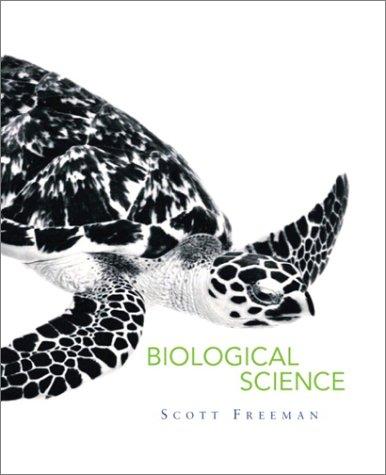
01 / Classic Textbook Recommendation
Classic Textbook Recommendation
Citation
Freeman, S. (2002). Biological Science. Prentice Hall.
Why It Matters
Freeman presents biology as a process of asking questions, building models, and testing explanations. Rather than treating the subject as a catalogue of terms, the book links the scale of molecules and cells to organisms, populations, and ecosystems.
Core Ideas
Evolution as a Unifying Framework
Natural selection and common ancestry provide a way to connect the diversity of life with the mechanisms that produce adaptation.
Structure and Function
Biological structures are explained in relation to what they do. This makes it possible to move from molecular interactions to cells, tissues, organs, and whole organisms.
Information and Inheritance
DNA, gene expression, and transmission of traits show how biological information is stored, changed, and interpreted across generations.
Evidence-Based Reasoning
Experiments, comparative observations, and quantitative reasoning are used to distinguish a plausible biological explanation from an appealing story.
Reading Lens
For each chapter, identify the question being investigated, the evidence used to answer it, and the level of organization at which the explanation operates. Drawing the links between levels is more valuable than memorizing isolated definitions.
Conclusion
Biological Science remains useful as a foundation because it treats biology as an interconnected science. Its broad survey can prepare readers for focused study in genetics, cell biology, physiology, ecology, and evolution.