01 / Classic Textbook Recommendation
Classic Textbook Recommendation
Citation
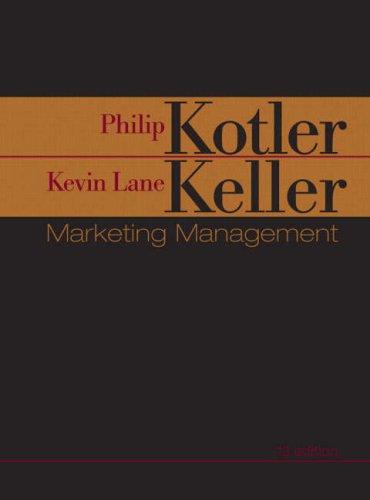
Kotler, P., & Keller, K. L. (2008). Marketing Management (13th ed.). Prentice Hall.
Why It Matters
The business collection has strong coverage of finance, accounting, and risk, but little on the market-facing work that turns a product or service into customer value. This text supplies the missing marketing vocabulary.
Core Ideas
Customer Value
Marketing begins by understanding a need, the alternatives available to a customer, and the value created by solving the problem. Value is experienced by people, not only measured inside the firm.
Segmentation and Positioning
Markets contain different expectations and constraints. Segmentation, targeting, and positioning turn a broad market into a strategic choice about whom to serve and what promise to make.
Brands and Relationships
Brands reduce uncertainty by making a promise recognizable across encounters. Long-term value depends on trust, experience, retention, and the relationship between the organization and its customers.
Marketing Programs
Product, price, promotion, and distribution must work as a system. A clever campaign cannot rescue a weak offering, and a strong product still needs a route to the people who need it.
Reading Lens
Choose one familiar product and map its target segment, value proposition, brand promise, price logic, channel, and evidence of customer response.
Conclusion
Marketing Management gives business students a shared language for analyzing markets and designing decisions. It balances customer insight with the operational and financial realities of implementation.