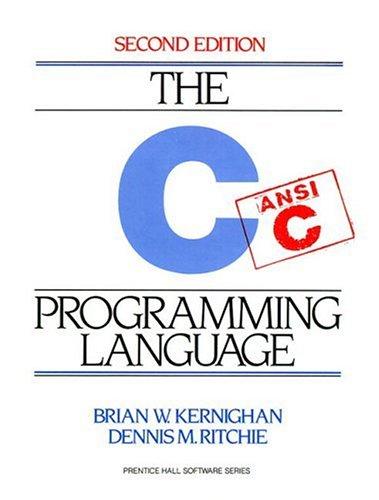
01 / Classic Textbook Recommendation
Classic Textbook Recommendation
Citation
Kernighan, B. W., & Ritchie, D. M. (1988). The C Programming Language (2nd ed.). Prentice Hall.
Why It Matters
C is close enough to the machine to make memory and representation visible, yet structured enough to teach functions, data types, and decomposition. The book remains useful because it connects language features to the discipline of writing small, clear programs.
Core Ideas
Types and Expressions
Values, conversions, operators, and declarations shape what a program can express. Understanding these rules prevents many bugs before they reach runtime.
Functions and Modularity
Functions divide a problem into units with defined inputs and outputs. Good interfaces make code easier to test, reuse, and reason about.
Pointers and Memory
Pointers expose the relationship between data and addresses. That power requires care with ownership, array bounds, lifetime, and representation.
Portable Systems Code
The book favors simple tools and explicit control. It also illustrates how a program can remain portable when it relies on language guarantees rather than accidental machine behavior.
Reading Lens
Do every short exercise by hand and then test it. When a program fails, inspect the data representation and lifetime of each value before adding complexity.
Conclusion
The C Programming Language is not a modern guide to every software practice, but it is a durable foundation for understanding how programs are represented and executed. It rewards precision and small, testable steps.