01 / Reading Guide
Reading Guide
Intermediate microeconomics: choose a model before optimizing
Compare three microeconomics texts and solve consumer-choice cases with kinks, corners and ties, checking budgets and the limits of utility comparisons.
Study route and exercise: University Reading List editorial project.
Who this book is for
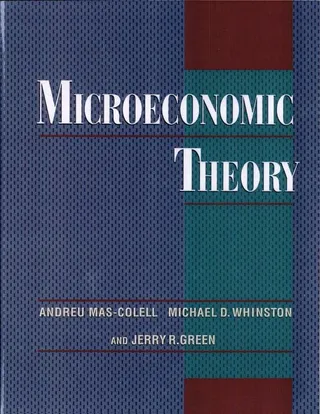
For undergraduates ready to replace familiar diagrams with explicit definitions and arguments. It suits an intermediate theory course and readers preparing for more demanding microeconomic work. The book is valuable when a student can solve a routine numerical exercise but cannot yet state precisely what a model assumes or prove why its result follows.
Prerequisites
Be comfortable with sets, functions, elementary algebra and sustained logical reasoning. Prior introductory microeconomics helps connect formal definitions to economic questions; little calculus is used.
What it covers
The book develops individual choice and consumer or producer behavior before introducing several economic systems and equilibrium notions. Later parts treat games and selected allocation questions. Proofs and exercises make the reasoning visible, allowing comparison of different ways an economy can be organized instead of assuming every setting uses the same price mechanism.
How to use it
Translate each definition into a tiny example before reading a proposition. Try to construct a counterexample when an assumption is removed, then trace which step of the proof fails. Solve exercises on paper and compare two equilibrium notions using the same agents and goods. Keep the model’s formal conclusion separate from a claim that it describes an actual economy.
Edition and sources
The selected record is the expanded second edition, She version, published June 26, 2023, paperback ISBN 9781805111214. The publisher provides free digital reading under CC BY-NC-ND 4.0. Match the She version and its ISBN to the copy used by your course. Metadata, contents and the available introductory material were checked. Publisher or author record Official online resource