01 / Classic Textbook Recommendation
Classic Textbook Recommendation
Citation
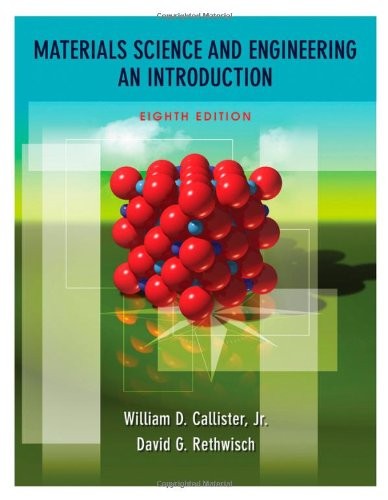
Callister, W. D., Jr., & Rethwisch, D. G. (2009). Materials Science and Engineering: An Introduction (8th ed.). John Wiley.
Why It Matters
The engineering list covers mechanics, circuits, thermodynamics, structures, and control, yet materials are the medium through which those designs become real. This text gives students the structure–processing–property vocabulary that connects disciplines.
Core Ideas
Structure Across Scales
Material behavior depends on what happens from atomic bonding to grains, defects, and macroscopic form. Each scale adds a different explanation for strength, conductivity, toughness, or failure.
Processing Changes Properties
Heat treatment, alloying, forming, sintering, and polymer processing alter structure. Manufacturing is therefore part of the material’s behavior, not a step that happens after design.
Phase Diagrams
Phase diagrams organize equilibrium states and transformations. They help engineers predict which phases will form and how composition and temperature shape performance.
Selection and Failure
Material selection balances stiffness, strength, weight, cost, durability, and manufacturability. Failure analysis turns a broken component into evidence about the assumptions behind a design.
Reading Lens
For one engineered object, trace the chain from material choice to processing, microstructure, measured property, service environment, and likely failure mode.
Conclusion
Materials Science and Engineering is a bridge text for engineering. It explains why a design is never only geometry and equations: the material’s history determines what the object can do.