01 / Classic Textbook Recommendation
Classic Textbook Recommendation
Citation
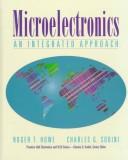
Howe, R. T., & Sodini, C. G. (1996). Microelectronics: An Integrated Approach. Prentice Hall.
Why It Matters
Microelectronics sits between material physics and useful systems. This book connects semiconductor behavior to circuit models, helping readers understand why a device behaves as it does before treating it as a symbol in a schematic.
Core Ideas
Device Physics
Doping, carrier transport, junctions, and fields determine how semiconductor devices respond. Physical intuition makes later circuit approximations easier to evaluate.
Models and Operating Regions
A transistor model is useful only within stated assumptions. Distinguishing operating regions prevents a compact equation from being applied outside its valid range.
Amplification and Switching
Electronic circuits use devices to control current, voltage, gain, and timing. The same component can serve different roles depending on bias and surrounding feedback.
Design Trade-offs
Speed, power, noise, area, linearity, and stability compete with one another. Engineering design is the process of choosing which compromises fit the application.
Reading Lens
For every circuit, move between the physical device, the small-signal model, and the system function. Check whether a result is a property of the device or an effect of the surrounding circuit.
Conclusion
Microelectronics: An Integrated Approach is useful for readers who want a connected view of electronics. It turns circuit analysis into an explanation of physical behavior and design choices.