01 / Classic Textbook Recommendation
Classic Textbook Recommendation
Citation
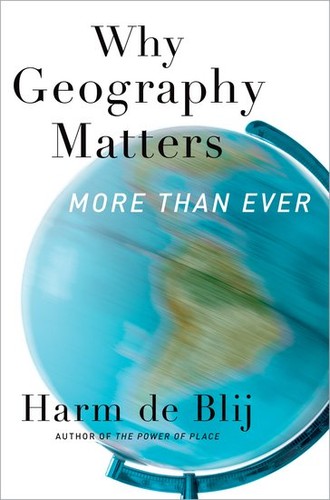
de Blij, H. (2012). Why Geography Matters More Than Ever. Oxford University Press.
Why It Matters
Global connectivity does not make location irrelevant. De Blij shows how terrain, climate, borders, infrastructure, and access to resources continue to influence opportunity, conflict, migration, and political power.
Core Ideas
Place and Constraint
Places create possibilities and limits through their physical settings and historical institutions. Geography is not destiny, but it changes the choices available to people and governments.
Scale
A neighborhood, state, region, and world system reveal different relationships. Geographic reasoning asks how processes at one scale are produced by or feed into processes at another.
Uneven Development
Resources, infrastructure, education, and political stability are distributed unevenly. Mapping those patterns makes inequality spatially visible without reducing it to a single cause.
Environment and Risk
Climate, water, food, and hazards connect environmental processes to human security. Geographic analysis can show why the same risk has different consequences in different places.
Reading Lens
For each claim, identify the spatial scale, the evidence, and the historical process behind the pattern. Avoid treating maps as neutral pictures; ask what they include, omit, and make comparable.
Conclusion
Why Geography Matters More Than Ever is a readable case for geographical thinking. It reminds readers that global systems are always experienced somewhere, through places with unequal histories and resources.