01 / Classic Textbook Recommendation
Classic Textbook Recommendation
Citation
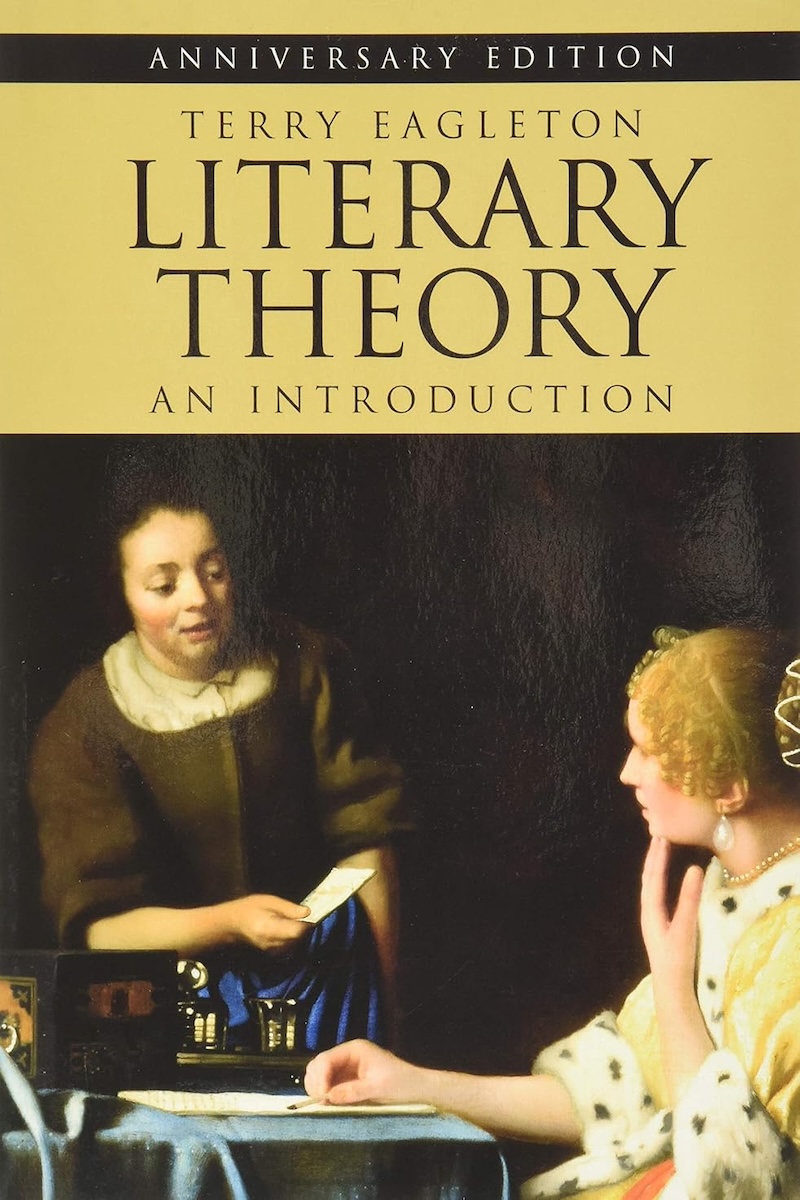
Eagleton, T. (2024). Literary Theory: An Introduction (4th ed.). University of Minnesota Press.
Knowledge and Historical Background
Terry Eagleton's "Literary Theory: An Introduction" has been the most widely read introduction to literary theory since its first publication in 1983. Written by one of Britain's most prominent literary critics and theorists, the book emerged during a period of intense theoretical debate in literary studies.
The work reflects Eagleton's Marxist perspective while providing fair and comprehensive coverage of competing theoretical approaches. It has shaped how literary theory is taught to undergraduates, making complex theoretical concepts accessible without oversimplification.
Teaching Philosophy
The book emphasizes that literary theory is not an abstract academic exercise but a practical tool for understanding how literature relates to politics, ideology, and social power. It teaches students to question assumptions about literature's neutrality and to understand how theoretical perspectives shape interpretation.
Core Concepts
Formalism and New Criticism
Early twentieth-century approaches that emphasized close reading and the autonomy of literary texts, examining their lasting influence on literary study.
Structuralism
Ferdinand de Saussure's linguistic theory and its application to literature, including the work of Roland Barthes and Claude Lévi-Strauss.
Post-structuralism
Derrida's deconstruction and its challenge to stable meaning, examining how texts undermine their own apparent certainties.
Psychoanalytic Criticism
Freudian and Lacanian approaches to literature, exploring unconscious desires and the symbolic order in literary texts.
Feminist Literary Theory
Examination of how literature reflects and shapes gender relations, from early feminist criticism to contemporary gender theory.
Marxist Literary Criticism
Analysis of literature's relationship to economic and social structures, including ideology critique and cultural materialism.
Postcolonial Theory
Edward Said's Orientalism and subsequent developments in postcolonial criticism, examining literature's role in imperial and anti-imperial projects.
Cultural Studies
Expansion of literary study to include popular culture and examination of literature within broader cultural contexts.
Significance and Impact
"Literary Theory: An Introduction" has democratized access to literary theory, making complex ideas comprehensible to undergraduate students worldwide. Its critical perspective has influenced how literary theory is taught and understood in academic settings.
The book's political engagement has helped students understand that literary criticism is never neutral but always involves questions of power, ideology, and social justice.
Conclusion
"Literary Theory: An Introduction" provides essential knowledge for understanding how different theoretical approaches illuminate literature's relationship to society and culture. Its comprehensive coverage and critical perspective prepare students for advanced theoretical study.
The book's integration of theoretical sophistication with political awareness makes it invaluable for students seeking to understand literature's role in cultural and political life, demonstrating that literary theory is both intellectually rigorous and socially relevant.