01 / Classic Textbook Recommendation
Classic Textbook Recommendation
Citation
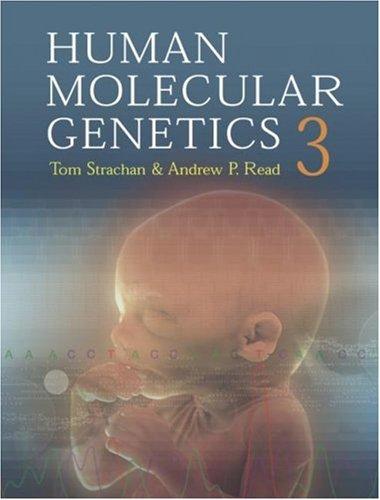
Strachan, T., & Read, A. P. (2003). Human Molecular Genetics (3rd ed.). Garland Science.
Why It Matters
Medical genetics requires movement between molecular mechanisms, whole organisms, families, and populations. This book provides that bridge by explaining how genome organization and gene regulation relate to variation, disease, and clinical interpretation.
Core Ideas
Genome Organization
Genes exist within chromosomes and larger regulatory landscapes. Their position, structure, copy number, and surrounding sequences can all affect biological function.
Gene Expression
Transcription, RNA processing, translation, and regulation connect DNA sequence to cellular behavior. The path from gene to phenotype is mediated by context rather than being a simple one-to-one mapping.
Variation and Disease
Mutations, recombination, epigenetic states, and environmental interactions contribute to human variation. The same molecular change can have different effects depending on genetic and biological context.
Genetics in Medicine
Molecular knowledge supports diagnosis, risk assessment, and research into treatment, but interpretation requires family history, population data, uncertainty, and ethical judgment.
Reading Lens
Keep mechanism, evidence, and clinical inference distinct. This 2003 edition is historically valuable, but current genomic methods and clinical guidance should be checked against newer sources.
Conclusion
Human Molecular Genetics gives medicine students a systems view of heredity and disease. Its central lesson is that genetic information operates through regulation, context, and interaction across biological scales.