01 / Classic Textbook Recommendation
Classic Textbook Recommendation
Citation
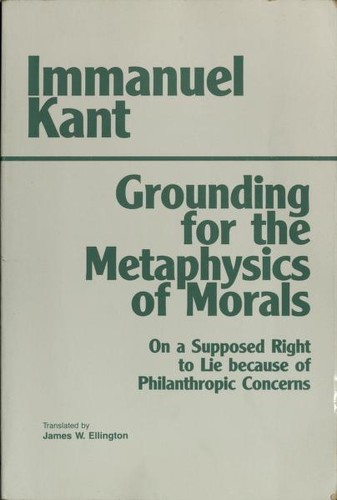
Kant, I. (1993). Grounding for the Metaphysics of Morals: With On a Supposed Right to Lie because of Philanthropic Concerns (J. W. Ellington, Trans.; 3rd ed.). Hackett Publishing.
Why It Matters
The philosophy collection has begun to move beyond animal ethics, but it still needs a central text in modern moral philosophy. Kant’s short argument gives students a demanding counterpoint to consequentialist and virtue-based approaches.
Core Ideas
The Good Will
Kant separates moral worth from talent, success, and desirable outcomes. A good will is valuable in itself because it acts from a principle it can recognize as rationally binding.
Duty and Inclination
An action can agree with duty without being done for the sake of duty. The distinction forces readers to ask whether moral value lies in what happens, why it happens, or the principle that guides the will.
Universal Law
A maxim is tested by asking whether it could be willed as a universal law. The test turns individual choice into a question about consistency and equal standing.
Autonomy and Humanity
Moral agents are not merely instruments for someone else’s purposes. Autonomy means giving oneself rational law, while the humanity formula requires treating persons as ends.
Reading Lens
Rewrite each example as a maxim: who acts, in what circumstances, for what purpose? Then test whether the principle can be universalized without contradiction or without undermining the practice it assumes.
Conclusion
Grounding for the Metaphysics of Morals is a compact laboratory for normative reasoning. It gives the reading list a canonical account of duty, autonomy, and the moral status of persons.