01 / Classic Textbook Recommendation
Classic Textbook Recommendation
Citation
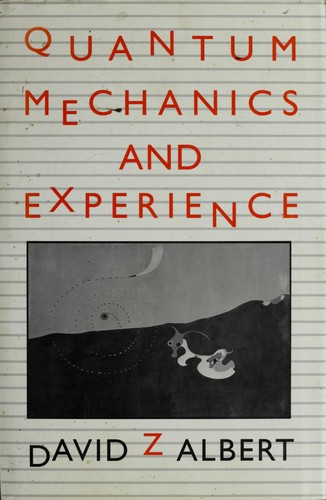
Albert, D. Z. (1992). Quantum Mechanics and Experience. Harvard University Press.
Why It Matters
Quantum mechanics is often introduced as a successful calculation scheme before its conceptual commitments are made explicit. Albert starts with the physical picture and asks what the formalism says about states, measurement, probability, and the world experienced by observers.
Core Ideas
Quantum States
A quantum state is not simply a list of hidden classical properties. It organizes the probabilities of possible observations and changes according to precise rules.
Measurement
Measurement creates a tension between smooth quantum evolution and definite outcomes. Different interpretations respond to this tension in different ways.
Nonlocality
Entangled systems challenge classical assumptions about separability and local properties. The challenge concerns what a physical theory says reality is like, not only how to calculate correlations.
Interpretation and Experience
The book keeps formal predictions connected to lived experimental situations. It asks what kind of world would make the theory intelligible rather than treating interpretation as decoration.
Reading Lens
Distinguish empirical predictions from claims about what the formalism means. This is a conceptual guide, so readers who need calculations should pair it with a standard quantum mechanics textbook.
Conclusion
Quantum Mechanics and Experience is an inviting route into the foundations of quantum theory. It makes difficult questions precise without pretending that conceptual clarity removes every disagreement.