01 / Classic Textbook Recommendation
Classic Textbook Recommendation
Citation
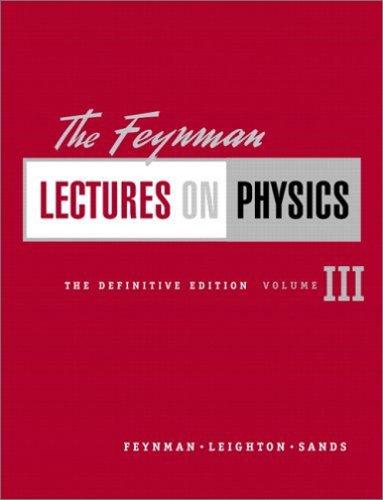
Feynman, R. P., Leighton, R. B., & Sands, M. (1989). The Feynman Lectures on Physics. Addison-Wesley.
Why It Matters
The lectures model how to think physically: start from a clear question, identify the structure of a phenomenon, and use mathematics to sharpen intuition. They are valuable beside a problem-solving textbook because they expose the conceptual choices hidden inside familiar formulas.
Core Ideas
Conservation and Symmetry
Conservation laws organize apparently different physical situations. The lectures repeatedly return to what remains invariant when a system changes.
Fields and Locality
Electric and magnetic phenomena are understood through fields rather than distant action at a distance. This shift changes what counts as an explanation.
Approximation as Understanding
Good estimates are not inferior versions of exact answers. They reveal which variables matter, which effects can be neglected, and how a model earns its usefulness.
The Limits of Classical Intuition
Quantum phenomena resist everyday pictures, but they are not beyond reasoning. The task is to replace misleading analogies with precise principles and testable predictions.
Reading Lens
Read slowly and redraw every diagram. After each section, explain the idea without using the equation first; then use the equation to check whether your verbal account has left out an assumption.
Conclusion
The Feynman Lectures on Physics is a lasting companion for students who want physics to feel like an argument rather than a formula sheet. Its best lessons are habits of curiosity, modeling, and intellectual honesty.