01 / Reading Guide
Reading Guide
Who this book is for
For students who know the basic vocabulary of politics and want to understand why analysts explain the same event differently. It suits a second stage of undergraduate reading before a more specialized methods text, especially when a student needs to articulate the theoretical assumptions behind an essay or research question.
Prerequisites
A first course or survey in politics or international relations is useful. Be ready to distinguish an argument’s assumptions from its evidence. No mathematical training is needed for the conceptual work described in the contents.
What it covers
Hay examines analytical perspectives, the boundaries of the political, structure and agency, change, power, ideas and postmodernism. The opening sample makes the assumptions behind competing approaches a central concern. The book therefore complements an institutions survey by asking what an explanation takes for granted and which relationships it makes visible.
How to use it
Begin with the first chapter’s map of approaches. Choose a familiar political event and write two short explanations using different starting assumptions. Then use the chapters on agency, power or ideas to identify what each explanation overlooks. Maintain a glossary of ontology and epistemology, and test whether a change in definition would alter the evidence you collect.
Edition and sources
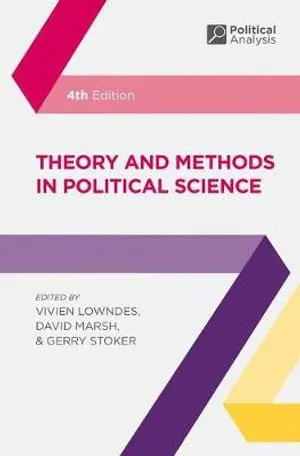
The current publisher record identifies the 2002 first-edition paperback, ISBN 9780333750032. The authorized sample confirms that print identifier and includes the contents and opening discussion; its updated imprint page also reflects later rights arrangements. These are not evidence for a new substantive edition or free access to the entire book.