01 / Classic Textbook Recommendation
Classic Textbook Recommendation
Part 1. Citation, Context, Thesis & Key Concepts
Citation
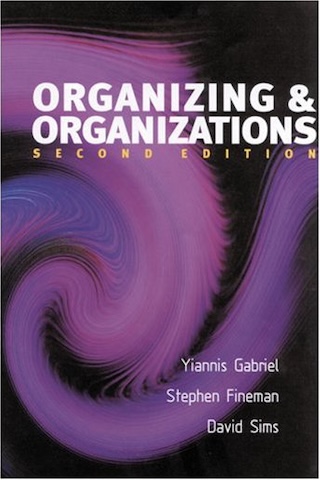
Fineman, S., Gabriel, Y., & Sims, D. (2010). Organizing and organizations (4th ed.). Sage Publications.
Authors & Publication Information
- Authors:
- Stephen Fineman, Professor Emeritus at the University of Bath School of Management, expert in emotions in organizations and environmental psychology
- Yiannis Gabriel, Professor of Organizational Theory at University of Bath, renowned for work on organizational storytelling and psychoanalytic approaches
- David Sims, Professor at City University London, specialist in organizational learning and management development
- Publication: Fourth edition published by Sage in 2010, building on decades of teaching and research experience.
Intellectual & Historical Context
- Written during the post-industrial transformation of work, addressing new organizational forms and challenges in the 21st century.
- Integrates insights from psychology, sociology, anthropology, and management studies to provide a multidisciplinary perspective.
- Responds to the need for more humanistic and critical approaches to understanding organizational life.
- Reflects the shift from purely rationalist management theories toward recognition of emotions, culture, and meaning in organizations.
Thesis Statement
Fineman, Gabriel, and Sims argue that organizing is a fundamentally human activity involving complex interactions between individual psychology, group dynamics, and organizational structures, requiring an understanding that goes beyond traditional management theories to encompass the full richness of human experience in work settings.
Key Concepts
- Organizing vs. Organizations: The distinction between the dynamic process of organizing and static organizational structures.
- Multiple Perspectives: The importance of viewing organizational phenomena from different theoretical and practical viewpoints.
- Human Dimension: The centrality of emotions, relationships, and meaning-making in organizational life.
- Power and Politics: How power relationships shape organizational behavior and outcomes.
- Culture and Identity: The role of organizational culture in shaping individual and collective identity.
- Change and Innovation: Understanding how organizations adapt and transform in response to internal and external pressures.
Part 2. Chapter Summaries
Part I: Foundations of Organizing
- Chs. 1-3: Introduction to organizational thinking:
- Understanding Organizations: Multiple perspectives on what organizations are and how they function
- Individual and Organization: The relationship between personal identity and organizational membership
- Groups and Teams: How people work together and the dynamics of collective action
Part II: Core Organizational Processes
- Chs. 4-7: Essential organizational phenomena:
- Leadership: Different approaches to understanding leadership and followership
- Decision Making: How decisions are made in organizational contexts
- Communication: The role of communication in creating and maintaining organizations
- Power and Politics: The exercise of influence and the political dimensions of organizational life
Part III: Organizational Dynamics
- Chs. 8-11: Dynamic aspects of organizational life:
- Conflict and Stress: Managing tensions and pressures in organizational settings
- Emotions: The role of feelings and emotional labor in work
- Culture: How organizational cultures develop and influence behavior
- Learning: Individual and organizational learning processes
Part IV: Contemporary Challenges
- Chs. 12-15: Modern organizational issues:
- Innovation and Change: Managing transformation and fostering creativity
- Ethics: Moral dimensions of organizational behavior
- Diversity: Managing difference and inclusion in organizations
- Sustainability: Environmental and social responsibility in organizing
Part V: Future Directions
- Chs. 16-18: Emerging trends and challenges:
- Technology: Impact of digital technologies on organizing
- Globalization: Managing across cultures and boundaries
- New Forms: Alternative organizational models and structures
Part 3. Key Quotes & Significance
Key Quotes
- "Organizations are not machines to be engineered, but complex human communities to be understood."
- "The most important organizational resource is not capital or technology, but human meaning-making."
- "Power in organizations is not just about hierarchy; it's about the ability to shape reality and meaning."
- "Organizational culture is not something an organization has, but something an organization is."
- "Change is not an event but a continuous process of becoming."
Significance & Impact
- Educational Influence: Became one of the most widely used organizational behavior textbooks, shaping how students understand organizational life.
- Theoretical Integration: Successfully integrated insights from multiple disciplines to provide a comprehensive view of organizations.
- Practical Relevance: Bridged academic theory with real-world organizational challenges and experiences.
- Critical Perspective: Encouraged critical thinking about traditional management assumptions and power relations.
- Global Adoption: Used in business schools and management programs worldwide, influencing how organizational behavior is taught.
Broader Implications
- Challenges mechanistic views of organizations in favor of more humanistic approaches.
- Demonstrates the importance of understanding the subjective and emotional dimensions of work.
- Shows how organizational behavior is shaped by broader social, cultural, and political forces.
- Highlights the ethical responsibilities of managers and organizational members.
- Contributes to the development of more inclusive and sustainable approaches to organizing.
- Emphasizes the role of storytelling and narrative in organizational sense-making and identity formation.