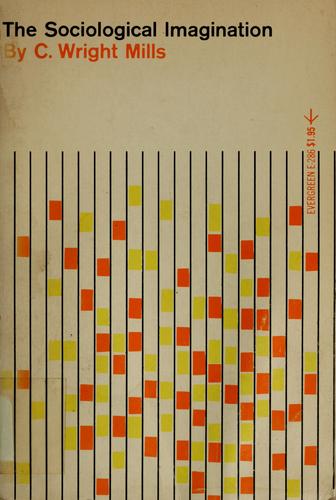
01 / Classic Textbook Recommendation
Classic Textbook Recommendation
Citation
Mills, C. W. (2000). The Sociological Imagination. Oxford University Press.
Why It Matters
The sociology collection now includes interaction, institutions, race, colonialism, and digital life, but it lacks a clear methodological statement about how to connect lived experience with history and structure.
Core Ideas
Private Troubles and Public Issues
A problem that looks personal may be produced by institutions, markets, or historical change. The sociological imagination changes the scale of the question without dismissing the person’s experience.
Biography and History
People make choices within conditions they did not choose. Biography becomes sociological when it is read alongside the historical forces that shape opportunities, expectations, and constraints.
Abstraction and Empirical Life
Mills criticizes both empty grand theory and unconnected facts. Concepts should help us see patterns in actual lives, while evidence should keep theory answerable to the world.
Intellectual Craftsmanship
Research is not only a technical procedure. It is a craft of keeping a file of questions, observations, concepts, and revisions until a meaningful problem comes into view.
Reading Lens
Take one everyday difficulty and ask what would change if many people experienced it at the same time. Move between a personal narrative, an institution, and the historical process that links them.
Conclusion
The Sociological Imagination is an invitation to think sociologically before choosing a method. It gives students a durable way to connect experience, structure, history, and public responsibility.