01 / Classic Textbook Recommendation
Classic Textbook Recommendation
Citation
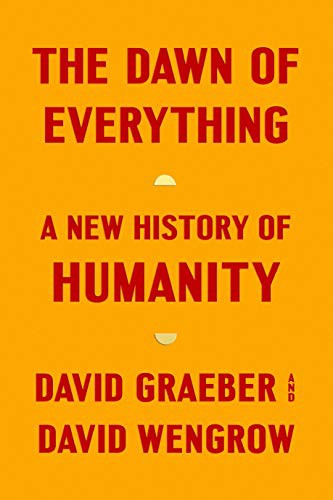
Graeber, D., & Wengrow, D. (2021). The Dawn of Everything: A New History of Humanity. Farrar, Straus and Giroux.
Why It Matters
This book asks a foundational anthropological question: how did humans come to organize collective life? Its answer resists a single ladder of progress from small egalitarian bands to agriculture, cities, and centralized states. Instead, the authors present evidence that communities repeatedly changed political arrangements and combined different ways of living.
Core Ideas
Many Paths Through History
Human societies did not follow one universal sequence. Mobile groups could be highly organized, farmers could preserve political freedom, and cities could exist without a single ruler.
Freedom as a Practice
The authors treat freedom as the ability to move away, disobey, or reshape social arrangements. This shifts attention from abstract political systems to choices made in everyday collective life.
Rethinking Inequality
Archaeological evidence is used to question the assumption that agriculture or urbanization automatically produced permanent hierarchy. Inequality often emerged through specific institutional choices rather than inevitability.
Evidence and Interpretation
The book models a dialogue between archaeology, anthropology, and history. It also invites readers to examine how modern assumptions shape the way evidence about the distant past is interpreted.
Reading Lens
Read the chapters comparatively. Notice when the authors move from material evidence to a larger interpretation, and ask what kinds of evidence would support or challenge that interpretation. The book is especially useful alongside evolutionary, Marxist, and political anthropology.
Conclusion
The Dawn of Everything expands the anthropological imagination. Its central lesson is not that every society was equally free, but that human beings have experimented with social and political possibilities far more often than conventional histories suggest.