01 / Classic Textbook Recommendation
Classic Textbook Recommendation
Citation
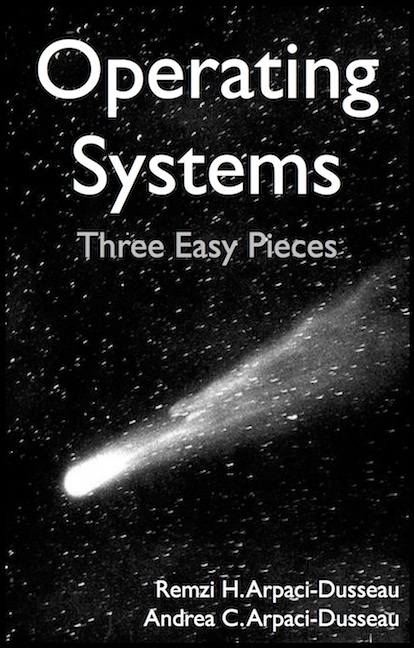
Arpaci-Dusseau, R. H., & Arpaci-Dusseau, A. C. (2018). Operating Systems: Three Easy Pieces (Version 1.00). Arpaci-Dusseau Books.
Why It Matters
Operating systems are often taught as a collection of mechanisms. This book organizes them around three durable ideas—virtualization, concurrency, and persistence—then connects those ideas to the interfaces programmers actually use.
Core Ideas
Virtualization
The operating system turns limited processors and memory into the illusion of private, flexible resources. Processes, address spaces, scheduling, and paging explain how that illusion is built.
Concurrency
Threads and interrupts create interleavings that a sequential program never reveals. Locks, condition variables, semaphores, and careful invariants make concurrent behavior analyzable.
Persistence
Files and storage devices must preserve information despite crashes, delays, and imperfect hardware. File systems, journaling, and data integrity show how software manages durable state.
Policy and Mechanism
A system needs mechanisms that make actions possible and policies that decide which action is appropriate. Separating the two helps explain scheduling, memory management, and resource allocation.
Reading Lens
Pair each chapter with a small experiment: trace a process, measure a scheduling policy, inspect a page table, or reason about a file-system failure. The goal is to make the abstraction visible in behavior.
Conclusion
Operating Systems: Three Easy Pieces is a clear bridge from programming to systems. It gives students the vocabulary needed to understand kernels, runtime libraries, performance, and the limits of computer abstractions.