01 / Classic Textbook Recommendation
Classic Textbook Recommendation
Citation
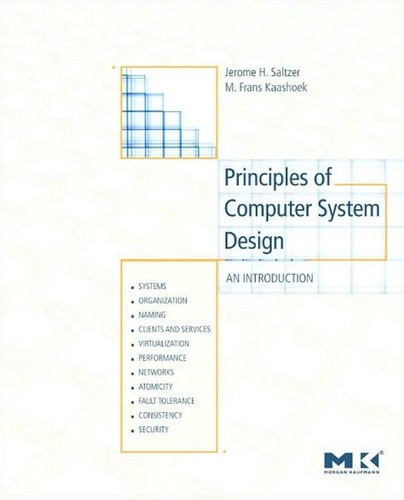
Saltzer, J. H., & Kaashoek, M. F. (2009). Principles of Computer System Design: An Introduction. Morgan Kaufmann.
Why It Matters
Computer systems are built from layers that hide complexity from one another. This book asks when those layers work, when they fail, and how designers can make the boundary between them explicit.
Core Ideas
Abstraction and Modularity
Abstraction lets a component expose a useful interface without exposing every implementation detail. Modularity then makes it possible to change one part while preserving the behavior expected by others.
Naming and Protection
Names connect users and programs to resources, while protection controls who may use those resources and under what conditions. Together they shape the security and usability of a system.
End-to-End Reasoning
Some functions are more reliable when implemented at the endpoints of a system rather than in the middle. This principle helps explain decisions in networking, storage, and distributed applications.
Failure and Recovery
Robust design assumes that components, links, and inputs can fail. Clear contracts, redundancy, isolation, and recovery procedures are ways to keep local faults from becoming system-wide failures.
Reading Lens
For every design principle, look for its trade-off. Ask what complexity is moved, what assumptions are required, and how the system behaves when an assumption is violated.
Conclusion
Principles of Computer System Design is valuable for readers who want to understand why systems are organized as they are. It builds a bridge between programming practice and the deeper reasoning behind operating systems, networks, and secure infrastructure.