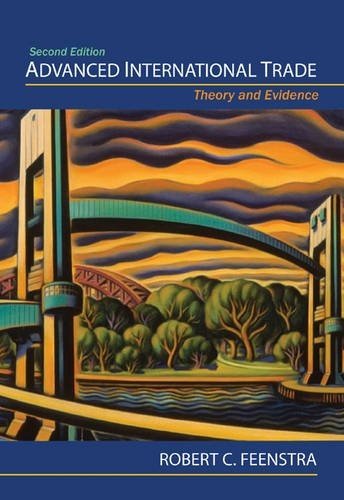
01 / Classic Textbook Recommendation
Classic Textbook Recommendation
Who this book is for
First-year and second-year PhD students in economics taking a field course in international trade or open-economy topics, and master's students in research-oriented programmes. It also serves researchers in development, industrial organization, labour or economic geography who need a careful, citable reference on trade models and the empirical methods attached to them.
Prerequisites
Graduate-level microeconomic theory, multivariable calculus and some econometrics are assumed.
What it covers
The book begins with the Ricardian and Heckscher-Ohlin models and tests of factor content, then treats specific factors, trade in intermediate inputs and offshoring, increasing returns and monopolistic competition, the gravity equation, firm heterogeneity in the tradition of Melitz, gains from trade, and the political economy of trade policy. It also discusses tariffs and quotas under imperfect competition, multinational firms, and the links between trade and growth.
How to use it
Treat it as a course text to be worked through with pen and paper: rederive the key results and attempt the exercises. Pair each chapter with the original journal articles it cites, and use the empirical sections as templates for replication exercises.
Edition and sources
This record describes the second edition, published by Princeton University Press in November 2015. Bibliographic data comes from the Google Books catalog page, since the publisher site could not be opened, with Open Library agreeing.